Representative David Dudley Field
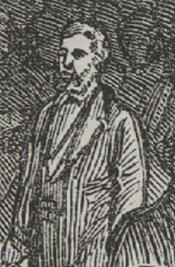
Here you will find contact information for Representative David Dudley Field, including email address, phone number, and mailing address.
| Name | David Dudley Field |
| Position | Representative |
| State | New York |
| District | 7 |
| Party | Democratic |
| Status | Former Representative |
| Term Start | December 6, 1875 |
| Term End | March 3, 1877 |
| Terms Served | 1 |
| Born | February 13, 1805 |
| Gender | Male |
| Bioguide ID | F000104 |
About Representative David Dudley Field
David Dudley Field II (February 13, 1805 – April 13, 1894) was an American lawyer, law reformer, and Democratic Representative from New York who made major contributions to the development of American civil procedure and briefly served in the United States Congress from 1875 to 1877. His greatest accomplishment was engineering the move away from common law pleading toward code pleading, which culminated in the enactment of the Field Code in 1850 by the State of New York. A member of the Democratic Party for most of his life, he contributed to the legislative process during one term in office and participated actively in national debates during a significant period in American history.
Field was born in Haddam, Connecticut, on February 13, 1805, the eldest of the eight sons and two daughters of the Rev. David Dudley Field I, a Congregational minister and local historian, and Submit Dickenson Field. He came from a family that would become prominent in American public life. His brothers included Stephen Johnson Field, who served as a Justice of the Supreme Court of the United States; Cyrus W. Field, a leading businessman and promoter of the first successful transatlantic telegraph cable; and the Rev. Henry Martyn Field, a noted clergyman and travel writer. Through his sister, he was the uncle of David Josiah Brewer, who also became a Justice of the Supreme Court of the United States.
Field was educated in New England and graduated from Williams College in Williamstown, Massachusetts, in 1825. After college he read law in Albany, New York, under Harmanus Bleecker, and then moved to New York City to complete his legal training. Admitted to the bar in 1828, he quickly established himself in practice and joined the law office of Henry and Robert Sedgwick, members of a prominent legal family. Following the death of Robert Sedgwick, Field became a partner in the firm, gaining a reputation as a skilled advocate and an incisive critic of the technicalities of common law pleading that dominated American courts in the early nineteenth century.
In his personal life, Field married Jane Lucinda Hopkins in 1829. The couple had three children: Dudley, Jeanie Lucinda, and Isabella. Tragedy struck in 1836, when his first wife, his youngest child, and one of his brothers all died in the same year. Deeply affected, Field temporarily withdrew from active practice and traveled in Europe for more than a year, studying the courts, procedures, and legal codes of England, France, and other countries. After his return to New York, he resumed practice and established his own law firm, in which he was joined by his brothers Stephen and Jonathan. His eldest child, Dudley Field, followed him into the law and was made a partner in his father’s practice in 1854. His daughter Jeanie Lucinda married Anthony Musgrave, an Antigua-born British imperial civil servant, and became a promoter of charitable projects in various British colonies. After the death of his first wife, Field married Harriet Davidson, who died in 1864, and later Mary E. Carr, who died in 1874.
Field’s European travels convinced him that the common law system in the United States, particularly in New York, required radical reform to unify and simplify legal procedure. Influenced by the 1825 Louisiana Code of Procedure—drafted by jurists including Edward Livingston, Louis Lislet, and Pierre Derbigny—and by the French Code of Civil Procedure of 1806, as well as Spanish and Roman law traditions, he began a decades-long campaign for codification. He also drew on the criticisms of common law pleading advanced by his law partner Henry Sedgwick and by lawyer William Sampson. Beginning in the 1830s and 1840s, Field outlined his proposals in pamphlets, professional journal articles, and legislative testimony, though at first he met with limited interest. His 1846 pamphlet “The Reorganization of the Judiciary” helped influence the New York State Constitutional Convention of that year to endorse codification of the laws. In 1847 he was appointed head of a state commission to revise court procedure and practice. The first portion of the commission’s work, a code of civil procedure, was reported and enacted in 1848, and by January 1, 1850, the New York legislature had adopted the complete Code of Civil Procedure, soon known as the Field Code because it was almost entirely his work.
The Field Code abolished the traditional distinction between actions at law and suits in equity, replacing them with a single form of civil action and thereby reshaping American civil litigation. It also helped “invent” the modern concept of civil procedure as a unified body of law, joining together what had previously been treated as separate domains of pleading and practice. The code adopted an expansive approach to the admissibility of evidence, allowing testimony from any person “having organs of sense,” except the insane and very young children, in contrast to the more restrictive common law rules; however, when other states adopted versions of the Field Code, many imposed racial exclusions on witnesses that Field himself had not endorsed. Over time, versions of his civil procedure code were adopted, with modifications, in some 27 states and influenced later procedural reforms in England and several of its colonies, including through the Judicature Acts. In 1857 Field became chair of another New York commission, this time charged with the systematic codification of all state law not already covered by the practice and pleading commission. He personally drafted most of the political and civil codes. Although New York adopted only portions of this work, his civil and related codes became models for statutory codifications in many jurisdictions. California, aided by the influence of his brother Stephen, adopted Field-inspired practice and codes more comprehensively than any other state, enacting in 1872 civil procedure, criminal procedure, civil, penal, and political codes that drew heavily on his work. Parts of what was widely, though incorrectly, called Field’s penal code—actually drafted by his colleague William Curtis Noyes—were eventually enacted in 18 states, including New York in 1881.
Field’s public life extended beyond state law reform. Originally an anti-slavery Democrat, he supported Martin Van Buren and the Free Soil movement in 1848, then aligned himself with the Republican Party in 1856 and backed President Abraham Lincoln and the Union cause during the Civil War. He later returned to the Democratic Party after 1876. In 1866 he proposed to the British National Association for the Promotion of Social Science a project for the revision and codification of the laws of all nations. For an international commission of lawyers he prepared “Draft Outlines of an International Code” (1872), which led to the organization of the Association for the Reform and Codification of the Laws of Nations, an early forerunner of modern international law organizations, of which he became president. In private practice he remained a prominent and sometimes controversial figure; notably, he served as part of the defense team for William M. Tweed during Tweed’s first criminal trial in 1873, alongside John Graham and Elihu Root. That first trial ended in a hung jury, but Tweed was convicted in a second trial later that year.
David Dudley Field served as a Representative from New York in the United States Congress from 1875 to 1877, sitting as a Democrat in the House of Representatives during a turbulent post–Civil War era. More specifically, after his return to the Democratic Party, he was elected to fill the unexpired term of Representative Smith Ely, who had been chosen Mayor of New York City, and from January to March 1877 he represented New York’s 7th congressional district. During his brief congressional service he participated actively in the democratic process and represented the interests of his urban constituents at a time of intense national political conflict. He delivered six speeches on the House floor, all of which attracted public and press attention, introduced a bill concerning presidential succession, and appeared before the Electoral Commission on behalf of Democratic presidential candidate Samuel J. Tilden during the disputed presidential election of 1876. His service in Congress thus coincided with the climax of Reconstruction-era political struggles and the contested resolution of the Hayes–Tilden election.
In his later years Field continued to write and speak on legal reform, politics, and international law. Some of his numerous pamphlets, addresses, and legal arguments were collected in a three-volume set, “Speeches, Arguments and Miscellaneous Papers,” published between 1884 and 1890. His life and work were later the subject of a biography, “Life of David Dudley Field” (New York, 1898), written by his brother, the Rev. Henry Martyn Field. David Dudley Field II died in New York City on April 13, 1894, at the age of 89. His remains were interred in Stockbridge Cemetery in Stockbridge, Massachusetts, closing the life of one of the most influential legal reformers in nineteenth-century America.