Representative David Funderburk
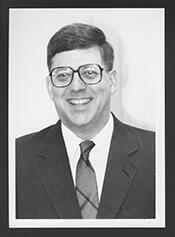
Here you will find contact information for Representative David Funderburk, including email address, phone number, and mailing address.
| Name | David Funderburk |
| Position | Representative |
| State | North Carolina |
| District | 2 |
| Party | Republican |
| Status | Former Representative |
| Term Start | January 4, 1995 |
| Term End | January 3, 1997 |
| Terms Served | 1 |
| Born | April 28, 1944 |
| Gender | Male |
| Bioguide ID | F000426 |
About Representative David Funderburk
David Britton Funderburk (born April 28, 1944) is an American politician, diplomat, historian, and author who served as the Ambassador of the United States to Romania from 1981 to 1985 and later as a Republican member of the U.S. House of Representatives from North Carolina from 1995 to 1997. His single term in Congress placed him among the class of lawmakers associated with the Republican Revolution of the mid‑1990s, and he was the first Republican to represent his North Carolina district since 1901.
Funderburk was born at Langley Field in Hampton, Virginia, the son of a pastor and a schoolteacher. He grew up in Aberdeen, North Carolina, where his family settled during his youth. He attended Wake Forest University from 1962 to 1967, earning both a Bachelor of Arts and a Master of Arts degree. Pursuing advanced historical study, he enrolled at the University of South Carolina, where he completed his Ph.D. in 1974. His doctoral thesis, titled “British policy towards Romania, 1938–1940: A Study in Economic and Political Strategy,” reflected an early and sustained scholarly interest in Eastern Europe and Romanian affairs that would later shape his diplomatic career.
Before entering public office, Funderburk worked as a professor of history. He initially taught at Wingate University and later held academic positions at the University of South Carolina, Hardin–Simmons University, and Campbell University. His scholarship and teaching focused in significant part on European and communist studies. He was a Fulbright Scholar and developed a reputation as a specialist on Romania, ultimately receiving Romania’s highest award granted to a foreigner. In recognition of his academic and diplomatic contributions, the University of Bucharest and Campbell University each conferred upon him honorary doctorates.
In 1981, President Ronald Reagan selected Funderburk to serve as United States Ambassador to the Socialist Republic of Romania, a post he held until 1985. His tenure coincided with the rule of Nicolae Ceaușescu and a tense period in Cold War diplomacy. As ambassador, Funderburk represented U.S. interests in a communist state that maintained a somewhat independent line from Moscow, navigating complex political, economic, and human rights issues. In 1987 he published “Pinstripes and Reds: An American Ambassador Caught Between the State Department & the Romanian Communists, 1981–1985,” in which he described the process by which he was nominated and confirmed as ambassador and offered a detailed account of diplomatic life and policy conflicts in Romania during the early 1980s.
Following his service in Bucharest, Funderburk sought elective office. In 1986 he ran for the United States Senate from North Carolina but was defeated in the Republican primary by incumbent Senator Jim Broyhill. After this unsuccessful bid, he turned to work as a professional lecturer and writer, drawing on his academic background and diplomatic experience. Among his published works are “If the Blind Lead the Blind: The Scandal Regarding the Mis-teachings of Communism in American Universities” (Erwin, N.C.: Carolina Arts and Publishing House, 1978), “British Policy Toward Romania, 1938–1940” (1983), and his aforementioned memoir “Pinstripes and Reds” (Washington, D.C.: Selous Foundation Press, 1987).
In 1994, Funderburk entered the race for the U.S. House of Representatives and was elected as a Republican to the 104th Congress, serving from January 3, 1995, to January 3, 1997. His election was part of the broader Republican gains that year, often referred to as the Republican Revolution, and he became the first Republican to represent his North Carolina district since 1901. During his one term in office, David Funderburk contributed to the legislative process and participated in the democratic governance of the nation, representing the interests of his constituents in North Carolina as a member of the House of Representatives. His service in Congress occurred during a significant period in American political history marked by debates over federal spending, regulatory reform, and the role of the federal government.
Funderburk was an unsuccessful candidate for reelection to the 105th Congress in 1996. His defeat was widely attributed in contemporary accounts to public reaction following a car accident in which he was involved; witnesses claimed that he had been driving the vehicle and then switched seats with his wife after the collision, an allegation that drew considerable media attention and political criticism. After leaving Congress in 1997, Funderburk joined the law firm Kirkpatrick and Lockhart, where he worked as a lobbyist, continuing to engage in public policy and governmental affairs.