Senator David Gambrell
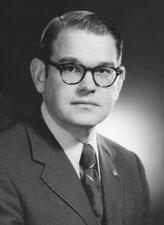
Here you will find contact information for Senator David Gambrell, including email address, phone number, and mailing address.
| Name | David Gambrell |
| Position | Senator |
| State | Georgia |
| Party | Democratic |
| Status | Former Representative |
| Term Start | February 1, 1971 |
| Term End | January 3, 1972 |
| Terms Served | 1 |
| Born | December 20, 1929 |
| Gender | Male |
| Bioguide ID | G000034 |
About Senator David Gambrell
David Henry Gambrell (December 20, 1929 – May 6, 2021) was an American attorney and Democratic politician from Atlanta, Georgia, who served as a United States Senator from Georgia from 1971 to 1973. Over the course of a long legal and public career, he became a prominent figure in Georgia’s bar and political life, serving as chairman of the Georgia Democratic Party in the early 1970s and contributing to the legislative process during one term in the Senate.
Gambrell was born in Atlanta, Georgia, on December 20, 1929, the son of Kathleen (Hagood) and Smythe Gambrell. Raised in Atlanta, he was educated in the region before enrolling at Davidson College in North Carolina, from which he graduated in 1949. He then attended Harvard Law School, earning his Juris Doctor degree with honors in 1952. In addition to his academic pursuits, he served in the reserves of the United States Army, reflecting an early commitment to public service alongside his legal training.
Following law school, Gambrell began his professional career in academia and private practice. He served as a Teaching Fellow at Harvard Law School before returning to Atlanta, where he joined the law firm of King & Spalding as an associate and later became a partner. In 1963 he founded his own firm, Gambrell & Stolz, LLP, which became a significant presence in the Atlanta legal community. His leadership in the profession was recognized through his election as president of the Atlanta Bar Association from 1965 to 1966 and as president of the State Bar of Georgia from 1967 to 1968. Nationally, he served in the American Bar Association House of Delegates, on the Board of Editors of the ABA Journal, and as a director of the National Legal Aid and Defender Association, underscoring his influence in both professional standards and access-to-justice initiatives.
Gambrell’s prominence in legal and civic affairs led naturally into a broader role in state politics. A member of the Democratic Party, he became active in party leadership and served as chairman of the Georgia Democratic Party from 1970 to 1971, a period of political transition in the state and nation. In this role he helped guide the party’s organization and strategy during a time of shifting political alignments in the South, laying the groundwork for his subsequent appointment to federal office.
In 1971, upon the death of U.S. Senator Richard Russell Jr., Governor Jimmy Carter appointed Gambrell to the United States Senate to fill the vacancy and complete the remainder of Russell’s term. Gambrell thus entered the Senate during a significant period in American history, marked by the Vietnam War, evolving civil rights issues, and economic challenges. He served in the Senate from 1971 to 1973, with his service often cited as covering the years 1971 and 1972. During his tenure he was a member of the Senate Committee on Banking, Housing, and Urban Affairs; the Aeronautical and Space Sciences Committee; and the Senate Select Committee on Small Business. Identified as a moderate Democrat, he participated in the legislative process and represented the interests of his Georgia constituents on matters ranging from economic policy to space and small business development.
Gambrell sought to continue his Senate service by running for a full term, but in 1972 he was defeated in the Democratic primary runoff by the more conservative Sam Nunn, who went on to serve in the Senate for the next twenty-four years. Remaining active in electoral politics, Gambrell then sought the Democratic nomination for Governor of Georgia in 1974. In that race he fared poorly, finishing behind former Governor Lester Maddox, eventual winner George Busbee, and Bert Lance. After these campaigns, he returned his primary focus to legal practice, business, and civic affairs, while retaining an influential voice in Georgia public life.
Beyond elective office, Gambrell held numerous public, business, and civic roles. He served as a director of three publicly held corporations and participated in higher education governance through service on the visiting committees of Davidson College, Harvard Law School, and Emory University. In Georgia public policy, he chaired the Governor’s Committee on Post-Secondary Education and served as chairman of the drafting committee for the education article of the Constitution of Georgia, contributing to the framework of the state’s educational system. He was a member of the Board of Curators of the Georgia Historical Society, a trustee of the Lawyers Foundation of Georgia, and later a trustee of the Georgia Legal History Foundation. He also served on the Board of Directors of the Georgia Chamber of Commerce and retired as a director of American Software, Inc. His professional contributions were recognized late in his career when he received the State Bar of Georgia’s Distinguished Service Award in 2002 and the Atlanta Bar Association’s Leadership Award in 2007.
Gambrell’s personal life was closely tied to Georgia civic and educational philanthropy through his marriage to Luck Flanders Gambrell. The couple had four children. Luck Flanders Gambrell, a noted philanthropist in her hometown of Swainsboro, Georgia, donated 190 acres of land in 1971 to establish what became East Georgia State College; the college’s library building bears her name in recognition of this gift. She died on June 29, 2015. David Henry Gambrell lived in Atlanta in his later years and continued to be associated with legal, educational, and historical institutions until a period of declining health. He died in Atlanta on May 6, 2021, at the age of 91.