Representative David McKee Hall
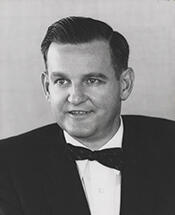
Here you will find contact information for Representative David McKee Hall, including email address, phone number, and mailing address.
| Name | David McKee Hall |
| Position | Representative |
| State | North Carolina |
| District | 12 |
| Party | Democratic |
| Status | Former Representative |
| Term Start | January 7, 1959 |
| Term End | January 3, 1961 |
| Terms Served | 1 |
| Born | May 16, 1918 |
| Gender | Male |
| Bioguide ID | H000048 |
About Representative David McKee Hall
David McKee Hall (May 16, 1918 – January 29, 1960) was a Democratic member of the United States House of Representatives from North Carolina who served one term in Congress from 1959 until his death in 1960. He was born in Sylva, Jackson County, North Carolina, where he spent much of his life and built a career in law, local government, and state politics before entering national office. Hall came from a family with a strong tradition of public service: his great-aunt, Gertrude Dills McKee, was the first woman to serve in the North Carolina State Senate, and his uncle, Dan K. Moore, later became governor of North Carolina.
Hall attended the public schools of Jackson County, North Carolina, receiving his early education in the local school system that served the rural mountain communities of western North Carolina. After completing his primary and secondary schooling, he pursued legal studies at the University of North Carolina. He first enrolled as a special student and received a certificate of law in 1947, then continued his studies and earned a law degree in 1948. This legal training prepared him for a career that combined private practice with extensive involvement in civic and governmental affairs.
Admitted to the bar in 1948, Hall commenced the practice of law in his hometown of Sylva. He quickly became an important legal figure in the region, serving as attorney for the towns of Sylva, Dillsboro, and Webster, as well as for Jackson County itself. His work as a municipal and county attorney placed him at the center of local governance and public administration during a period of postwar growth and modernization in western North Carolina. In 1952 he was appointed to the Twentieth Judicial District Committee, a position that further integrated him into the legal and political networks of the state’s judiciary and Democratic Party organization.
In addition to his legal practice, Hall played a prominent role in local economic development. He organized the Jackson County Savings & Loan Association and served as its secretary, helping to expand access to credit and home financing in the area. In 1953 he organized Jackson County Industries, Inc., and served as its president, working to promote industrial and commercial growth in a traditionally agricultural and mountainous region. These efforts reflected his broader interest in improving economic opportunities and infrastructure for his constituents at the county and regional levels.
Hall’s growing reputation led to his election to the North Carolina Senate, where he served in the 1955 session. As a state senator, he participated in legislative deliberations during a time when North Carolina was grappling with issues of education, infrastructure, and the early stages of the civil rights era. Concurrently, he was appointed a member of the North Carolina Board of Water Commissioners, serving from 1955 to 1958. In that capacity he was involved in the oversight and development of the state’s water resources, a critical concern for both public health and economic development in North Carolina’s rapidly changing mid‑twentieth‑century landscape.
Building on his experience in local and state government, Hall was elected as a Democrat to the Eighty-sixth United States Congress. He took his seat in the U.S. House of Representatives on January 3, 1959, representing a North Carolina district during a significant period in American history marked by the Cold War, the Eisenhower administration’s final years, and the intensifying national debate over civil rights and social policy. During his single term in office, he participated in the legislative process and represented the interests of his constituents in western North Carolina, contributing to the work of the House as the nation approached the 1960s.
Hall’s service in Congress was cut short by his untimely death. He died in Sylva, North Carolina, on January 29, 1960, while still in office as a member of the Eighty-sixth Congress. His tenure in the House thus extended from January 3, 1959, until his death, encompassing just over one year of congressional service. He was interred in Webster Methodist Church Cemetery in Webster, North Carolina, near the communities where he had been born, practiced law, and devoted his career to public service.