Representative David William Hopkins
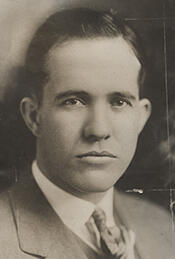
Here you will find contact information for Representative David William Hopkins, including email address, phone number, and mailing address.
| Name | David William Hopkins |
| Position | Representative |
| State | Missouri |
| District | 4 |
| Party | Republican |
| Status | Former Representative |
| Term Start | December 5, 1927 |
| Term End | March 3, 1933 |
| Terms Served | 3 |
| Born | October 31, 1897 |
| Gender | Male |
| Bioguide ID | H000772 |
About Representative David William Hopkins
David William Hopkins (October 31, 1897 – October 14, 1968) was a Republican U.S. Representative from Missouri who served in the United States House of Representatives from 1927 to 1933. He was born in Troy, Doniphan County, Kansas, and in 1899 moved with his parents to Saint Joseph, Buchanan County, Missouri, a community that would remain the center of his personal and professional life. Growing up in St. Joseph at the turn of the twentieth century, he came of age in a period of rapid educational expansion and civic development that helped shape his later career in public service and school administration.
Hopkins pursued his early education in the public schools before attending Graceland Academy in Lamoni, Iowa, from which he graduated in 1916. He continued his studies at the University of Iowa in Iowa City, receiving a degree in 1920. While at the University of Iowa he was a member of the Sigma Pi fraternity, an affiliation that reflected his engagement in campus life and broader social networks of the era. Seeking further professional preparation, particularly in the field of education, he went on to graduate from the University of Missouri in Columbia in 1926, positioning himself for a career that combined teaching, administration, and ultimately elective office.
By the early 1920s Hopkins had embarked on a career in education in St. Joseph. From 1922 until his election to Congress he taught in the high schools of St. Joseph, gaining firsthand experience with the city’s public school system and the needs of its students and families. His abilities as an educator and administrator were recognized when he was appointed superintendent of schools of St. Joseph in 1928, a position he held through 1929. This role placed him at the center of local educational policy at a time when communities were grappling with modernization, school consolidation, and changing curricular standards.
Hopkins entered national politics as a member of the Republican Party and was elected to the United States House of Representatives from Missouri, beginning his service in 1927. He served three consecutive terms in Congress, remaining in office until 1933. His tenure coincided with a significant period in American history, spanning the late 1920s economic expansion and the onset of the Great Depression following the stock market crash of 1929. As a member of the House of Representatives, he participated in the legislative process during these turbulent years and represented the interests of his Missouri constituents in debates over economic policy, relief measures, and federal responses to the deepening national crisis. Throughout his service, he contributed to the work of the Republican majority and then minority as political power in Washington shifted in the early 1930s.
In the 1932 elections, held amid widespread economic distress and a national political realignment, Hopkins was defeated in his bid for reelection. His congressional service concluded on March 3, 1933, at the end of his third term. Following his departure from Congress, he returned to private life in St. Joseph and entered the insurance business, working as an insurance broker. This transition reflected a common path for former members of Congress in the period, combining business pursuits with continued local civic engagement.
Even after leaving national office, Hopkins remained deeply involved in education in St. Joseph. In 1937 he joined the St. Joseph Board of Education, on which he served for three decades, from 1937 to 1967. In that capacity he helped oversee the governance and development of the city’s public schools through years marked by World War II, postwar growth, and the early phases of school desegregation and modernization. His long tenure on the board underscored his enduring commitment to public education and local affairs, extending the influence he had first established as a teacher and superintendent.
David William Hopkins died on October 14, 1968. His life and career reflected a sustained engagement with both local and national public service, encompassing roles as educator, school administrator, insurance broker, and three-term Republican Representative from Missouri during one of the most consequential eras in twentieth-century American history.