Representative David W. Jolly
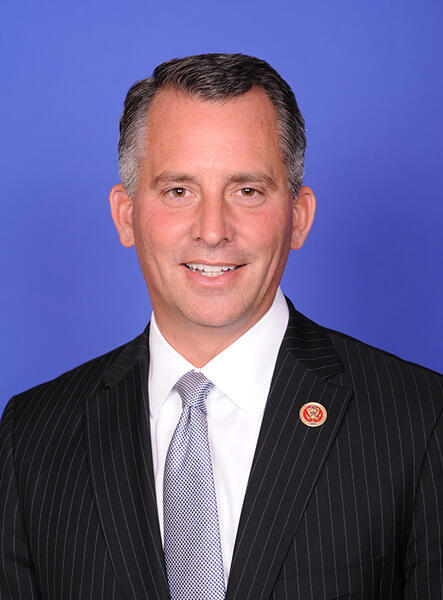
Here you will find contact information for Representative David W. Jolly, including email address, phone number, and mailing address.
| Name | David W. Jolly |
| Position | Representative |
| State | Florida |
| District | 13 |
| Party | Republican |
| Status | Former Representative |
| Term Start | March 11, 2014 |
| Term End | January 3, 2017 |
| Terms Served | 2 |
| Born | October 31, 1972 |
| Gender | Male |
| Bioguide ID | J000296 |
About Representative David W. Jolly
David Wilson Jolly (born October 31, 1972) is an American attorney, politician, former lobbyist, and media commentator who served as the U.S. representative for Florida’s 13th congressional district from 2014 to 2017 as a member of the Republican Party. A native of Florida’s Gulf Coast region, he built his early professional life around public service and law, eventually emerging as a key political figure in the St. Petersburg–Pinellas County area. His tenure in Congress coincided with a period of intense national political polarization, and in later years he became widely known as a prominent Republican critic of President Donald Trump and an independent-minded political pundit. In September 2018, Jolly left the Republican Party, and in April 2025 he switched his party registration to run in the 2026 Florida gubernatorial race as a Democrat.
Jolly’s early life and education were closely tied to Florida, where he came of age in the communities he would later represent. He pursued higher education with the intention of entering the legal profession and public affairs, ultimately earning his law degree and being admitted to the bar. Trained as an attorney, he developed expertise in legislative and regulatory matters, which would shape his subsequent work as both a congressional aide and a lobbyist. His formative professional years were spent learning the mechanics of federal policymaking, constituent service, and the intersection of law and politics in Washington, D.C.
Before his election to Congress, Jolly worked extensively in and around Capitol Hill, including service as a congressional staffer and later as a lobbyist. These roles gave him detailed familiarity with the legislative process and the priorities of Florida’s 13th district, a St. Petersburg-based seat long held by Republicans. His work as a lobbyist and attorney centered on federal policy and advocacy, positioning him as a well-connected figure within Republican political circles and preparing him for elective office when a vacancy arose in his home district.
Jolly entered elective politics at the national level following the death of longtime Representative C. W. Bill Young, whose passing triggered a special election in Florida’s 13th congressional district. On January 14, 2014, Jolly won the Republican nomination for the special election, prevailing over Mark Bircher and Kathleen Peters with a plurality of 45 percent of the vote. The ensuing general election campaign drew national attention as a potential bellwether for the 2014 midterm elections and quickly became the most expensive congressional race in history to that point, with approximately $11 million spent, $9 million of it by outside groups. Jolly faced Democratic nominee Alex Sink and Libertarian candidate Lucas Overby in a contest marked by heavy negative advertising and friction between his campaign and the National Republican Congressional Committee; party strategists criticized his campaign’s effectiveness, while Jolly publicly objected to the tone of some of the NRCC’s attack ads. Voters in the district expressed broad dissatisfaction with the volume and negativity of the advertising on both sides.
After trailing in some early tallies, Jolly won the special election on March 11, 2014, with 48.4 percent of the vote and was sworn into office on March 13, 2014, to complete the remainder of Young’s term. As a member of the House of Representatives, he participated in the democratic process and represented the interests of his constituents in Florida’s 13th district during a significant period in American political life. He contributed to the legislative process over what amounted to two terms in office, focusing on issues of particular importance to his coastal district, including veterans’ affairs, federal spending, and matters affecting the Tampa Bay region. His service in Congress took place amid broader national debates over health care, federal budget priorities, and the direction of the Republican Party.
In November 2014, Jolly sought a full term in his own right. He was unopposed in the Republican primary, and no Democrat filed to run against him in the general election. His sole challenger was Lucas Overby, the Libertarian nominee who had also run in the special election earlier that year. In a significantly less contentious race than the special election, Jolly defeated Overby decisively, winning 75 percent of the vote and securing a full two-year term in the 114th Congress. This victory continued the Republican hold on the St. Petersburg-based seat, which had been in GOP hands since William Cramer first captured it in 1954 and handed it off to Young in 1970.
On July 20, 2015, Jolly announced that he would give up his House seat to run for the United States Senate in 2016, seeking the seat being vacated by Senator Marco Rubio, who at that time was not running for reelection due to his presidential campaign. As of August 2015, Jolly appeared poised to face several prominent opponents in the August 30, 2016 Republican primary, including U.S. Representative Ron DeSantis and Florida Lieutenant Governor Carlos López-Cantera. However, the dynamics of the race changed when Rubio reversed his decision and opted to seek reelection to the Senate. On June 17, 2016, citing “unfinished business” in the House, Jolly withdrew from the Senate race and instead ran for reelection to his congressional seat.
Jolly’s bid for a second full term in the House in 2016 unfolded under significantly altered political conditions. A court-ordered redrawing of Florida’s congressional map made the 13th district substantially more Democratic. The new boundaries absorbed a heavily Democratic portion of southern Pinellas County, including almost all of St. Petersburg; previously, some of the more Democratic areas of St. Petersburg had been part of the Tampa-based 14th district. In the general election, Jolly faced former Florida governor and St. Petersburg resident Charlie Crist, himself a former Republican who had become an independent and then a Democrat. In the closely watched contest, Jolly lost to Crist by a margin of 51.9 percent to 48.1 percent. His defeat ended the Republican Party’s 62-year hold on the district, which had begun with Cramer’s victory in 1954 and continued through Young’s long tenure and Jolly’s own service.
After leaving Congress in January 2017, Jolly transitioned into a role as a political commentator and public critic of the direction of the Republican Party, particularly under President Donald Trump. Drawing on his experience as an attorney, former lobbyist, and former member of Congress, he became a frequent presence in national media, offering analysis of legislative affairs, party politics, and governance. Over time he emerged as a prominent Republican critic of Trump, distancing himself from the party’s leadership and policy positions. In September 2018, Jolly formally left the Republican Party, underscoring his break with its contemporary direction. Continuing his engagement in public life, he later reoriented his partisan affiliation once more; in April 2025, he switched his party registration to run in the 2026 Florida gubernatorial race as a Democrat, signaling a new phase in his political career and an effort to shape state-level policy and governance in his home state.