Representative David Loebsack
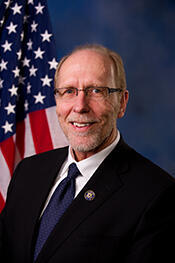
Here you will find contact information for Representative David Loebsack, including email address, phone number, and mailing address.
| Name | David Loebsack |
| Position | Representative |
| State | Iowa |
| District | 2 |
| Party | Democratic |
| Status | Former Representative |
| Term Start | January 4, 2007 |
| Term End | January 3, 2021 |
| Terms Served | 7 |
| Born | December 23, 1952 |
| Gender | Male |
| Bioguide ID | L000565 |
About Representative David Loebsack
David Wayne Loebsack (born December 23, 1952) is an American politician and academic who represented Iowa’s 2nd congressional district in the U.S. House of Representatives from January 3, 2007, to January 3, 2021. A member of the Democratic Party, he served seven consecutive terms in Congress and contributed to the legislative process during a significant period in recent American history. In addition to his political career, he is an emeritus professor of political science at Cornell College in Mount Vernon, Iowa, where he began teaching in 1982.
Loebsack was born in 1952 and grew up in modest circumstances in the Midwest, experiences that later informed his focus on education, working families, and social policy. Before entering public office, he established himself as a scholar and educator. He joined the faculty of Cornell College, a private liberal arts college in eastern Iowa, where he taught political science for decades. His academic work and classroom experience helped shape his understanding of American government, public policy, and international affairs, and provided a foundation for his later legislative interests, particularly in education and national security.
Loebsack’s professional career prior to Congress was centered on higher education. At Cornell College, where he began teaching in 1982, he rose to become a respected member of the faculty and later an emeritus professor of political science. His long tenure at the institution coincided with his growing engagement in public affairs and Democratic Party politics in Iowa. Through his academic work, he developed expertise in political institutions and public policy that he would later apply in his congressional service, especially on committees dealing with armed services and education.
Loebsack entered electoral politics in 2006, when he ran for the U.S. House of Representatives from Iowa’s 2nd congressional district. Initially, he failed to gather the required number of signatures to appear on the Democratic primary ballot, which led to a special nominating convention of 2nd District Democrats. With no candidate qualifying for the ballot, the convention selected him as the party’s nominee. In the general election, he narrowly defeated 15-term Republican incumbent Jim Leach in one of the most notable upsets of the 2006 election cycle. The 2nd District had been trending Democratic for some time—a Republican presidential candidate had not carried it since 1984—and was widely expected eventually to elect a Democrat after Leach’s retirement. Nonetheless, Leach was considered personally popular and politically moderate, and not especially vulnerable. Loebsack’s victory was aided by a strong performance in Johnson County, home to Iowa City, where he ran up an 8,395-vote margin.
Taking office on January 3, 2007, Loebsack served seven terms, remaining in Congress until January 3, 2021. During his tenure, he represented the interests of his eastern Iowa constituents through periods of economic upheaval, war, and shifting national politics. He was assigned to the House Committee on Armed Services, where he served on the Subcommittee on Military Personnel and the Subcommittee on Readiness, reflecting his interest in national defense, military readiness, and the welfare of service members and their families. He also served on the Committee on Education and the Workforce, including the Subcommittee on Higher Education and Workforce Training and the Subcommittee on Health, Employment, Labor, and Pensions, aligning with his background as an educator and his focus on access to education, workforce development, and labor issues.
Throughout his congressional career, Loebsack was active in a variety of caucuses that reflected his policy priorities and ideological orientation. He was a member of the Congressional Progressive Caucus, emphasizing a generally liberal approach to economic and social policy. He also participated in the Congressional Arts Caucus, the Afterschool Caucuses, and the Congressional Cement Caucus, engaging on issues ranging from support for the arts and after-school programs to infrastructure and industry concerns important to Iowa and the broader region. His voting record and public statements often highlighted his concern for working families, education, and social equity. In September 2017, for example, he told voters in Ottumwa that he supported protections for Dreamers, stating, “We’ve got to do everything we can to protect them.” In November 2017, he was the only member of the Iowa House delegation to vote against the Republican tax reform bill, arguing that the “tax plan that was rushed through the House of Representatives will hurt everyday Iowans.”
Loebsack’s electoral history in the 2nd District reflected both the competitiveness of Iowa politics and his ability to maintain support in a swing region. He was easily reelected in 2008, winning 57 percent of the vote against Republican challenger Mariannette Miller-Meeks, a physician from Ottumwa and former president of the Iowa Medical Society. In 2010, amid a more challenging national environment for Democrats, he again faced Miller-Meeks and won reelection with 51 percent of the vote, once more relying on a strong showing in Johnson County, where he expanded his margin to 13,900 votes. That year, Republican Terry Branstad carried the district in his successful campaign to return as governor, and Senator Chuck Grassley carried every county in the district except Johnson County, underscoring the competitiveness of Loebsack’s seat.
Following redistricting after the 2010 Census, Loebsack’s longtime home in Mount Vernon was shifted into Iowa’s 1st congressional district, then represented by Democrat Bruce Braley. Loebsack chose to move to Iowa City, within the reconfigured 2nd District, in order to continue representing that constituency. The redrawn district, which regained Davenport as a major population center, was somewhat less Democratic than its predecessor. In the 2012 election under the new lines, Loebsack defeated Republican John Archer with 55.4 percent of the vote to Archer’s 42.5 percent, while independent candidate Alan Aversa received 2.2 percent. Braley simultaneously won reelection in the 1st District with 56.9 percent of the vote.
Loebsack again faced Miller-Meeks in 2014 and prevailed with 52.5 percent of the vote to her 47.5 percent. That year, the 1st District flipped to the Republicans, leaving Loebsack as the only Democrat in Iowa’s U.S. House delegation. In 2016, amid a strong Republican showing statewide that saw Donald Trump carry Iowa by a comfortable margin and Senator Grassley win reelection by a landslide, Loebsack was endorsed by the Daily Iowan, which noted that while he was “not perfect,” he had shown a “willingness to work with the other side” and had “maintained some degree of competence in office.” He defeated Republican surgeon Christopher Peters, 54 percent to 46 percent, and again emerged as the sole Democrat Iowa sent to the House that cycle. In a 2018 rematch with Peters, Loebsack was reelected with 54.8 percent of the vote. That year, Democrats also captured Iowa’s 1st and 3rd congressional districts, so he was no longer the only Democratic member of the state’s House delegation.
On April 12, 2019, Loebsack announced that he would not seek reelection in 2020, bringing his congressional career to a close at the end of his seventh term on January 3, 2021. His departure marked the end of fourteen years of service in the House of Representatives, during which he participated in the democratic process, represented the interests of his constituents in Iowa’s 2nd District, and helped shape legislation on defense, education, labor, and tax policy. After leaving Congress, he retained his association with Cornell College as an emeritus professor of political science, reflecting the enduring connection between his academic and public service careers.