Representative Dave McCurdy
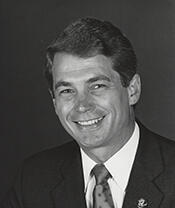
Here you will find contact information for Representative Dave McCurdy, including email address, phone number, and mailing address.
| Name | Dave McCurdy |
| Position | Representative |
| State | Oklahoma |
| District | 4 |
| Party | Democratic |
| Status | Former Representative |
| Term Start | January 5, 1981 |
| Term End | January 3, 1995 |
| Terms Served | 7 |
| Born | March 30, 1950 |
| Gender | Male |
| Bioguide ID | M000398 |
About Representative Dave McCurdy
David Keith McCurdy (born March 30, 1950) is an American lobbyist, lawyer, and former politician who served as the Democratic U.S. Representative from Oklahoma’s 4th congressional district from January 3, 1981, to January 3, 1995. A member of the Democratic Party, he served seven consecutive terms in the United States House of Representatives during a significant period in late twentieth‑century American political history. Described as a moderate or conservative Democrat, he became a prominent figure in centrist Democratic circles and later chaired the Democratic Leadership Council.
McCurdy was born in Canadian, Texas, and grew up in the Southern Plains region. He attended the University of Oklahoma, where he received his undergraduate degree in 1972. He continued at the University of Oklahoma College of Law, earning his Juris Doctor in 1975. As part of his academic training, he studied international economics at the University of Edinburgh in Scotland as a Rotary International Graduate Fellow, gaining early exposure to international affairs and economic policy that would later inform his work in Congress.
After completing law school, McCurdy began his legal and public service career in Oklahoma. He served in the United States Air Force Reserve, attaining the rank of major and serving as a Judge Advocate General (JAG). From 1975 to 1977 he was an Assistant Attorney General for the State of Oklahoma, where he gained experience in state legal affairs and public policy. These early roles, combining legal practice and military service, helped establish his credentials in national security and governmental law, areas that would become central to his later legislative work.
McCurdy entered electoral politics in 1980, running for the open seat in Oklahoma’s 4th congressional district following the retirement of sixteen‑term Democratic Representative Tom Steed of Shawnee. In the Democratic primary he trailed Oklahoma House Majority Leader James B. Townsend, also of Shawnee, by 40 percent to 34 percent, but he went on to win the runoff with 51.2 percent of the vote. His campaign featured commercials emphasizing prayer in public life and support for a statue of Jesus Christ in the Wichita Mountains near Lawton, themes that resonated with many socially conservative voters in the district. In the 1980 general election he defeated Republican Howard Rutledge by a vote of 74,245 to 71,339, and he was reelected in 1982, again defeating Rutledge, this time by 84,205 to 44,351. McCurdy secured a third term in 1984 by defeating Jerry Smith 109,447 to 60,844, with Libertarian candidate Gordon Mobley receiving about 1 percent of the vote. After winning 81.9 percent of the Democratic primary vote in 1986, he coasted to a fourth term with 94,984 votes (76.1 percent) over Republican Larry Humphreys. He faced no Republican opponent in 1988, won reelection in 1990 with 73.6 percent of the vote, and in 1992 was returned to Congress with 70.7 percent of the final tally.
During his seven terms in the House of Representatives, from 1981 to 1995, McCurdy specialized in national security, defense, and intelligence issues and rose to key leadership positions in those areas. He served as chair of the House Permanent Select Committee on Intelligence, where he played a central role in overseeing U.S. intelligence activities during the late Cold War and post–Cold War transition. He also chaired the Military Installations and Facilities Subcommittee of the House Armed Services Committee and the Transportation, Aviation and Materials Subcommittee of the House Science, Space, and Technology Committee. McCurdy founded and chaired the Mainstreet Forum, a group of moderate and conservative House Democrats that, at its height in 1994, counted seventy‑two members and sought to shape a centrist legislative agenda within the party. Among his most significant legislative contributions were his roles in the 1982 Nunn–McCurdy Amendment, which required congressional notification of Department of Defense cost overruns of 15 percent or more; the 1985 Goldwater–Nichols Department of Defense Reorganization Act, which restructured the U.S. military command system; the 1988 National Superconductivity Competitiveness Act, aimed at bolstering American high‑technology research and competitiveness; and the 1993 national service legislation, which originated in a bill he introduced with Senator Sam Nunn of Georgia and contributed to the creation of national service programs.
Beyond his committee work, McCurdy became a leading figure in efforts to reposition the Democratic Party toward the political center. In the 1990s he served as a national chairman of the Democratic Leadership Council (DLC), a centrist organization that sought to modernize the party’s policy agenda. He was widely regarded as a “rising national star,” and, according to George Stephanopoulos in his memoir “All Too Human,” McCurdy at one point considered a presidential campaign for 1992. He ultimately chose to support fellow DLC member Bill Clinton, delivering a speech seconding Clinton’s nomination at the 1992 Democratic National Convention, where “McCurdy 2000” signs were visible in the crowd. Following Clinton’s election, McCurdy was mentioned as a potential candidate for high‑level national security posts; he was considered for the position of Secretary of Defense, which ultimately went to Les Aspin, and he was offered the role of Director of Central Intelligence, which he declined.
In 1994, when U.S. Senator David L. Boren resigned his seat before the end of his term, McCurdy chose not to seek reelection to the House and instead ran for the U.S. Senate from Oklahoma. Campaigning on themes of military preparedness and family values, he faced fellow Representative Jim Inhofe in the general election. Inhofe’s campaign prominently featured clips of McCurdy’s 1992 convention speech seconding Clinton’s nomination, tying him closely to the national Democratic administration. McCurdy lost the election, receiving about 39 percent of the vote and failing to carry his own congressional district. After leaving office on January 3, 1995, he donated his congressional papers and records to the Carl Albert Center for Congressional Studies at the University of Oklahoma, preserving documentation of his legislative career.
Following his departure from Congress, McCurdy embarked on a career as a lobbyist and trade association executive while continuing to engage in defense and budget policy. He became chairman and chief executive officer of the McCurdy Group LLC and, in 1998, was elected president of the Electronic Industries Alliance (EIA), a national trade organization representing the electronics industry. His selection drew attention on Capitol Hill when House Majority Leader Tom DeLay, who had pressed the EIA to hire a Republican, held up legislation beneficial to the organization and threatened it with loss of access; DeLay was later rebuked by the House Ethics Committee for his actions. McCurdy served as chairman of the Center for Strategic and Budgetary Assessments and sat on the Defense Policy Board under Presidents George W. Bush and Barack Obama, advising on long‑term defense planning and strategy.
McCurdy continued to lead major industry groups in the 2000s and 2010s. On February 12, 2007, he became president of the Alliance of Automobile Manufacturers (AAM), where under his leadership the organization supported President Barack Obama’s National Program to reduce carbon emissions and increase fuel economy standards, as well as a federal ban on texting while driving. In February 2011 he was appointed president and chief executive officer of the American Gas Association, representing natural gas utilities and related companies. In August 2011 he joined the Board of Directors of LMI, a not‑for‑profit studies and analysis consulting firm headquartered in McLean, Virginia, and he has also served on the board of directors of the Committee for a Responsible Federal Budget, reflecting his continued involvement in fiscal and public policy issues.
McCurdy lives in McLean, Virginia, with his wife, Dr. Pam McCurdy. The couple has three children.