Representative David B. McKinley
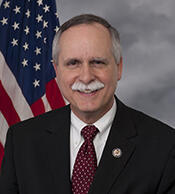
Here you will find contact information for Representative David B. McKinley, including email address, phone number, and mailing address.
| Name | David B. McKinley |
| Position | Representative |
| State | West Virginia |
| District | 1 |
| Party | Republican |
| Status | Former Representative |
| Term Start | January 5, 2011 |
| Term End | January 3, 2023 |
| Terms Served | 6 |
| Born | March 28, 1947 |
| Gender | Male |
| Bioguide ID | M001180 |
About Representative David B. McKinley
David Bennett McKinley (born March 28, 1947) is an American businessman and politician who served as a Representative from West Virginia in the United States Congress from 2011 to 2023. A member of the Republican Party, he represented West Virginia’s 1st congressional district for six consecutive terms and was generally considered a moderate Republican. Over the course of his career, he also served in the West Virginia House of Delegates from 1980 to 1994 and chaired the West Virginia Republican Party from 1990 to 1994, playing a prominent role in both state and national politics.
McKinley was born in Wheeling, Ohio County, West Virginia, where he was raised in a large family in the state’s industrial Northern Panhandle. He attended local schools in Wheeling before enrolling at Purdue University in West Lafayette, Indiana. In 1970, he earned a Bachelor of Science degree in engineering from Purdue, training that would shape his early professional life and inform his later legislative interests in infrastructure, energy, and economic development.
Following his graduation, McKinley worked as a civil engineer for 12 years before founding his own architectural and engineering firm, McKinley and Associates, based in Wheeling. Under his leadership, the firm grew to employ roughly 40 people and became involved in approximately $1 billion in construction projects over a period of about three decades. McKinley and Associates undertook a variety of commercial, educational, and civic projects, and McKinley became known for his interest in historic preservation. Among the notable efforts associated with his work was the renovation of structures of historic significance in West Virginia communities, including the restoration of the Capitol Theatre in Wheeling, a landmark cultural venue in the region.
McKinley entered elective office in 1980, winning a seat in the West Virginia House of Delegates. He served in the House of Delegates for 14 years, from 1980 to 1994, representing his home region and focusing on issues related to economic development, infrastructure, and business regulation. During this period, he emerged as a key figure in the state Republican Party. From 1990 to 1994, he chaired the West Virginia Republican Party, using the position to sharpen partisan contrasts in a state long dominated by Democrats. As party chair, he was notably critical of West Virginia’s two Democratic U.S. senators: in 1991 he publicly criticized Senator Jay Rockefeller for exploring a potential presidential run against President George H. W. Bush, and in 1994 he criticized Senator Robert Byrd for opposing a proposed Balanced Budget Amendment to the U.S. Constitution. In 1996, McKinley sought higher office, running in the Republican primary for governor against astronaut Jon McBride and former governor Cecil Underwood. He finished third in that primary, and Underwood went on to win the general election.
After continuing his business and civic activities, McKinley returned to electoral politics at the federal level in 2010. He ran for the U.S. House of Representatives in West Virginia’s 1st congressional district, a seat that had seen very few occupants since 1953. That year, long-serving Democratic incumbent Alan Mollohan was defeated in the Democratic primary by State Senator Mike Oliverio, a more conservative Democrat. McKinley entered a competitive six-candidate Republican primary and won with 35 percent of the vote, ahead of Mac Warner, who received 27 percent, and State Senator Sarah Minear, who received 21 percent. During the general election campaign, McKinley received endorsements from the Parkersburg News, National Right to Life, the West Virginians for Life PAC, the National Federation of Independent Business, the House Republicans Fund, the West Virginia Farm Bureau, and the International Brotherhood of Electrical Workers. In November 2010, he narrowly defeated Oliverio by a margin of 50.4 percent to 49.6 percent, a difference of just 1,440 votes, becoming only the fourth person to represent the district since 1953.
David B. McKinley took office in the U.S. House of Representatives on January 3, 2011, and served continuously until January 3, 2023. His service in Congress occurred during a significant period in American history, encompassing debates over federal spending, energy policy, infrastructure, and partisan polarization. As a member of the House of Representatives, McKinley participated in the democratic process and represented the interests of his constituents in northern West Virginia. He quickly established a reputation as a pragmatic and often bipartisan legislator. In April 2011, he was one of only four Republican members of Congress to vote against the Republican budget proposal for fiscal year 2012, signaling his willingness to break with party leadership. During the 114th Congress, the Bipartisan Index created by The Lugar Center and the McCourt School of Public Policy ranked him the 22nd most bipartisan member of the House and the most bipartisan House member from West Virginia, based on how frequently his bills attracted co-sponsors from the opposite party and how often he co-sponsored legislation introduced by Democrats.
Throughout his six terms, McKinley focused heavily on energy, coal, and industrial employment, reflecting the economic base of his district. He was an active supporter of the Coal Miner Employment and Domestic Energy Infrastructure Protection Act, also known as the Stop the War on Coal Act, which aimed to protect American mining jobs and limit regulations perceived as harmful to the coal industry. McKinley argued that “the constant attacks on coal have to stop” and maintained that “our job creators need a consistent and predictable regulatory program that will protect jobs we have and create new one.” He was one of 233 representatives to vote in favor of the act when it passed in September 2012. At the same time, he frequently expressed concern about what he described as the United States’ “unchecked spending,” warning that excessive federal debt left the country “beholden to countries like China and Japan who own a significant amount of our debt.” On trade policy, he was notably skeptical of major free trade agreements; in October 2011, he was the only Republican freshman to vote against all three trade deals then before Congress—those with Panama, Colombia, and South Korea—arguing that earlier agreements such as NAFTA and CAFTA had “shipped our jobs overseas” and vowing not to support new trade pacts unless he believed they were fair to his constituents.
McKinley’s electoral record in Congress was consistently strong through the 2010s. In 2012, running in a newly redrawn 1st district, he defeated Democratic nominee Sue Thorn, a former community organizer, by a margin of 62 percent to 38 percent, winning every county in the district. In 2013, he announced that he would not seek the open U.S. Senate seat being vacated by Senator Jay Rockefeller in 2014, choosing instead to focus on his House responsibilities. That same year and in the 2014 election cycle, he again secured reelection, defeating Democratic challenger Glen Gainer III, the West Virginia State Auditor, by 64 percent to 36 percent. In 2016, he won reelection against former State Delegate Mike Manypenny, 69 percent to 31 percent. In 2018, he prevailed over West Virginia University law professor Kendra Fershee, 64.6 percent to 35.4 percent, and in 2020 he defeated Democratic nominee Natalie Cline, a computational linguist, by a margin of 69 percent to 31 percent. During these years, he continued to cultivate a profile as a moderate Republican, occasionally breaking with his party on high-profile votes. On November 5, 2021, he was one of 13 House Republicans to vote with a majority of Democrats in favor of the Infrastructure Investment and Jobs Act, a major bipartisan infrastructure package. On July 28, 2022, he was one of 24 House Republicans to vote with Democrats in support of the CHIPS and Science Act, which aimed to bolster domestic semiconductor manufacturing and scientific research.
McKinley’s final term was shaped by the redistricting that followed the 2020 United States Census. Because West Virginia’s population had declined relative to other states, it lost one of its three U.S. House seats. The state legislature divided West Virginia into two districts, northern and southern, ending the long-standing practice of designating the 1st district as the state’s northernmost district. The Charleston-based 2nd district was eliminated, and its easternmost counties were merged with most of the old 1st district to form a new 2nd district. This configuration placed McKinley and the incumbent from the old 2nd district, fellow Republican Alex Mooney, in the same new district. Both announced their intention to run in the 2022 Republican primary. The race drew nationwide attention, in part because the new district was geographically and demographically more aligned with McKinley’s old constituency, but former President Donald Trump endorsed Mooney. McKinley, who had been ranked among the most bipartisan members of Congress and had supported bipartisan measures such as the infrastructure and CHIPS bills, was criticized by some conservatives for his moderate positions. On May 10, 2022, Mooney defeated McKinley in the Republican primary, with McKinley receiving 35.6 percent of the vote. His term concluded on January 3, 2023, marking the end of twelve years of service in the U.S. House of Representatives.
Following his departure from Congress, McKinley returned to private life with a long record as both a businessman and public servant. Over four decades in public affairs—from his early years in the West Virginia House of Delegates and his tenure as state party chair through six terms in the U.S. House—he participated in the legislative process at the state and federal levels and represented the interests of his constituents during a period of significant political, economic, and social change in West Virginia and the nation.