Senator David Lawrence Morril
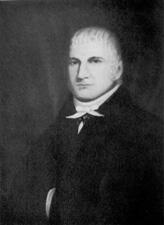
Here you will find contact information for Senator David Lawrence Morril, including email address, phone number, and mailing address.
| Name | David Lawrence Morril |
| Position | Senator |
| State | New Hampshire |
| Party | Republican |
| Status | Former Representative |
| Term Start | December 1, 1817 |
| Term End | March 3, 1823 |
| Terms Served | 1 |
| Born | June 10, 1772 |
| Gender | Male |
| Bioguide ID | M000966 |
About Senator David Lawrence Morril
David Lawrence Morril (June 10, 1772 – January 28, 1849) was an American politician, attorney, physician, and minister who became a prominent public figure in New Hampshire in the early nineteenth century. A member of the Republican Party, he served as a United States Senator from New Hampshire from 1817 to 1823 and later as the tenth governor of New Hampshire from 1824 until 1827. His career in public life unfolded during a significant period in American history, as the young republic was consolidating its institutions and political parties were evolving in the aftermath of the early Federalist era.
Morril was born on June 10, 1772, in Epping, in the Province of New Hampshire, during the final years of the colonial period. Little is recorded in the surviving summaries about his immediate family background, but his early life in New Hampshire placed him within a region deeply engaged in the political and religious currents of the Revolutionary and post-Revolutionary eras. Growing up in this environment likely influenced his later decision to pursue both religious and civic vocations, combining ministry, medicine, law, and politics in a multifaceted career.
In his youth and early adulthood, Morril undertook studies that prepared him for several professions. He trained as a physician and also studied theology, eventually becoming a minister. His intellectual formation reflected the broad, learned culture of New England clergy of the period, who were often conversant in law, medicine, and public affairs as well as religious doctrine. In addition to his ministerial and medical work, he studied law and was admitted to practice as an attorney, adding legal expertise to his professional portfolio and positioning himself for later legislative and executive responsibilities.
Before his election to the United States Senate, Morril built his reputation in New Hampshire through his work as a minister, physician, and attorney, and through participation in state and local affairs. These roles brought him into close contact with the concerns of his fellow citizens and helped establish him as a trusted public figure. His combination of pastoral experience, medical practice, and legal training gave him a distinctive perspective on the social and political issues facing the state in the early nineteenth century.
Morril entered national politics as a member of the Republican Party, the dominant political organization of the era that had emerged in opposition to the earlier Federalist Party. He was elected to the United States Senate from New Hampshire and served one term, from 1817 to 1823. During these six years in the Senate, he contributed to the legislative process at a time when the nation was addressing questions of economic development, territorial expansion, and the balance of power between the federal government and the states. As a senator, he participated in the democratic process and represented the interests of his New Hampshire constituents in the upper chamber of Congress, helping to shape federal policy in the period sometimes described as the “Era of Good Feelings.”
After completing his service in the Senate in 1823, Morril returned to New Hampshire and soon moved into state executive leadership. He was elected the tenth governor of New Hampshire and served from 1824 until 1827. As governor, he oversaw the administration of state government during a time of gradual economic and political change in New England, when questions of internal improvements, education, and the evolving party system were increasingly prominent. His tenure in the governor’s office extended his long-standing commitment to public service and allowed him to apply his legislative experience and professional training to the management of state affairs.
In his later years, following the conclusion of his gubernatorial service, Morril withdrew from the front rank of public life but remained a respected figure in New Hampshire. He lived through the transition from the early Republican era into the age of Jacksonian democracy, having witnessed and participated in the formative decades of the United States’ political development. David Lawrence Morril died on January 28, 1849, closing a life that had encompassed service as a minister, physician, attorney, United States senator, and governor, and leaving a legacy of multifaceted public service to his state and nation.