Representative David R. Obey
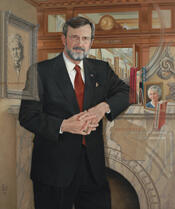
Here you will find contact information for Representative David R. Obey, including email address, phone number, and mailing address.
| Name | David R. Obey |
| Position | Representative |
| State | Wisconsin |
| District | 7 |
| Party | Democratic |
| Status | Former Representative |
| Term Start | January 3, 1969 |
| Term End | January 3, 2011 |
| Terms Served | 21 |
| Born | October 3, 1938 |
| Gender | Male |
| Bioguide ID | O000007 |
About Representative David R. Obey
David Ross Obey (OH-bee; born October 3, 1938) is an American lobbyist and former politician who served as a member of the United States House of Representatives from Wisconsin’s 7th congressional district from April 1, 1969, to January 3, 2011. A Democrat, he represented a largely northwestern Wisconsin district that included Wausau, Superior, and much of the surrounding region, and he served 21 consecutive terms in Congress. Over the course of his tenure he became one of the most influential members of the House, chairing the powerful Committee on Appropriations from 1994 to 1995 and again from 2007 to 2011. Until he was surpassed by Jim Sensenbrenner in 2020, Obey was the longest-serving member ever of the United States House of Representatives from the state of Wisconsin, and he remains the longest-serving Democratic Representative from Wisconsin.
Obey was born in Okmulgee, Oklahoma, the son of Mary Jane (née Chellis) and Orville John Obey. In 1941, when he was still a small child, his family moved back to his parents’ native Wisconsin, and he was raised in Wausau, where he has made his home for most of his life. He graduated from Wausau East High School and initially attended the University of Wisconsin’s Wausau branch campus in order to save money. He later transferred to the University of Wisconsin–Madison, where he earned a Bachelor of Arts degree in political science. He pursued graduate work in Soviet politics at the University of Wisconsin under a three-year National Defense Education Act scholarship, reflecting an early interest in foreign affairs and Cold War issues. While still a graduate student, he married Joan Lepinski; the couple had two children and remained married until her death in 2023.
In his youth, Obey identified as a Republican and even helped deliver campaign materials for Senator Joseph McCarthy during McCarthy’s electoral campaigns. His political outlook shifted dramatically after he witnessed one of his teachers being falsely branded a communist by McCarthy supporters. Disillusioned by what he regarded as an abuse of power, he left the Republican Party and gravitated toward the progressive tradition of Robert M. La Follette. During his teenage years in the mid-1950s he became active in Democratic politics, working on the campaigns of prominent Wisconsin Democrats such as Gaylord Nelson, Robert Kastenmeier, and William Proxmire. Before entering elective office himself, Obey worked as a real estate broker, gaining experience in the private sector and local community affairs.
Obey’s formal political career began in the Wisconsin State Assembly, to which he was first elected in 1963. Representing a Wausau-area district, he served in the Assembly until 1969. Within the state legislature he rose quickly in the Democratic caucus, becoming Assistant Majority Leader, a position he held from 1967 until 1969. His work in Madison helped establish his reputation as a committed progressive and an effective legislator, and it positioned him for higher office when a vacancy arose in Wisconsin’s congressional delegation.
In 1969, Obey was elected to the U.S. House of Representatives in a special election to succeed eight-term Republican Representative Melvin R. Laird, who had been appointed Secretary of Defense by President Richard Nixon. At age 30, Obey became the youngest member of Congress upon taking his seat and the first Democrat to represent Wisconsin’s 7th district in the 20th century. He was elected to a full term in 1970 and was subsequently reelected 18 times. His closest race came in 1972, when redistricting merged his district with the neighboring 10th District of 15-term Republican incumbent Alvin O’Konski. Although the new district combined two incumbents, Obey retained about 60 percent of his former territory and won reelection; thereafter he was handily returned to office in most contests. He won reelection by a narrower margin of eight points in 1994, a year in which Republicans captured control of the House in what became known as the Republican Revolution.
During more than four decades in the House, Obey played a central role in shaping federal spending and ethics standards. Early in his congressional career he chaired the commission that drafted the House’s Code of Ethics. Among the reforms he championed was a requirement that members of the House publicly disclose their personal financial dealings so that voters could be aware of potential conflicts of interest. He rose steadily through the ranks of the Appropriations Committee, chairing its Subcommittee on Labor and serving as the committee’s ranking Democrat from 1995 to 2007. He briefly chaired the full Appropriations Committee from 1994 to 1995, and again from 2007 to 2011, when Democrats regained the majority. By the late 2000s he had become the fifth-ranking House Democrat and was widely regarded as one of the chamber’s most liberal members, describing himself as a progressive in the La Follette tradition. In the 1970s he led the Democratic Study Group, a caucus of liberal House Democrats organized to counterbalance the influence of conservative and Southern Democrats within the party.
Obey’s legislative work extended beyond appropriations and ethics. He authored the “Obey Amendment,” which prohibited the export of the Lockheed Martin F-22 Raptor to American allies such as Japan, reflecting his concerns about advanced weapons proliferation. He was also active in education and domestic policy debates. On June 30, 2010, he proposed an amendment to a supplemental war spending bill to allocate $10 billion to prevent anticipated teacher layoffs in school districts nationwide. The amendment, which passed the House on July 1, 2010, would have redirected $500 million from the federal Race to the Top fund and $300 million from programs for charter schools and teacher incentive pay; the White House responded with a veto threat if the bill emerged from the Senate in that form. On March 21, 2010, Obey presided with the same gavel used to pass Medicare in 1965 when the House approved the Patient Protection and Affordable Care Act, underscoring his long-standing involvement in major social legislation. He was also known for his forceful presence on the House floor; in 2005 he intervened when fellow Democrat Harold Ford Jr. approached Republican Representative Jean Schmidt after she had referred to Congressman John Murtha as a coward for advocating withdrawal of U.S. forces from Iraq.
Obey’s tenure in Congress unfolded during a significant period in American history, spanning the Vietnam War, the end of the Cold War, and the post‑9/11 era. He was often critical of what he saw as the trivialization of politics by the mainstream news media. Upon the sudden death of NBC News Washington Bureau Chief Tim Russert on June 13, 2008, he remarked that Russert’s passing was “not just a body blow for NBC News; it is a body blow for the nation and for anyone who cherishes newsmen and women who have remained devoted to reporting hard news in an era increasingly consumed by trivia.” His comments reflected his broader concern with the quality of public discourse and the seriousness of national debate.
By 2010, Obey had amassed a substantial campaign fund—about $1.4 million—and was widely expected to seek another term. However, facing difficult polling numbers in his district, advancing age, the death of his close colleague John Murtha, and growing frustration with the Obama White House, he decided to end his congressional career. On May 5, 2010, he announced that he would not seek reelection, with formal press releases following on May 6. Upon his retirement, his seat was won by Republican Sean Duffy, who defeated Democratic State Senator Julie Lassa in the November 2010 election. Obey left Congress in January 2011, at the conclusion of his 21st term, and was succeeded by Duffy.
After leaving office, Obey entered the private sector as a lobbyist. In June 2011 he joined Gephardt Government Affairs, a Washington, D.C., lobbying firm founded by former House Majority Leader Dick Gephardt. In addition to his lobbying work, Obey has contributed to the public record through writing. He authored “Raising Hell for Justice: The Washington Battles of a Heartland Progressive” (2008, University of Wisconsin Press), a memoir of his political life, and wrote the foreword to “Along Wisconsin’s Ice Age Trail” by Eric Sherman and Andrew Hanson III (2008, University of Wisconsin Press). Throughout his post-congressional years, he has remained identified with the progressive causes and Wisconsin political traditions that shaped his long career in public service.