Senator David H. Pryor
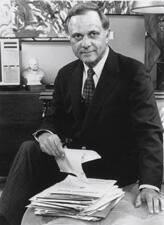
Here you will find contact information for Senator David H. Pryor, including email address, phone number, and mailing address.
| Name | David H. Pryor |
| Position | Senator |
| State | Arkansas |
| Party | Democratic |
| Status | Former Representative |
| Term Start | January 4, 1965 |
| Term End | January 3, 1997 |
| Terms Served | 13 |
| Born | August 29, 1934 |
| Gender | Male |
| Bioguide ID | P000556 |
About Senator David H. Pryor
David Hampton Pryor (August 29, 1934 – April 20, 2024) was an American politician who served Arkansas at the state and federal levels for more than three decades. A member of the Democratic Party, he represented Arkansas’s 4th congressional district in the U.S. House of Representatives from 1966 until 1973 and served as a United States Senator from Arkansas from 1979 until 1997. He was the 39th governor of Arkansas from January 14, 1975, to January 3, 1979, and earlier served in the Arkansas House of Representatives from 1960 to 1966. Over the course of seven terms in Congress, he contributed to the legislative process during a significant period in American history, participating in the democratic process and representing the interests of his constituents. Later in life, he briefly returned to party leadership as acting chairman of the Arkansas Democratic Party from 2008 to 2009, following the assassination of Bill Gwatney.
Pryor was born in Camden, the seat of Ouachita County in southern Arkansas, to William Edgar Pryor and the former Susan Newton Pryor. Both parents had deep roots in the state, and their marriage was described as uniting “two of the pioneer families of Arkansas.” His father moved to Camden from Holly Springs in 1923 and entered the automobile business, eventually becoming sole owner of Edgar Pryor Inc., a prominent Chevrolet dealership in the region by 1933. The Pryor family was active in the civic, religious, and political life of Camden; William E. Pryor served as Ouachita County sheriff from 1939 to 1942. David Pryor was a third-generation resident of Ouachita County and grew up in this environment of local public service and community engagement.
Pryor attended public schools in Camden and went on to higher education at Henderson State Teachers College in Arkadelphia before transferring to the University of Arkansas in Fayetteville, from which he graduated in 1957. Immediately after college, he founded and published a local newspaper, the Ouachita Citizen, which he operated from 1957 to 1960, gaining early experience in journalism and public affairs. He later pursued legal training at the University of Arkansas School of Law, graduating in 1964 and being admitted to the Arkansas bar that same year. On the personal front, in 1957 he married Barbara Jean Lunsford, then a 19‑year‑old freshman at the University of Arkansas. Their marriage would endure throughout his long public career, though the stresses of political life led Barbara Pryor to live away from the family from 1975 to 1977 while he was governor; during that period she took university courses, sought employment, and ultimately returned to the Governor’s Mansion after what was described as a period of rest.
Pryor’s political career began in state government. In 1960 he was elected to the Arkansas House of Representatives, representing Ouachita County in the 63rd Arkansas General Assembly. He was reelected in 1962 and 1964, serving in the legislature until 1966. In that year, a vacancy arose in Arkansas’s 4th congressional district when President Lyndon B. Johnson appointed Representative Oren Harris to a federal judgeship. Pryor ran for the open seat and was elected to the U.S. House of Representatives, taking office in 1966. He was reelected and served in the House until 1973. Choosing not to seek reelection in 1972, he instead challenged longtime U.S. Senator John L. McClellan in the Democratic primary. Pryor lost that race in a runoff by fewer than 20,000 votes, a narrow defeat that nonetheless elevated his statewide profile.
In 1974, Pryor entered the Democratic primary for governor after Governor Dale Bumpers declined to seek a third term in order to run successfully for the U.S. Senate against J. William Fulbright. Pryor narrowly avoided a runoff in the gubernatorial primary, defeating former governor Orval Faubus and Lieutenant Governor Bob C. Riley, and then easily defeated Republican Ken Coon, the Arkansas Republican Party’s executive director, in the general election. He was reelected governor in 1976, winning 66 percent of the vote in the Democratic primary against former University of Arkansas Razorback football star Jim Lindsey and 86 percent of the vote in the general election against a token Republican opponent. As governor from January 14, 1975, to January 3, 1979, Pryor governed during the difficult national recession of 1974–76 and focused on economic development and modernization of state government. He appointed banker and future governor Frank D. White as his economic development director, reflecting his emphasis on attracting investment and managing the state’s economy.
Declining to seek a third gubernatorial term, Pryor turned again to the U.S. Senate in 1978, running for the seat formerly held by Senator McClellan, who had died in 1977. In a competitive Democratic primary, he faced two sitting congressmen, Jim Guy Tucker and Ray Thornton. Pryor advanced to a runoff with Tucker and defeated him by 12 points. In the general election he prevailed easily, winning 76 percent of the vote against Republican and independent opponents, and entered the Senate in January 1979. He was reelected in 1984 despite President Ronald Reagan’s national landslide, defeating central Arkansas Congressman Ed Bethune in a race that drew substantial national Republican financial support for his opponent. In 1990, Pryor faced only a write‑in challenger; no Democrat or Republican filed against him, underscoring his political strength at home. Over the course of his Senate career, which lasted until his retirement in 1997, he served seven terms in Congress in total—three in the House and three in the Senate—during a period marked by the end of the Vietnam War, the Watergate aftermath, the Reagan era, and the close of the Cold War.
In the Senate, Pryor became known for his advocacy on behalf of older Americans and taxpayers. He served as chairman of the Senate Special Committee on Aging, where he focused on issues such as Social Security, Medicare, and protections for the elderly. He also promoted taxpayer rights and government accountability. Within the Democratic caucus, he rose in the party hierarchy, serving as secretary of the Senate Democratic Conference, the third-ranking position in the Senate Democratic leadership. His legislative work and leadership roles reflected a generally moderate, populist approach, emphasizing constituent service and pragmatic solutions over ideological confrontation.
After leaving the Senate in 1997, Pryor remained active in public life, particularly in education, public service, and civic institutions. In 2000 he became director of the Institute of Politics at Harvard University’s John F. Kennedy School of Government in Cambridge, Massachusetts, where he worked with students and emerging political leaders. Returning to Arkansas, he served as the founding dean of the University of Arkansas Clinton School of Public Service in Little Rock from 2004 to 2006, helping to shape a graduate program focused on public service and policy. In 2004, he was named to the five‑member board of directors of the Clinton Foundation, reflecting his long association with former President Bill Clinton and Arkansas Democratic politics. In June 2006, President George W. Bush nominated Pryor to the board of the Corporation for Public Broadcasting; he was confirmed by the Senate in September 2006 for a six‑year term, contributing to oversight of public radio and television. He also periodically returned to the classroom, teaching a political science course at the University of Arkansas in Fayetteville during the fall 2008 term.
Pryor continued to play a role in party affairs in Arkansas. In 2008, following the assassination of Arkansas Democratic Party chairman Bill Gwatney, Pryor briefly returned to active politics by serving as acting chairman of the Arkansas Democratic Party from 2008 to 2009, helping to stabilize the organization during a period of shock and transition. His family’s political legacy extended into the next generation: his son, Mark Pryor, also a Democrat, was elected to the U.S. Senate from Arkansas and held the same seat his father had once occupied, serving from 2003 until 2015.
In his later years, Pryor faced several health challenges but remained a respected elder statesman in Arkansas. On October 11, 2006, he underwent quadruple bypass surgery performed by Dr. Tamim Antaki at the University of Arkansas for Medical Sciences (UAMS) Medical Center in Little Rock, following a heart attack the previous day; he recovered satisfactorily and was released from the hospital on October 17, 2006. On July 13, 2020, during the COVID‑19 pandemic, Arkansas Governor Asa Hutchinson announced that Pryor and his wife Barbara had tested positive for COVID‑19, with Pryor hospitalized at UAMS in Little Rock and his wife under home quarantine. David Hampton Pryor died at his home in Little Rock on April 20, 2024, at the age of 89. He lay in state at the Arkansas State Capitol on April 26, 2024, and his funeral was held at Second Presbyterian Church in Little Rock on April 27, 2024, with former President Bill Clinton among those in attendance. He was buried at Mount Holly Cemetery in Little Rock, closing a long life marked by public service to Arkansas and the nation.