Senator David Aiken Reed
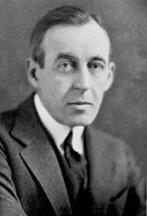
Here you will find contact information for Senator David Aiken Reed, including email address, phone number, and mailing address.
| Name | David Aiken Reed |
| Position | Senator |
| State | Pennsylvania |
| Party | Republican |
| Status | Former Representative |
| Term Start | August 8, 1922 |
| Term End | January 3, 1935 |
| Terms Served | 3 |
| Born | December 21, 1880 |
| Gender | Male |
| Bioguide ID | R000114 |
About Senator David Aiken Reed
David Aiken Reed (December 21, 1880 – February 10, 1953) was an American lawyer, soldier, and Republican Party politician from Pittsburgh, Pennsylvania, who represented Pennsylvania in the United States Senate from 1922 to 1935. A prominent figure in national politics during the interwar period, he served three terms in the Senate and was a co-author of the restrictive Immigration Act of 1924, also known as the Johnson–Reed Act.
Reed was born on December 21, 1880, in Pittsburgh, Pennsylvania, to James Hay Reed, a Pittsburgh lawyer and federal judge, and Katherine Jones (Aiken) Reed. He attended Shady Side Academy, a Pittsburgh preparatory school, graduating in 1896. He then enrolled at Princeton University, where he completed a Bachelor of Arts degree in 1900. Pursuing a legal career, he studied at the University of Pittsburgh Law School, earning a Bachelor of Laws degree in 1903, and was admitted to the bar that same year.
From 1903 to 1917, Reed practiced law in Pittsburgh, establishing himself in the city’s legal and civic life. During this period he also served as chairman of the Pennsylvania Industrial Accidents Commission, reflecting an early engagement with issues of labor, industry, and workplace safety in a rapidly industrializing state. His legal practice and public service in Pennsylvania laid the groundwork for his later prominence in national affairs.
With the entry of the United States into World War I, Reed entered military service and served as a major in the field artillery. His dog tag identified him as “David A. Reed Major 311th Field Artillery U.S.A.” He served in the Army until 1919 and received several decorations for his wartime service, including the Victory Medal, the Distinguished Service Medal, and the French Order of the Legion of Honor, Knight Cross. After the war, he remained active in veterans’ affairs and was post commander for Veterans of Foreign Wars East Liberty Post No. 5, Department of Pennsylvania. Upon his return to civilian life, he resumed the practice of law in Pittsburgh.
Reed’s national political career began when he was appointed as a Republican to the United States Senate on August 8, 1922, to fill the vacancy caused by the death of Senator William E. Crow. He was subsequently elected on November 7, 1922, both to complete the remainder of Crow’s term and to a full six-year term of his own, beginning in March 1923. A member of the Republican Party throughout his career, he participated actively in the legislative process during a period marked by postwar adjustment, economic expansion, and, later, the onset of the Great Depression. He was reelected in 1928, serving continuously until the expiration of his final term on January 3, 1935, after an unsuccessful bid for reelection in 1934.
During his Senate service, Reed played a significant role in shaping national policy. Along with Representative Albert Johnson, he co-authored the Immigration Act of 1924, widely known as the Johnson–Reed Act, whose purpose was to restrict the movement of Eastern and Southern Europeans into the United States and to prohibit Asian immigration in its entirety. In the Senate he held important committee assignments, serving as chairman of the Committee on Expenditures in Executive Departments and later of the Committee on Military Affairs, positions that gave him influence over government administration and defense policy. His tenure coincided with the profound economic crisis of the Great Depression, and his frustration with what he regarded as inadequate governmental response was evident in a Senate speech on July 1, 1932, in which he declared, “I do not often envy other countries and their governments, but I say that if this country ever needed a Mussolini, it needs one now.” He was also a member of the American Liberty League, an organization that opposed aspects of the New Deal and advocated limited government and property rights.
After leaving the Senate in 1935, Reed returned to Pittsburgh and resumed the practice of law, remaining active in professional and political circles. He maintained ties to Washington, D.C., where his residence at 2222 S Street NW in the Kalorama neighborhood, designed by the architectural firm Carrère & Hastings and built in 1929, later became the Embassy of Laos, preserving a physical reminder of his years in national public life. Reed continued his legal work until his death.
David Aiken Reed died on February 10, 1953, in Sarasota, Florida. In recognition of his military service and national office, he was interred in Arlington National Cemetery in Arlington, Virginia. His career, spanning law, military service, and more than a decade in the United States Senate, reflected the political and social currents of early twentieth-century America and left a lasting imprint on federal immigration policy and congressional history.