Representative David Rivera
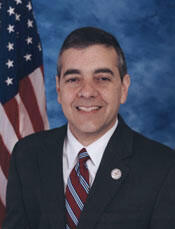
Here you will find contact information for Representative David Rivera, including email address, phone number, and mailing address.
| Name | David Rivera |
| Position | Representative |
| State | Florida |
| District | 25 |
| Party | Republican |
| Status | Former Representative |
| Term Start | January 5, 2011 |
| Term End | January 3, 2013 |
| Terms Served | 1 |
| Born | September 16, 1965 |
| Gender | Male |
| Bioguide ID | R000590 |
About Representative David Rivera
David Mauricio Rivera (born September 16, 1965) is an American politician from Florida and a member of the Republican Party who served one term in the United States House of Representatives, representing Florida’s 25th congressional district from January 3, 2011, to January 3, 2013. He previously served in the Florida House of Representatives from 2002 to 2010. Rivera’s tenure in Congress occurred during a significant period in American history, during which he participated in the legislative process and represented the interests of his South Florida constituents. In later years, his political career became intertwined with a series of high-profile investigations and criminal charges related to campaign finance and foreign lobbying.
Rivera was born in the borough of Brooklyn in New York City on September 16, 1965. In 1974, he moved with his family to Florida. His parents, including his father, a cab driver, and his mother, Daisy, a driving instructor, had fled Cuba following the rise to power of Fidel Castro, an experience that deeply shaped Rivera’s political outlook and his long-standing focus on Cuban affairs. He attended Miami Christian High School in Miami, Florida, and went on to enroll at Florida International University (FIU). Rivera earned a Bachelor of Arts degree with honors in political science from FIU in 1986 and later completed a Master of Public Administration there in 1994.
After college, Rivera began his professional career in public affairs and advocacy. He worked as a public affairs director for the Valladares Foundation, an organization focused on human rights in Cuba. This early work reinforced his interest in U.S.–Cuba policy and human rights issues, themes that would become central to his later legislative agenda. In addition to his professional roles, Rivera became active in Republican Party politics in Florida, serving as a state committeeman for the Republican Party of Florida and as executive director for the Republican Party of Miami-Dade County, positions that helped him build a political base and network in South Florida.
Rivera entered elective office in 2002 when he ran for the Florida House of Representatives from the 112th district. He won the Republican primary that year, defeating Ray Gonzalez by a margin of 52–48 percent, and then won the general election unopposed. Rivera was re-elected to the Florida House without opposition in 2004, 2006, and 2008, serving until 2010. During his tenure in the Florida House, he rose to influential positions, chairing the rules committee and later serving as chairman of the appropriations committee from 2009 to 2010. In that role, he worked with the Miami-Dade delegation to navigate a tight state budget and advocated for the creation of new professional schools at Florida International University. Rivera supported tax-free back-to-school shopping holidays and sponsored legislation forbidding Florida institutions of higher education from sponsoring and paying for research trips to Cuba. He frequently emphasized that Cuba policy was his foremost concern, stating in 2004 that it was “the most important issue” to him and that Cuban Americans had a moral obligation to support the cause of a free and democratic Cuba.
In January 2009, Rivera filed to run for a Florida state senate seat being vacated by J. Alex Villalobos. However, the political landscape shifted when U.S. Representative Lincoln Díaz-Balart announced he would not seek re-election in 2010, and his brother, U.S. Representative Mario Díaz-Balart, chose to run in Lincoln’s district rather than his own. The resulting vacancy in Florida’s 25th congressional district prompted Rivera to enter the race for Congress. He formally announced his candidacy on February 25, 2010. In the Republican primary held on August 24, 2010, Rivera won decisively with 63 percent of the vote. In the general election on November 2, 2010, he defeated Democratic nominee Joe Garcia by a margin of 52 percent to 43 percent, securing a seat in the U.S. House of Representatives.
Rivera served in the U.S. House from January 3, 2011, to January 3, 2013, representing Florida’s 25th congressional district. As a member of the House of Representatives, he participated in the democratic process and contributed to the legislative work of the 112th Congress. During his term, he served on the Committee on Foreign Affairs, including the Subcommittee on Oversight and Investigations and the Subcommittee on the Western Hemisphere, where his longstanding interest in Latin American and Cuban issues was reflected in his committee assignments. He also served on the Committee on Natural Resources, including the Subcommittee on Energy and Mineral Resources and the Subcommittee on National Parks, Forests and Public Lands. Rivera’s service in Congress coincided with debates over economic recovery, foreign policy, and federal spending, and he represented a district encompassing parts of South Florida.
Following the 2010 census, redistricting in Florida altered the political landscape of Rivera’s constituency. His district was renumbered from the 25th to the 26th district, losing its share of Collier County and gaining the Florida Keys as well as additional portions of Miami-Dade County. Whereas the old 25th district leaned Republican, the new 26th district was more evenly divided between Democrats and Republicans and considered a swing district. In the 2012 election, Rivera faced a rematch against Democrat Joe Garcia. In the changed district, Garcia defeated Rivera by a margin of 54 percent to 43 percent, ending Rivera’s congressional service after one term.
After leaving Congress, Rivera remained active in electoral politics but was unable to regain public office. In May 2014, he announced a bid to return to Congress, but he was defeated in the Republican primary, finishing fourth with 7.5 percent of the vote. In March 2016, he declared his candidacy for the open Florida House of Representatives seat in District 118, but he narrowly lost the general election to Democrat Robert Asencio by 53 votes. In March 2017, Rivera announced that he would run again for the Florida House in 2018, this time in neighboring District 105, continuing his efforts to reestablish himself in state-level office.
Rivera’s post-congressional career was marked by significant legal and ethical controversies. In April 2012, during his re-election campaign, he initiated a scheme to secretly fund Justin Lamar Sternad, a Democratic candidate in the primary for his own congressional district, in an effort to weaken his eventual general election opponent, Joe Garcia. Rivera met with his associate, Miami campaign consultant Ana Sol Alliegro, and directed her to approach Sternad with an offer of financial support. Acting at Rivera’s direction, Alliegro spent several months serving as an intermediary, transmitting nearly $76,000 to Sternad, to a Sternad political action committee, and to vendors providing services to the Sternad campaign. According to a complaint by the Federal Election Commission (FEC), Rivera illegally made contributions in the name of another person by making multiple cash payments to third-party vendors for the Sternad campaign between July 14 and August 8, 2012, and took steps to conceal his identity, directing others not to disclose him as the true source of the funds. The scheme became the subject of investigations by the FEC and the U.S. Attorney’s Office for the Southern District of Florida. Sternad and Alliegro both pleaded guilty to criminal charges related to their roles in the operation. On March 24, 2022, a federal judge rejected Rivera’s appeal of a $456,000 judgment against him arising from his federal campaign finance violations, a penalty that ranked among the 15 largest fines ever imposed by the FEC.
Rivera also became embroiled in a separate, high-profile federal case involving alleged foreign lobbying and money laundering. On December 5, 2022, he was arrested in Atlanta, Georgia, and charged with conspiracy to launder money and with failing to register as a foreign agent, in violation of the Foreign Agents Registration Act (FARA). Prosecutors alleged that Rivera acted as a lobbyist for interests aligned with the government of Venezuela, promoting the normalization of relations between Venezuela and the United States, and that he received substantial payments for these efforts. He was released on bail following his arrest. On December 15, 2023, additional charges were added to the indictment, including three tax-related offenses. The U.S. Department of Justice alleged that Rivera received more than $5.5 million for efforts to lobby U.S. officials on behalf of sanctioned Venezuelan businessman Raúl Gorrín. These developments further complicated the later phase of Rivera’s public life, as his earlier legislative career and party leadership roles became overshadowed by ongoing legal proceedings.