Representative David Lowrey Seymour
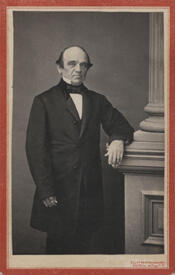
Here you will find contact information for Representative David Lowrey Seymour, including email address, phone number, and mailing address.
| Name | David Lowrey Seymour |
| Position | Representative |
| State | New York |
| District | 12 |
| Party | Democratic |
| Status | Former Representative |
| Term Start | December 4, 1843 |
| Term End | March 3, 1853 |
| Terms Served | 2 |
| Born | December 2, 1803 |
| Gender | Male |
| Bioguide ID | S000265 |
About Representative David Lowrey Seymour
David Lowrey Seymour (December 2, 1803, Wethersfield, Connecticut – October 11, 1867, Lanesborough, Massachusetts) was an American lawyer and Democratic politician from New York who served two non-consecutive terms in the United States House of Representatives during a significant period in American history. Born in Wethersfield, he came of age in the early national period and later established his professional and political life in New York, where he became a prominent member of the bar and an influential public official.
Seymour pursued a rigorous education, graduating from Yale College in 1826. Following his graduation, he remained at Yale as a tutor from 1828 to 1830, an appointment that reflected both his scholarly ability and his early commitment to public service through education. During this period he also undertook the study of law. He was admitted to the bar in 1829 and soon thereafter moved to Troy, New York, where he commenced the practice of law and began to build the legal and political career that would carry him into state and national office.
In New York, Seymour quickly became active in public affairs. He served as a member of the New York State Assembly in 1836, representing his constituency in the state legislature and aligning himself with the Democratic Party. His legal expertise and growing reputation led to his appointment as District Attorney of Rensselaer County, a position he held from 1839 to 1842. In this role he was responsible for prosecuting criminal cases on behalf of the county, further solidifying his standing as a capable and respected attorney in upstate New York.
Seymour’s rising profile in state politics led to his election as a Democrat to the United States House of Representatives. He was first elected to the Twenty-eighth Congress, serving from March 4, 1843, to March 3, 1845, as a Representative from New York. During this initial term in Congress, he contributed to the legislative process and represented the interests of his constituents at a time of expanding national territory and intensifying political debate. He served as Chairman of the Committee on Revolutionary Pensions, overseeing matters related to pensions for veterans and their families, a responsibility that connected the contemporary Congress with the legacy of the American Revolution.
After a period back in private life, Seymour returned to national office when he was elected to the Thirty-second Congress. He served this second, non-consecutive term from March 4, 1851, to March 3, 1853. Again representing New York as a Democrat, he participated actively in the work of the House of Representatives during a critical decade leading up to the Civil War. In this term he was Chairman of the Committee on Commerce, a significant assignment that placed him at the center of legislative deliberations over trade, navigation, and economic policy at a time of rapid commercial growth and increasing sectional tensions. Across his two terms, from 1843 to 1845 and from 1851 to 1853, Seymour contributed to the democratic process and played a role in shaping federal policy in areas of pensions and commerce.
Following the conclusion of his second term in Congress in 1853, Seymour resumed the practice of law in Troy. He continued to be regarded as a leading figure at the bar and remained engaged in public affairs. His legal practice and political connections extended into the next generation through his law partner and son-in-law, Charles E. Patterson, who later served as Speaker of the New York State Assembly in 1882, reflecting the continued influence of Seymour’s family in New York political life.
In the final year of his life, Seymour participated in one more significant public undertaking when he served as a delegate to the New York State Constitutional Convention of 1867. His selection as a delegate underscored his long-standing reputation as an experienced legislator and legal mind, and it afforded him an opportunity to help shape the fundamental law of the state in the post–Civil War era. He died on October 11, 1867, in Lanesborough, Massachusetts. He was buried at Mount Ida Cemetery in Troy, New York, closing a career that spanned education, law, state office, and service in the United States Congress during a formative era in the nation’s history.