Representative David E. Skaggs
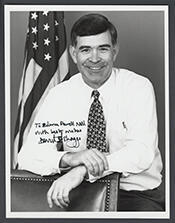
Here you will find contact information for Representative David E. Skaggs, including email address, phone number, and mailing address.
| Name | David E. Skaggs |
| Position | Representative |
| State | Colorado |
| District | 2 |
| Party | Democratic |
| Status | Former Representative |
| Term Start | January 6, 1987 |
| Term End | January 3, 1999 |
| Terms Served | 6 |
| Born | February 22, 1943 |
| Gender | Male |
| Bioguide ID | S000462 |
About Representative David E. Skaggs
David Evans Skaggs (born February 22, 1943) is an American lawyer, politician, and educator from Colorado who served as a Representative from Colorado in the United States Congress from 1987 to 1999. A member of the Democratic Party, he was elected to six consecutive terms in the U.S. House of Representatives, where he contributed to the legislative process during a significant period in American history and represented the interests of his constituents.
Skaggs was born in Cincinnati, Ohio, but grew up in the New Jersey suburbs of New York City. He earned a Bachelor of Arts degree in philosophy from Wesleyan University in 1964 and went on to receive a Bachelor of Laws from Yale Law School in 1967. Following law school, he briefly practiced law in New York City before entering active military service.
Skaggs spent three years on active duty in the United States Marine Corps, including service in Vietnam with the 1st Marine Division and assignments on Okinawa and at Marine Corps Headquarters in Washington, D.C. Upon his discharge from active duty in 1971, he remained in the Marine Corps Reserve until 1978, attaining the rank of major. After leaving active service, he practiced law in Boulder, Colorado, and became increasingly involved in public affairs and Democratic Party politics.
Skaggs first became involved in politics as a Democratic Party volunteer and officer in 1971. In 1974, he was hired as an aide to United States Representative Tim Wirth of Colorado, a position he held until 1977. Building on this experience, he ran successfully for a seat in the Colorado House of Representatives in 1980. He served three terms in the state legislature, including two terms as Minority Leader, before seeking federal office. During this period he also emerged as an active party figure nationally, serving as a delegate to the Democratic National Convention in 1984.
In 1986, Skaggs was elected to the U.S. House of Representatives from Colorado, beginning his congressional service in January 1987. He would go on to serve six terms, remaining in office until January 1999. During his tenure in Congress, he was again a delegate to the Democratic National Convention in 1988, 1992, and 1996. He initially served on the House Science, Space, and Technology Committee and the Public Works and Transportation Committee, and in 1991 he won a seat on the powerful Appropriations Committee. From 1993 to 1999 he also served on the House Permanent Select Committee on Intelligence. In the 104th Congress he was chairman of the Democratic Study Group, then the principal policy and reform organization of House Democrats.
Throughout his congressional career, Skaggs developed a strong environmental and reform-oriented record. He sponsored 42 bills, three of which were enacted into law, including the Colorado Wilderness Act of 1993, which designated certain lands in Colorado as components of the National Wilderness Preservation System. He co-sponsored the Energy Policy Act of 1992, which amended utility laws to increase clean energy use, improve overall energy efficiency in the United States, and mandated the installation of low-flush toilets in all new homes. He was also a co-sponsor of the Americans with Disabilities Act of 1990, landmark legislation outlawing discrimination based on disability. At the same time, he became known as a prominent voice for civility in politics. With Representative Ray LaHood, he was a founding co-chair of the House Bipartisan Retreat, first held in 1997 and designed to encourage civility and comity in the House; the retreats continued through 2003. He also co-founded, with Representative Jim Leach, the Constitutional Forum, a series of seminars featuring distinguished guest lecturers who led member discussions of constitutional issues.
Skaggs’s efforts to foster civility coexisted with a reputation for a generally liberal voting record and frequent alignment with his party, which led some critics to characterize him as highly partisan. He was, however, a strong opponent of the presidential line-item veto—going so far as to sue to block its use—and he publicly opposed President Bill Clinton’s use of military force without explicit congressional authorization. In 1992, he came under scrutiny for overdrafts from the so‑called House bank, a controversy that affected numerous members of Congress at the time. During his years in office, he also secured federal funding for what would become the National Oceanic and Atmospheric Administration’s David E. Skaggs Research Center in Boulder, Colorado, later named in his honor.
After retiring from Congress in 1999, Skaggs pursued a career in education, public policy, and ethics oversight. He served as an adjunct professor at the University of Colorado and as executive director of the Center for Democracy & Citizenship at the Council for Excellence in Government. In 2007 he returned to Colorado state government as executive director of the Colorado Department of Higher Education, a post he held until his resignation in 2009, which he attributed to a dispute with Governor Bill Ritter. In 2008, he was appointed the first chair of the board of the newly created Office of Congressional Ethics (OCE). After Republicans gained control of the House in 2010, former Representative and CIA Director Porter Goss became OCE board chair, with Skaggs serving as co-chair.
Skaggs has remained active in national security, constitutional, and democracy-promotion work. He served as a member of the U.S. Public Interest Declassification Board from 2005 to 2016 and as co-chair of the Constitution Project’s bipartisan War Powers Committee. He has served on the boards of trustees of the National Endowment for Democracy and the American University of Iraq. In recognition of his public service, he received the Distinguished Service Award from the U.S. Association of Former Members of Congress in 2017. He is affiliated with the Denver office of the law firm Dentons as a senior strategic advisor and independent consultant, and he has led the legal team in a federal lawsuit challenging the constitutionality of Colorado’s Taxpayer Bill of Rights (“TABOR”).
In the 2020s, Skaggs has continued to engage in Colorado and national politics. In January 2023, he was among the applicants seeking appointment to the Colorado House District 12 seat vacated by the resignation of Representative Tracey Bernett; the vacancy committee instead selected Louisville councilman Kyle Brown. In the 2024 Colorado Democratic presidential primary, Skaggs publicly endorsed an “uncommitted” vote. In a column for The Denver Post, he praised President Joe Biden’s record but expressed doubt about Biden’s prospects for reelection, arguing that Biden “should step aside, as Lyndon Johnson did in March 1968 […] preserve the splendid legacy he has earned, and avoid the embarrassment he doesn’t deserve.” Following Biden’s poorly received performance in the first presidential debate on June 27, 2024, Skaggs organized 24 former members of Congress to sign a letter urging Biden to withdraw from the race. As of 2024, David Evans Skaggs lives in Longmont, Colorado.