Representative David Dickson Terry
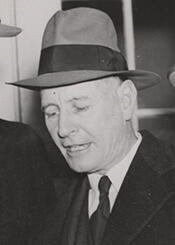
Here you will find contact information for Representative David Dickson Terry, including email address, phone number, and mailing address.
| Name | David Dickson Terry |
| Position | Representative |
| State | Arkansas |
| District | 5 |
| Party | Democratic |
| Status | Former Representative |
| Term Start | March 9, 1933 |
| Term End | January 3, 1943 |
| Terms Served | 5 |
| Born | January 31, 1881 |
| Gender | Male |
| Bioguide ID | T000133 |
About Representative David Dickson Terry
David Dickson Terry (January 31, 1881 – October 6, 1963) was an American lawyer and Democratic politician who served five terms as a U.S. Representative from Arkansas from 1933 to 1943. A member of the Democratic Party, he represented his Arkansas constituents in the House of Representatives during a significant period in American history, contributing to the legislative process through a decade that encompassed the Great Depression and the early years of World War II. He was the son of William Leake Terry, himself a prominent Arkansas lawyer and member of Congress, a family connection that helped shape his early exposure to law and public affairs.
Terry was born in Little Rock, Arkansas, where he spent his formative years in an environment closely connected to public service and the legal profession. Growing up as the son of William Leake Terry, who served in the U.S. House of Representatives, he became familiar at an early age with the workings of government and the responsibilities of elected office. This background fostered an interest in law and politics that would guide his later education and career.
After completing his early schooling in Little Rock, Terry pursued legal studies and prepared for admission to the bar. He read law in the established tradition of the period, gaining practical training under experienced attorneys rather than through a formal law school education, and was admitted to the bar in Arkansas. Establishing himself as a practicing attorney in Little Rock, he built a professional reputation in the legal community and became active in civic and political affairs. His work as a lawyer provided the foundation for his later public service and helped connect him to the broader network of Democratic politics in Arkansas.
Terry’s political career developed within the Democratic Party at a time when it was the dominant political force in Arkansas and much of the South. He became increasingly involved in party activities and public issues, drawing on both his legal experience and his family’s longstanding engagement in politics. By the early 1930s, amid the economic crisis of the Great Depression, he emerged as a candidate for national office, presenting himself as a representative of Arkansas interests in Washington and aligning with the broader Democratic response to the nation’s economic challenges.
Elected as a Democrat to the U.S. House of Representatives, Terry entered Congress on March 4, 1933, at the outset of President Franklin D. Roosevelt’s New Deal. He served continuously through five terms, from 1933 to 1943, during the Seventy-third through the Seventy-seventh Congresses. In the House of Representatives, David Dickson Terry participated in the democratic process and represented the interests of his constituents, taking part in debates and votes on major legislation addressing economic recovery, social welfare, and national defense. His decade in Congress coincided with sweeping federal initiatives to combat the Great Depression and with the nation’s transition from peace to wartime mobilization following the outbreak of World War II in Europe and the attack on Pearl Harbor.
During his ten years in Congress, Terry’s work reflected the priorities of his Arkansas district and the broader Southern Democratic coalition. He supported measures associated with agricultural relief, infrastructure development, and economic stabilization that were central to New Deal policy and of particular importance to a largely rural state such as Arkansas. As a member of the House, he contributed to the legislative process at a time when Congress was enacting landmark programs that reshaped the relationship between the federal government and American citizens, and he participated in deliberations over defense preparedness and wartime policy as global conflict intensified in the early 1940s.
Terry’s congressional service concluded in 1943, after which he returned to private life and the practice of law. Leaving the House at the close of his fifth term, he resumed his legal career in Arkansas, drawing on his experience in national government and his longstanding ties to the state’s legal and political communities. In his later years, he remained a figure identified with a pivotal era in Arkansas and national politics, linking the congressional service of his father’s generation to the transformative New Deal and World War II period in which he served.
David Dickson Terry died on October 6, 1963. His life and career spanned from the post-Reconstruction era through the mid-twentieth century, and his decade in the U.S. House of Representatives from 1933 to 1943 placed him at the center of some of the most consequential developments in modern American political and economic history.