Representative David Gardiner Tyler
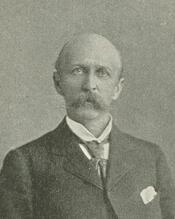
Here you will find contact information for Representative David Gardiner Tyler, including email address, phone number, and mailing address.
| Name | David Gardiner Tyler |
| Position | Representative |
| State | Virginia |
| District | 2 |
| Party | Democratic |
| Status | Former Representative |
| Term Start | August 7, 1893 |
| Term End | March 3, 1897 |
| Terms Served | 2 |
| Born | July 12, 1846 |
| Gender | Male |
| Bioguide ID | T000448 |
About Representative David Gardiner Tyler
David Gardiner Tyler (July 12, 1846 – September 5, 1927) was an American lawyer, legislator, and jurist who served as a Democratic Representative from Virginia in the United States Congress from 1893 to 1897. He was the ninth child and fourth son of John Tyler, the tenth president of the United States, and the first child born to President Tyler and his second wife, Julia Gardiner Tyler. He was born in East Hampton, New York, and was named for his maternal grandfather, David Gardiner.
Tyler spent much of his childhood in Virginia, where he attended private schools in Charles City County. Following the death of his father in 1862, he enrolled at what is now Washington and Lee University in Lexington, Virginia, and became a member of the Phi Kappa Psi fraternity. His formal education was interrupted by the American Civil War; in 1863 he left the university to join the Confederate Army. He served in the Confederate forces through the closing campaigns of the war and was present at the surrender of General Robert E. Lee at Appomattox Court House in April 1865.
After the war, Tyler sought further education abroad. He and his brother, John Alexander Tyler, traveled to Germany and attended school in the Grand Duchy of Baden. Upon returning to the United States, he resumed his legal studies and enrolled in the law department of Washington and Lee University. He completed his legal education there and graduated from the Washington and Lee School of Law in 1869, preparing for a professional career in the law.
From 1870 to 1884, Tyler practiced law in Richmond, Virginia, establishing himself in the legal community of the state capital. In 1884 he accepted an appointment as director of the state lunatic asylum in Williamsburg, Virginia, a position he held until 1887. His work in that role reflected the era’s growing public concern with institutional care and state responsibility for mental health. He also became involved in higher education governance, serving on the Board of Visitors of the College of William and Mary. His political career in elective office began in the early 1890s, when he was elected to the Virginia State Senate, serving there from 1891 to 1892.
In 1892, Tyler was elected to the United States House of Representatives as a Democrat from Virginia’s 2nd congressional district. In that election he defeated independent Republicans P. C. Garrigan and John F. Deyendorf, H. S. Collier, and independent candidate George E. Bowden, receiving 55.61 percent of the vote. He entered Congress at the opening of the Fifty-third Congress in 1893, during a significant period in American history marked by the Panic of 1893 and major debates over monetary policy, tariffs, and economic reform. As a member of the House of Representatives, David Gardiner Tyler participated in the legislative process, represented the interests of his constituents, and contributed to the work of the Democratic Party in Congress. In 1894 he was reelected to a second term, defeating Republican Thomas R. Borland and independent T. J. Edwards with 56.27 percent of the vote. His service in Congress thus extended through two full terms, from 1893 to 1897. In 1896, however, he was defeated for renomination by his party and consequently left the House at the conclusion of his second term in 1897.
Following his departure from Congress, Tyler returned to private law practice in Virginia. He remained active in state politics and was again elected to the Virginia State Senate, serving a second period in that body from 1900 to 1904. In 1904 he was elevated to the judiciary as a Virginia Circuit Court judge. He held this judicial office for the remainder of his life, from 1904 until his death in 1927, presiding over a wide range of civil and criminal matters and helping to shape the administration of justice in the Commonwealth during the early twentieth century.
Tyler married Mary Morris Jones (1865–1931), with whom he had five children. Four of their children survived to adulthood: Mary Lyon Tyler (1895–1975), who married George Peterkin Gamble (1899–1986); Margaret Gardiner Tyler (1897–1981), who married Stephen F. Chadwick (1894–1975), a grandson of Stephen F. Chadwick, the fifth governor of Oregon; David Gardiner Tyler Jr. (1899–1993), who married Anne Morton Shelton (1900–1977); and James Alfred Jones Tyler (1902–1972), who married Katherine Thomason (1909–1967). A younger son, John Tyler (1905–1907), died in childhood.
David Gardiner Tyler died on September 5, 1927, at Sherwood Forest Plantation, the historic Tyler family estate in Charles City County, Virginia. He was buried in Hollywood Cemetery in Richmond, Virginia, a resting place for many of the state’s prominent political figures. His life spanned the antebellum period, the Civil War, Reconstruction, and the emergence of the modern South, and his career encompassed service as a lawyer, state legislator, member of Congress, and long-serving circuit court judge.