Representative David Kemper Watson
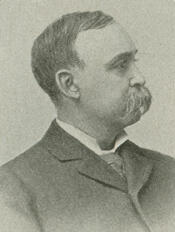
Here you will find contact information for Representative David Kemper Watson, including email address, phone number, and mailing address.
| Name | David Kemper Watson |
| Position | Representative |
| State | Ohio |
| District | 12 |
| Party | Republican |
| Status | Former Representative |
| Term Start | December 2, 1895 |
| Term End | March 3, 1897 |
| Terms Served | 1 |
| Born | June 18, 1849 |
| Gender | Male |
| Bioguide ID | W000200 |
About Representative David Kemper Watson
David Kemper Watson (June 18, 1849 – September 28, 1918) was an American lawyer and Republican politician who served one term as a U.S. Representative from Ohio from 1895 to 1897. Over the course of a varied public career, he held important legal and political offices at both the state and federal levels and played a notable role in the early enforcement of federal antitrust law.
Watson was born near London, Madison County, Ohio, on June 18, 1849. He pursued higher education in the years following the Civil War, enrolling at Dickinson College in Carlisle, Pennsylvania. He was graduated from Dickinson College in 1871, and then undertook legal studies at the law department of Boston University, from which he graduated in 1873. That same year he was admitted to the bar and commenced the practice of law, beginning a professional path that would combine private practice with significant public responsibilities.
Early in his legal career, Watson entered federal service as assistant United States district attorney for the Southern District of Ohio during the administration of President Chester A. Arthur, which lasted from 1881 to 1885. His work as a federal prosecutor helped establish his reputation in legal and political circles in Ohio. Building on this experience, he successfully sought statewide office and was elected attorney general of Ohio in 1887. He was reelected to that post in 1889, reflecting broad support for his performance as the state’s chief legal officer.
As Ohio attorney general, Watson became prominently associated with the early enforcement of federal antitrust legislation. In 1890, he successfully prosecuted the Standard Oil Company under the Sherman Antitrust Act, in one of the landmark early cases brought under that statute. His efforts led the court to order the dissolution of the Standard Oil trust, a significant development in the emerging body of antitrust law and an important assertion of governmental authority over large corporate combinations. In 1892, he further extended his federal service when he was appointed special counsel for the United States in suits brought by the Government against the Pacific railroads, participating in complex litigation involving major transportation interests and federal financial claims.
Watson’s legal and public service career provided the foundation for his election to Congress. A member of the Republican Party, he was elected as a Republican to the Fifty-fourth Congress and served as a Representative from Ohio from March 4, 1895, to March 3, 1897. During this single term in the U.S. House of Representatives, he participated in the legislative process at a time of significant economic and political change in the United States, representing the interests of his Ohio constituents and contributing to the work of the House. He was an unsuccessful candidate for reelection in 1896 to the Fifty-fifth Congress, bringing his congressional service to a close after one term in office.
Following his departure from Congress, Watson continued to be involved in important national legal work. He was appointed by President William McKinley as a member of the commission to revise and codify the laws of the United States, a body charged with organizing and clarifying federal statutory law. After completing this service, he resumed the private practice of law, maintaining his professional engagement with legal questions of both state and national significance. In addition to his practice, he contributed to legal and historical scholarship. Among his published works were “The Early Judiciary, Early Laws and Bar of Ohio,” an article appearing in the Ohio Archaeological and Historical Publications in 1890, and a substantial treatise, “The Constitution of the United States: Its History, Application and Construction,” published in Chicago by Callaghan in 1910.
In his personal life, Watson married Louise M. Harrison in 1873. She was the daughter of Hon. Richard A. Harrison of Columbus, Ohio, a connection that further tied Watson to the political and legal community of the state capital. The couple had a son and a daughter. Watson spent his later years in Columbus, where he continued his legal and intellectual pursuits until his death. He died in Columbus, Ohio, on September 28, 1918. He was interred in Green Lawn Cemetery in Columbus, closing the life of a lawyer, public official, and legislator who had participated in both state and federal governance during a formative period in American legal and political history.