Representative Dave Weldon
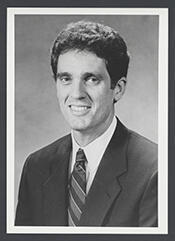
Here you will find contact information for Representative Dave Weldon, including email address, phone number, and mailing address.
| Name | Dave Weldon |
| Position | Representative |
| State | Florida |
| District | 15 |
| Party | Republican |
| Status | Former Representative |
| Term Start | January 4, 1995 |
| Term End | January 3, 2009 |
| Terms Served | 7 |
| Born | August 31, 1953 |
| Gender | Male |
| Bioguide ID | W000267 |
About Representative Dave Weldon
David Joseph Weldon (born August 31, 1953) is an American physician and former politician who served as a Republican member of the United States House of Representatives from Florida’s 15th congressional district from January 3, 1995, to January 3, 2009. Over seven consecutive terms in Congress, he represented much of Florida’s Space Coast region and became particularly active on issues related to space policy, veterans’ health, biomedical research funding, and medical privacy. A practicing internal medicine physician before and after his congressional service, he used his medical background to shape his legislative priorities and later remained engaged in public policy, nonprofit leadership, and academic and clinical work.
Weldon was born in Amityville, New York, to Anna and David Weldon and grew up on Long Island. He graduated from Farmingdale High School in Farmingdale, New York, in 1971. He went on to earn a Bachelor of Science degree in biochemistry from the State University of New York at Stony Brook in 1978. Continuing his education in medicine, he received his Doctor of Medicine (M.D.) degree from the University at Buffalo in 1981. Following medical school, he completed his internship and residency in internal medicine, training that would form the foundation of his later work both as a clinician and as a legislator focused on health policy.
After his residency, Weldon entered active duty as a physician in the United States Army, serving from 1981 to 1987 and achieving the rank of major. During his military career he was stationed at several military hospitals, providing care to service members and gaining experience in military and institutional medicine. Upon leaving the Army, he relocated to Florida’s Space Coast, where he entered private practice as an internal medicine physician. His medical practice in the region, which included caring for many patients connected to the aerospace and defense industries, helped establish his local profile and informed his later focus on veterans’ issues, health care policy, and the economic importance of the Kennedy Space Center and related facilities.
Weldon entered electoral politics in the 1994 election cycle, when he decided to run for the U.S. House of Representatives in Florida’s 15th congressional district, a seat being vacated by Democratic Representative Jim Bacchus. In a crowded Republican primary field of seven candidates, he placed first on September 8, 1994, with 24 percent of the vote but did not secure the majority needed to avoid a runoff. In the October 4 runoff, he defeated Carole Jean Jordan by a margin of 54 percent to 46 percent. In the November 1994 general election, he won the seat by defeating Democrat Sue Munsey, also by a 54–46 percent margin, beginning his service in the 104th Congress. He was reelected in 1996 over Democrat John L. Byron, 51–43 percent, and subsequently consolidated his position in the district, winning a third term in 1998 with 63 percent of the vote, a fourth term in 2000 with 59 percent, a fifth term in 2002 with 63 percent, and a sixth term in 2004 with 65 percent. In 2006, he faced former presidential candidate Bob Bowman, a Democrat, in the general election; Weldon significantly out-raised his opponent—reporting $673,321 in campaign funds by the end of September, compared with Bowman’s $21,944—and declined to participate in debates. He won reelection to a seventh term on November 7, 2006, receiving 125,596 votes to Bowman’s 97,947, or 56 percent to 44 percent.
During his seven terms in the House of Representatives, Weldon served on the powerful Committee on Appropriations, where he was involved in shaping federal spending priorities, particularly for NASA and the Department of Defense, which were central to the economy of the Space Coast and the operations of the Kennedy Space Center. Within Appropriations, he served on the Subcommittee on Labor, Health and Human Services, Education, and Related Agencies and the Subcommittee on State, Foreign Operations, and Related Programs, giving him influence over health, education, and foreign assistance funding. Over the course of his tenure he also served on the Committee on Science, the Committee on Education and the Workforce, the Committee on Banking and Currency, and the Committee on Government Reform. Weldon was a member of the Republican Study Committee, a caucus of conservative House Republicans, and he co-founded and chaired the Congressional Aerospace Caucus and the Congressional Israel Allies Caucus, reflecting his interest in aerospace policy and strong support for the U.S.–Israel relationship.
Weldon’s legislative record reflected both his medical background and his social conservatism. In 2004, he authored the Weldon Amendment, a provision attached to an appropriations measure that prohibits federal health programs from requiring health care entities—including individual physicians, hospitals, and health insurance plans—to provide, pay for, or refer for abortion services as a condition of receiving federal funds. The Weldon Amendment has been included in annual federal appropriations bills since 2005 and has been a significant element of federal “conscience protection” policy in health care. He was also a vocal advocate for medical privacy rights, sponsoring legislation intended to limit government access to patient health records without patient consent. In response to the legal and political controversy surrounding the case of Terri Schiavo, a Florida woman in a prolonged incapacitated state, Weldon introduced legislation seeking federal review of the case. Drawing on his medical training, he publicly argued that Schiavo was not in a persistent vegetative state, stating that “she responds to verbal stimuli, she attempts to vocalize, she tracks with her eyes, she emotes, she attempts to kiss her father.”
Weldon became known as a prominent congressional critic of certain aspects of federal vaccine policy. During his tenure, he promoted the scientifically disproven claim that thimerosal, a mercury-based preservative formerly used in some vaccines, was linked to an increase in autism. In 2007, he introduced legislation to transfer vaccine safety oversight from the Centers for Disease Control and Prevention (CDC) to an independent agency within the Department of Health and Human Services, citing what he described as conflicts of interest and inadequate research funding in the existing federal vaccine safety review process. He publicly questioned the safety of specific vaccines, including the measles, mumps, and rubella (MMR) vaccine and Gardasil, a vaccine that protects against certain strains of human papillomavirus (HPV), while at the same time describing himself as a supporter of vaccination in general. He later appeared in the 2016 anti-vaccine film “Vaxxed,” produced by discredited former physician Andrew Wakefield, who publicly touted Weldon as his preferred candidate to lead the CDC during Donald Trump’s first presidency. In a 2019 appearance on a television program broadcast by the Sinclair Broadcast Group, Weldon falsely claimed that “some children can get an autism spectrum disorder from a vaccine,” reiterating views rejected by the scientific and medical communities. He has, however, voiced support for COVID-19 vaccines.
In addition to his legislative work, Weldon occasionally engaged in cultural and morale-boosting activities connected to his congressional service. In December 2005, he joined several other members of Congress to form “The Second Amendments,” a rock and country music band organized to perform for United States troops stationed overseas during the holiday season; Weldon played bass guitar in the group. On January 25, 2008, he announced that he would not seek an eighth term in the House of Representatives and would return to his medical practice, with a spokesperson explaining that “he never wanted to be a career politician.” He endorsed Florida state senator Bill Posey as his preferred successor in the 15th district. Weldon left Congress at the conclusion of the 110th Congress in January 2009, after a period that encompassed major national developments including the late 1990s economic expansion, the September 11, 2001, terrorist attacks, the subsequent wars in Afghanistan and Iraq, and the onset of the 2008 financial crisis.
After leaving Congress, Weldon resumed his medical career and broadened his involvement in public policy and nonprofit work. He returned to practicing internal medicine and established a medical practice with Health First Medical Group in Malabar, Florida, continuing to serve patients in the Space Coast region. He took on teaching and advisory roles at the Florida Institute of Technology in Melbourne, Florida, where he donated his congressional archives, making his legislative papers available for research and educational use. Weldon remained active in international and faith-based policy initiatives, serving as chairman of the Israel Allies Foundation, an organization that promotes cooperation between legislators around the world who support Israel. In 2017, he became president of the Alliance of Health Care Sharing Ministries, a trade association representing Christian health care sharing organizations that offer an alternative to traditional health insurance arrangements.
Weldon periodically returned to electoral politics after his House service. In 2012, he sought the Republican nomination for the United States Senate from Florida, aiming to challenge incumbent Democratic Senator Bill Nelson. Running as a Christian conservative, he faced Representative Connie Mack IV in the Republican primary and trailed Mack in both fundraising and statewide name recognition. In the August 2012 primary, Weldon received 20 percent of the vote, finishing second to Mack, who won the nomination with 59 percent and later lost the general election to Nelson by a margin of 55 percent to 42 percent. More than a decade later, Weldon ran for the Florida House of Representatives in the 32nd district in 2024. In that Republican primary he faced state senator Debbie Mayfield and was defeated, receiving 35 percent of the vote to Mayfield’s 65 percent.
Weldon’s profile in national health policy debates resurfaced in the 2020s. On November 22, 2024, former President Donald Trump, then again the president, nominated Weldon to serve as director of the Centers for Disease Control and Prevention, a position requiring Senate confirmation. According to reporting by The Washington Post, Secretary of Health and Human Services nominee Robert F. Kennedy Jr. had proposed Weldon for the role. The nomination drew significant attention and controversy due to Weldon’s longstanding promotion of the disproven claim of a causal link between vaccines and autism, his public critiques of the CDC and federal health officials, his advocacy of abstinence as the most effective strategy to curb sexually transmitted infections, and the fact that he lacked formal training or prior experience in public health administration or in managing an organization as large and complex as the CDC. Anti-vaccine activists and organizations publicly celebrated his nomination. In March 2025, Trump withdrew Weldon’s nomination, ending the confirmation effort. Throughout these later chapters of his career, Weldon has continued to describe himself as a supporter of vaccines while maintaining positions on vaccine safety and federal health oversight that have placed him at odds with the scientific consensus and many public health authorities.