Senator De Witt Clinton
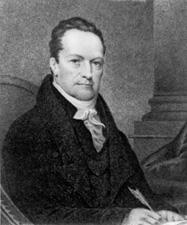
Here you will find contact information for Senator De Witt Clinton, including email address, phone number, and mailing address.
| Name | De Witt Clinton |
| Position | Senator |
| State | New York |
| Party | Republican |
| Status | Former Representative |
| Term Start | January 1, 1802 |
| Term End | December 31, 1803 |
| Terms Served | 1 |
| Born | March 2, 1769 |
| Gender | Male |
| Bioguide ID | C000525 |
About Senator De Witt Clinton
De Witt Clinton served as a Senator from New York in the United States Congress from 1801 to 1803. A member of the Republican Party, De Witt Clinton contributed to the legislative process during 1 term in office.
De Witt Clinton’s service in Congress occurred during a significant period in American history. As a member of the Senate, De Witt Clinton participated in the democratic process and represented the interests of constituents.
DeWitt Clinton (March 2, 1769 – February 11, 1828) was an American politician and naturalist. He served as a United States senator, as the mayor of New York City, and as the sixth governor of New York. In the last capacity, he was largely responsible for the construction of the Erie Canal. Clinton was a major candidate for the American presidency in the election of 1812, challenging incumbent James Madison. A nephew of two-term U.S. vice president and New York governor George Clinton, DeWitt Clinton was his uncle’s secretary before launching his own political career. As a Democratic-Republican, Clinton won election to the New York State Legislature in 1798 before briefly serving as a U.S. Senator. Returning to New York, Clinton served three terms as the appointed Mayor of New York City and the lieutenant governor of New York State. In the 1812 presidential election, Clinton won support from the Federalists as well as from a group of Democratic-Republicans who were dissatisfied with Madison. Though Madison won re-election, Clinton carried most of the Northeastern United States and fared significantly better than the previous two Federalist-supported tickets. After the presidential election, Clinton continued to be affiliated with the Democratic-Republican Party. Clinton was governor of New York from 1817 to 1822 and from 1825 to 1828, and presided over the construction of the Erie Canal. Clinton believed that infrastructure improvements could transform American life, drive economic growth, and encourage political participation. He heavily influenced the development of infrastructure both in New York State and in the United States as a whole.