Representative De Witt Clinton Littlejohn
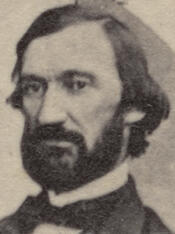
Here you will find contact information for Representative De Witt Clinton Littlejohn, including email address, phone number, and mailing address.
| Name | De Witt Clinton Littlejohn |
| Position | Representative |
| State | New York |
| District | 22 |
| Party | Republican |
| Status | Former Representative |
| Term Start | December 7, 1863 |
| Term End | March 3, 1865 |
| Terms Served | 1 |
| Born | February 7, 1818 |
| Gender | Male |
| Bioguide ID | L000357 |
About Representative De Witt Clinton Littlejohn
DeWitt Clinton Littlejohn (February 7, 1818 – October 27, 1892) was a New York merchant, railroad executive, state legislator, brevet brigadier general in the Union Army, and a United States Representative from New York during the Civil War. A prominent Republican political leader before and during the war, and later a Liberal Republican and Democrat, he was closely associated with major figures in New York and national politics and played a significant role in both state government and wartime mobilization.
Littlejohn initially pursued an academic course at Geneva College (now Hobart and William Smith Colleges) in Geneva, New York, but did not complete his studies. Instead, he entered business, engaging in several profitable mercantile pursuits. For a time he acted as a forwarder of fresh produce on the lakes and canals of the region, taking advantage of the growing transportation network in upstate New York. He later settled in Oswego, New York, where he engaged in the manufacturing of flour, establishing himself as a successful businessman in that port city on Lake Ontario.
Littlejohn’s public career began in local government. He served as mayor of Oswego in 1849 and 1850, gaining experience in municipal administration at a time when the city was expanding as a commercial hub. He was elected to the New York State Assembly from Oswego County’s 1st District in 1853, 1854, 1855, 1857, 1859, 1860, 1861, 1866, 1867, 1870, 1871, and 1884, making him one of the more frequently returned members of that body in the mid-nineteenth century. Within the Assembly he quickly rose to leadership, serving as Speaker in 1855, 1857, 1859, 1860, and 1861. In state politics he was regarded as the chief lieutenant of influential Republican strategist Thurlow Weed, and he played an important role in party organization and legislative management.
In 1861, Littlejohn was deeply involved in the behind-the-scenes political maneuvering surrounding the selection of a United States senator from New York to succeed William H. Seward, who did not seek re-election in anticipation of joining President Abraham Lincoln’s cabinet. Littlejohn was influential in securing the Republican nomination for Ira Harris over newspaper editor Horace Greeley. The bitter contest led to a public dispute, and in September 1861 Littlejohn unsuccessfully sued Greeley and the New-York Tribune for libel. Despite this controversy, he remained a central figure in Republican politics in New York on the eve of the Civil War.
With the outbreak of the Civil War in 1861, Littlejohn worked actively to recruit troops in the Oswego area, using his political prominence to support the Union cause. In July 1862 he used his connections to secure a commission as colonel of the 110th New York Infantry Regiment, a unit he helped raise through his personal efforts. He trained the regiment at Camp Patterson near Baltimore, Maryland, where it was stationed until November 1862, when it was ordered to federal-occupied New Orleans, Louisiana. His military service coincided with his continuing political ambitions, and he resigned from the Union Army on February 3, 1863, as he prepared to enter national office. On February 26, 1867, President Andrew Johnson nominated Littlejohn for appointment to the grade of brevet brigadier general of volunteers, to rank from March 13, 1865, in recognition of his wartime service, and the United States Senate confirmed the appointment on March 2, 1867.
Returning to electoral politics, Littlejohn successfully campaigned for a seat in the United States House of Representatives. A member of the Republican Party, he was elected as a Republican to the Thirty-eighth Congress and served as a Representative from New York from March 4, 1863, to March 3, 1865. His single term in Congress coincided with a critical phase of the Civil War, and he contributed to the legislative process during this significant period in American history. During that term he was chairman of the Committee on Revolutionary Pensions, overseeing matters related to benefits for veterans and their families from the Revolutionary era. He represented the interests of his constituents while supporting the Union war effort in the national legislature. Littlejohn was not a candidate for renomination in 1864 and returned to state and business pursuits at the conclusion of his congressional service.
After the war, Littlejohn remained active in both politics and economic development. He moved for a time to Buffalo, New York, but returned to Oswego in 1867, determined to promote the city’s growth through improved transportation links. In 1868 he organized and became president of the New York and Oswego Midland Railroad, a line designed to traverse much of New York State on its way to New York City and to provide Oswego with a direct rail connection to a major port. He also established a steamboat service connecting Long Island to his new railroad, further integrating regional transportation. In 1870 the Republican state convention nominated him for lieutenant governor of New York on a ticket headed by Stewart L. Woodford, but Littlejohn declined to run.
In the early 1870s Littlejohn’s political allegiance shifted. Disillusioned by what he regarded as corruption in the administration of President Ulysses S. Grant, he joined the Liberal Republican movement and supported the presidential candidacy of his former adversary Horace Greeley in 1872, having resolved their earlier legal and political disputes. He subsequently became a Democrat and was a delegate to several Democratic state conventions. In his later political career he was a supporter and ally of New York governor and 1876 Democratic presidential candidate Samuel J. Tilden, aligning himself with reform-oriented elements within the party while continuing to serve periodically in the State Assembly, including his final term in 1884.
DeWitt Clinton Littlejohn died in Oswego, New York, on October 27, 1892. He was interred at Riverside Cemetery in Oswego, the city that had been the center of his business, political, and military endeavors for most of his adult life.