Representative Dennis A. Cardoza
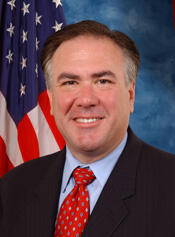
Here you will find contact information for Representative Dennis A. Cardoza, including email address, phone number, and mailing address.
| Name | Dennis A. Cardoza |
| Position | Representative |
| State | California |
| District | 18 |
| Party | Democratic |
| Status | Former Representative |
| Term Start | January 7, 2003 |
| Term End | August 15, 2012 |
| Terms Served | 5 |
| Born | March 31, 1959 |
| Gender | Male |
| Bioguide ID | C001050 |
About Representative Dennis A. Cardoza
Dennis Alan Cardoza (born March 31, 1959) is an American politician and attorney who served as a Representative from California in the United States Congress from 2003 to 2012. A member of the Democratic Party, he represented California’s 18th congressional district, which encompassed a large portion of the Central Valley from Stockton to Fresno. Over five terms in office, Cardoza contributed to the legislative process during a significant period in American history, participating in the democratic process and representing the interests of his constituents.
Cardoza was born in Merced, California, of Portuguese ancestry, and grew up in nearby Atwater, California. He graduated from Atwater High School and became the first in his family to graduate from college. He initially attended California State University, Stanislaus in Turlock, California, before transferring to the University of Maryland, College Park. While in college, he was a member of Theta Chi fraternity. His interest in public service began during his student years, when he interned on Capitol Hill in the summer of 1979, an experience that helped shape his commitment to government and public affairs.
After completing his education, Cardoza returned to California and ran a successful small business, gaining experience in the private sector that would later inform his legislative priorities, particularly on economic and agricultural issues. He entered local politics as a city council member, serving on the city councils of both Merced and Atwater. Building on this local government experience, he was elected to the California State Assembly, where he served from 1996 to 2002. During his six years in the Assembly, Cardoza chaired the powerful Rules Committee and helped found the Moderate Democratic Caucus, reflecting his centrist orientation within the Democratic Party.
Cardoza’s early political career was closely intertwined with that of Gary Condit, for whom he served as chief of staff when Condit was a member of the California State Assembly. The congressional seat Cardoza would later hold, California’s 18th District, had long been in Democratic hands and was held by Condit prior to the 2002 election cycle. When Condit’s political career was damaged by revelations of his extramarital affair with murdered intern Chandra Levy, Cardoza challenged him in the March 2002 Democratic primary. Cardoza defeated Condit in that primary and went on to face Republican State Senator Dick Monteith in the November 2002 general election. The race was considered the only potentially competitive U.S. House contest in California that year, as redistricting after the 2000 census had rendered most of the state’s 53 districts safe for one party or the other.
The Democratic-controlled state legislature, concerned about a growing Republican trend in the 18th District even before Condit’s troubles, had redrawn the district to shore up Democratic strength. A Republican-leaning portion of eastern Stanislaus County was shifted to the heavily Republican 19th District and replaced with a largely Democratic area in and around Stockton, giving the 18th District a plurality of Latino voters. In this reconfigured district, Cardoza defeated Monteith by a margin of 51 percent to 43 percent in the 2002 general election. He took office on January 3, 2003, and was reelected four times, facing only nominal opposition in subsequent campaigns. The district and its predecessors remained in Democratic hands from 1955 until the election of Republican John Duarte in 2022.
In Congress, Cardoza was regarded as a conservative Democrat by California standards, consistent with the political profile of many Democrats from the Central Valley, though his voting record was considered slightly more liberal than that of his predecessor, Condit. During the 109th Congress, he served as a co-chair of the Blue Dog Coalition, a group of moderate to conservative House Democrats of which Condit had been a founding member. Cardoza served on the House Committee on Resources (later the Natural Resources Committee), the Agriculture Committee, and the International Relations Committee. In the 112th Congress, he sat on the House Committee on Foreign Affairs, including the Subcommittee on Asia and the Pacific and the Subcommittee on the Middle East and South Asia, and continued his service on the Agriculture Committee, where he was the ranking member of the Subcommittee on Livestock, Dairy, and Poultry and also served on the Subcommittee on General Farm Commodities and Risk Management. Throughout his tenure, he remained active in several caucuses, including the Congressional Hispanic Caucus, the International Conservation Caucus, the Moderate Democratic Caucus, and the Sportsmen’s Caucus.
On October 20, 2011, Cardoza announced that he would retire from Congress at the end of his term in 2012. Media accounts suggested that his decision was influenced in part by the 2012 redistricting map, which placed his hometown of Merced in the same district as fellow Blue Dog Democrat Jim Costa, while much of his former territory was incorporated into a reconfigured 10th District later won by Republican Jeff Denham. Cardoza ultimately resigned from Congress effective August 15, 2012, citing family concerns as his priority. During his final year in office, on June 8, 2012, he was named a Grand Officer of the Order of Prince Henry by the government of Portugal, an honor reflecting his Portuguese heritage.
Following his departure from Congress, Cardoza joined the law firm Foley & Lardner LLP in a public affairs and lobbying role, continuing his engagement with public policy from the private sector. In this capacity, he has drawn on his legislative experience, particularly in agriculture, foreign affairs, and regulatory matters, to advise clients and participate in policy discussions.