Senator Dennis DeConcini
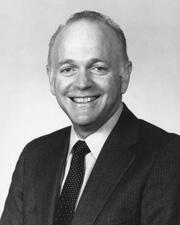
Here you will find contact information for Senator Dennis DeConcini, including email address, phone number, and mailing address.
| Name | Dennis DeConcini |
| Position | Senator |
| State | Arizona |
| Party | Democratic |
| Status | Former Representative |
| Term Start | January 4, 1977 |
| Term End | January 3, 1995 |
| Terms Served | 9 |
| Born | May 8, 1937 |
| Gender | Male |
| Bioguide ID | D000185 |
About Senator Dennis DeConcini
Dennis Webster DeConcini (born May 8, 1937) is an American lawyer, philanthropist, and Democratic politician who represented Arizona in the United States Senate from January 3, 1977, to January 3, 1995. Over the course of three terms in office, he contributed to the legislative process during a significant period in American history, participating in the democratic process and representing the interests of his Arizona constituents. After his re-election in 1988, no Arizona Democrat was elected to the U.S. Senate for 30 years, until Kyrsten Sinema won his former seat in 2018.
DeConcini was born in Tucson, Arizona, the son of Ora (née Webster) and Evo Anton DeConcini. His father was a prominent figure in Arizona’s legal and political life, serving as a judge on the Arizona State Superior Court for ten years, then as Arizona Attorney General for one two-year term from 1948 to 1949, before being appointed to the Arizona Supreme Court, where he served from 1949 to 1953. Growing up in this environment of public service and law strongly influenced Dennis DeConcini’s own career trajectory and interest in government and the legal profession.
DeConcini attended the University of Arizona, where he received his bachelor’s degree in 1959. He continued at the University of Arizona College of Law, earning his LL.B. in 1963. Following law school, he entered public service early in his career, working as a lawyer on the Arizona Governor’s staff from 1965 to 1967. He also attended The Judge Advocate General’s School at the University of Virginia and entered the U.S. Army Judge Advocate General’s Corps, gaining legal and military experience that would later inform his work on national security and judicial issues in the Senate. In 1968, he and his father co-founded the Tucson law firm that would become DeConcini McDonald Yetwin & Lacy.
Before his election to the U.S. Senate, DeConcini built a record in local government and law enforcement. He served one elected term as Pima County Attorney from 1973 to 1976, acting as the chief prosecutor and civil attorney for Pima County and the school districts within the county. In that role he oversaw criminal prosecutions and provided legal counsel to local governmental entities, enhancing his public profile in southern Arizona and establishing his reputation as a pragmatic Democrat with experience in both criminal and civil law.
DeConcini was elected to the United States Senate in 1976 as a Democrat, defeating Republican Representative Sam Steiger for the open seat created by the retirement of Republican Senator Paul Fannin. He took office on January 3, 1977, and would serve three consecutive terms, leaving office on January 3, 1995. During his Senate career, he became particularly known for his work on appropriations, judiciary matters, and intelligence oversight. In the 101st Congress, he served on the Senate Appropriations Committee, where he chaired the Subcommittee on Treasury, Postal Service, and General Government, and sat on the Subcommittees on Defense, Energy and Water Development, and Foreign Operations. He also served on the Senate Judiciary Committee, chairing the Subcommittee on Patents, Copyrights and Trademarks, and serving on the Subcommittees on Antitrust, Monopolies and Business Rights, the Constitution, and the Courts. From 1993 to 1994, he chaired the Senate Select Committee on Intelligence, playing a key role in congressional oversight of U.S. intelligence activities at the end of the Cold War and in the early post–Cold War era.
One of DeConcini’s most notable legislative involvements came during the debate over the Panama Canal Treaties of 1977. He sponsored an amendment, commonly known as the DeConcini Reservation, to the Panama Canal Treaty, which stated that the United States and Panama each reserved the right “to take such steps as each deems necessary, in accordance with its constitutional processes, including the use of military force in the Republic of Panama, to reopen the Canal or restore the operations of the Canal, as the case may be.” The DeConcini amendment, which established a basis for the potential use of U.S. military force in Panama to ensure the canal’s operation, was written into and signed by Panamanian leader Omar Torrijos in the Instrument of Ratification. Its existence and effect, however, have been the subject of controversy. Panamanian negotiator Carlos López Guevara asserted that “the DeConcini amendment does not exist, and I maintained that and I continue to maintain it,” arguing that it was effectively neutralized by the so‑called leadership or Church amendment, contained in the Panama Canal Treaty. Citing former U.S. Ambassador William Jorden’s book “Panama Odyssey,” López Guevara contended that the Church amendment was intended “to disown, to undo, to neutralize, to balance” the interventionist implications of the DeConcini amendment, and that what the U.S. Senate did in approving the Church amendment was to eliminate those effects. He further argued that, even though the Church amendment was part of the Panama Canal Treaty, which ended in December 1999, its impact on the Neutrality Treaty—of indefinite duration—remained part of the broader negotiation, which critics in Panama have characterized as an “interventionist” pact.
DeConcini’s Senate career was also marked by controversy arising from the U.S. savings and loan crisis of the 1980s. He was widely noted as one of the “Keating Five,” a group of five U.S. senators investigated by the Senate Ethics Committee for their actions on behalf of Charles Keating, head of Lincoln Savings and Loan and its related company, Continental Homes, then the sixth-largest employer in Arizona. The committee concluded that DeConcini, along with Senators John McCain, John Glenn, and Donald Riegle, had broken no laws or formal Senate ethics rules but had been “aggressive” in their actions on Keating’s behalf. DeConcini was specifically judged to have “acted improperly.” The political fallout from the investigation was significant, and he chose not to run for a fourth term in 1994. During his Senate tenure he also participated in major confirmation battles; notably, in October 1991 he was one of eleven Democrats who voted to confirm Clarence Thomas to the Supreme Court in a closely divided 52–48 vote. Allegations also arose that in 1979 he had insider knowledge about the proposed route of the Central Arizona Project and used this information to purchase land that he later resold to the federal government six years afterward for a gain of nearly $1,000,000.
After leaving the Senate in 1995, DeConcini returned to the practice of law, rejoining the firm of DeConcini McDonald Yetwin & Lacy, which he and his father had co-founded in 1968. In February 1995, President Bill Clinton appointed him to the board of directors of the Federal Home Loan Mortgage Corporation (Freddie Mac), where he served until May 1999, participating in oversight of one of the nation’s major government-sponsored enterprises in the housing finance sector. In 2006, Arizona Governor Janet Napolitano selected him, along with former Del E. Webb Construction Company president Anne Mariucci, to serve on the Arizona Board of Regents, which oversees the state’s public university system. His congressional papers are preserved at the University of Arizona Libraries, Special Collections, documenting his legislative career and public service.
In later years, DeConcini remained active in civic, nonprofit, and corporate governance roles. He served on the board of directors of the Corrections Corporation of America (now known as CoreCivic) from 2008 to 2014. Beginning in 2010, his membership on that board drew protests from individuals and advocacy groups who argued that his involvement with a for‑profit prison company was “not suitable for a public figure like DeConcini.” While he has stated that he did not lobby for harsher immigration laws or sentencing practices, he has acknowledged meeting with Arizona Department of Corrections Director Chuck Ryan and “publicly speaking in favor of” for‑profit prisons. DeConcini has also been active in human rights and international child protection efforts, serving on the board of directors of the International Centre for Missing & Exploited Children, a global nonprofit organization that combats child sexual exploitation, child pornography, and child abduction. He is a member of the advisory council of the Victims of Communism Memorial Foundation, reflecting his ongoing engagement in public policy and historical memory. In 2006 he co‑authored a memoir, “Senator Dennis DeConcini: From the Center of the Aisle,” with historian Jack L. August Jr., published by the University of Arizona Press, offering his own account of his centrist approach to politics and his years in the Senate.