Representative Dennis Thomas Flynn
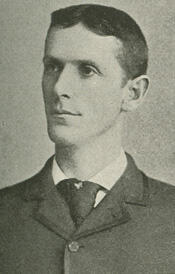
Here you will find contact information for Representative Dennis Thomas Flynn, including email address, phone number, and mailing address.
| Name | Dennis Thomas Flynn |
| Position | Representative |
| State | Oklahoma |
| District | -1 |
| Party | Republican |
| Status | Former Representative |
| Term Start | August 7, 1893 |
| Term End | March 3, 1903 |
| Terms Served | 4 |
| Born | February 13, 1861 |
| Gender | Male |
| Bioguide ID | F000226 |
About Representative Dennis Thomas Flynn
Dennis Thomas Flynn (February 13, 1861 – June 19, 1939) was an American politician, lawyer, newspaperman, and a Delegate from Oklahoma Territory to the United States House of Representatives. A member of the Republican Party, he served as the territorial delegate—functionally a Representative—from 1893 to 1903, contributing to the legislative process during four terms in office and representing the interests of his constituents during a formative period in the history of both Oklahoma and the United States.
Flynn was born in Phoenixville, Chester County, Pennsylvania, on February 13, 1861, the son of Dennis T. and Margaret (Clancy) Flynn. In 1863 he moved with his mother to Buffalo, New York. Orphaned at the age of three upon his mother’s death, he was placed in a Catholic orphanage in Buffalo, where he remained until 1880. He attended the local common schools and later studied at Canisius College in Buffalo, receiving the education that would prepare him for a career in journalism, law, and public service.
After leaving the orphanage and completing his studies, Flynn moved to Riverside, Iowa, where he established and edited a newspaper, the Riverside Leader, and simultaneously studied law. He was admitted to the Iowa bar in 1882. Seeking broader opportunities on the Great Plains, he relocated to Kiowa, Kansas, where he commenced the practice of law. In Kiowa he also became publisher of the Kiowa Herald, demonstrating an early combination of legal and journalistic pursuits. He served as the first postmaster of Kiowa from December 5, 1884, to July 17, 1885, and then as city attorney of Kiowa from 1886 to 1889, gaining experience in both local administration and municipal law.
Flynn married Addie M. Blanton in 1887 in Kiowa, Kansas. Mrs. Flynn had been born, reared, and educated in Kansas, and the couple married while he was actively engaged in the practice of law there. They became the parents of four children. Their eldest son, Dennis, died in childhood; their surviving children included a daughter, Dorothy, a son, Streeter Flynn, and another son. The family would later move with Flynn as his career took him into the newly opened Oklahoma Territory, where he became closely identified with the region’s early political development.
With the opening of Oklahoma Territory to non-Indigenous settlement in 1889, Flynn moved to Guthrie, Oklahoma Territory, arriving in the period of the Land Run of 1889. He quickly emerged as a civic leader and was appointed by President Benjamin Harrison as postmaster of Guthrie, serving from April 4, 1889, to December 20, 1892. He was Guthrie’s first postmaster and also became Oklahoma’s first Republican National Committeeman, underscoring his prominence in the territorial Republican organization. A committed Republican, he first sought national office as an unsuccessful candidate for election as Territorial Delegate to the United States House of Representatives in 1890, but his defeat did not end his political ambitions.
Flynn was elected as the Territorial Delegate from Oklahoma to the Fifty-third Congress and took his seat on March 4, 1893. He was reelected in 1894 to the Fifty-fourth Congress, serving continuously until March 3, 1897, when he left office after an unsuccessful campaign for reelection in 1896. He returned to the political arena in 1898 and was elected again as Territorial Delegate to the Fifty-sixth Congress, beginning a new term on March 4, 1899. He was reelected in 1900 to the Fifty-seventh Congress. Nominated again in 1902, he declined to be a candidate for reelection, and his final term ended on March 3, 1903. In total, he served four terms in Congress between 1893 and 1903. During this decade in Washington, he participated in the democratic process on behalf of Oklahoma Territory, advocating for its development and for the interests of its residents at a time when questions of territorial governance, land policy, and eventual statehood were central issues. His service occurred during a significant period in American history, as the nation continued its westward expansion and grappled with the political integration of new territories.
After leaving Congress, Flynn resumed the practice of law, establishing himself in Oklahoma City in 1904. He remained a leading figure in Republican politics in the new state. In 1908, following Oklahoma’s admission to the Union in 1907, he was the Republican candidate for the United States Senate but was defeated by the Democratic nominee, Thomas P. Gore. Flynn’s prominence in party affairs was such that he was considered for appointment as Secretary of the Interior under President William Howard Taft, a position of particular importance to the administration of public lands and Indian affairs. Although he did not receive the appointment, he continued to be active in national Republican politics and served as a delegate to the Republican National Convention in 1912, which marked his last significant participation in public political life.
In later years, Flynn remained a respected elder statesman in Oklahoma, his life story often cited as emblematic of the state’s pioneer generation—marked by risk-taking, community service, and leadership in the transition from territory to statehood. His legacy extended into subsequent generations; his great-grandson, William Flynn Martin, served as a special assistant to President Ronald Reagan and as United States Deputy Secretary of Energy, reflecting the family’s continued involvement in national public service. Dennis Thomas Flynn died in Oklahoma City, Oklahoma, on June 19, 1939, at the age of 78 years and 126 days. He was interred at Fairlawn Cemetery in Oklahoma City, leaving behind a record of service that secured his place among the founding figures of Oklahoma’s political history.