Representative Denver David Hargis
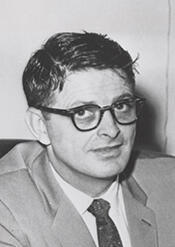
Here you will find contact information for Representative Denver David Hargis, including email address, phone number, and mailing address.
| Name | Denver David Hargis |
| Position | Representative |
| State | Kansas |
| District | 3 |
| Party | Democratic |
| Status | Former Representative |
| Term Start | January 7, 1959 |
| Term End | January 3, 1961 |
| Terms Served | 1 |
| Born | July 22, 1921 |
| Gender | Male |
| Bioguide ID | H000204 |
About Representative Denver David Hargis
Denver David Hargis (July 22, 1921 – March 16, 1989) was an American lawyer, local official, and one-term United States Representative from Kansas who served in the Eighty-sixth Congress from 1959 to 1961. A member of the Democratic Party, he represented a Kansas district in the U.S. House of Representatives during a significant period in mid-twentieth-century American political history, participating in the legislative process and representing the interests of his constituents.
Hargis was born in Key West, Florida, on July 22, 1921. His maternal grandparents were immigrants, with his grandfather and grandmother each coming from Spain and England, giving him a mixed Spanish and English heritage on his mother’s side. In 1922, when he was one year old, his parents moved from Florida to Coffeyville, Kansas, where he was raised. He attended the public schools of Coffeyville, establishing the Kansas community as his long-term home and the base of his later legal and political career.
In January 1941, shortly before the United States formally entered World War II, Hargis enlisted in the United States Navy. He served on active duty through much of the war period, remaining in the Navy until October 1943. After his military service, he returned to Kansas and pursued higher education under the postwar climate that saw many veterans enter college. He enrolled at Washburn University in Topeka, Kansas, receiving a Bachelor of Arts degree in 1946. He continued at Washburn University School of Law, earning an LL.B. degree in 1948. That same year he was admitted to the bar and commenced the practice of law in Coffeyville, where he built a professional reputation that would support his entry into public life.
Hargis’s early career in public service combined federal administrative work with local government leadership. In February 1949, he was appointed district supervisor of the United States Census Bureau for the Third District of Kansas. He was subsequently promoted to administrative officer for Kansas, Missouri, and Nebraska, and later to regional assistant, serving in these Census Bureau capacities until December 1950. Returning to local affairs, he became increasingly active in Coffeyville civic life and was elected mayor of Coffeyville, serving from 1953 to 1958. During this period he also gained experience in regional resource and infrastructure issues; Governor George Docking appointed him as a member of the Arkansas River Basin Committee, on which he served from 1957 to 1959. Hargis first sought national office as a Democrat in 1956, running unsuccessfully for election to the Eighty-fifth Congress.
In 1958, Hargis again stood for Congress and was elected as a Democrat to the Eighty-sixth Congress, serving from January 3, 1959, to January 3, 1961. His single term in the U.S. House of Representatives coincided with the administration of President Dwight D. Eisenhower and the early stages of the modern civil rights era, a time of significant legislative debate over domestic policy, defense, and international affairs. As a member of the House of Representatives, he participated in the democratic process at the federal level, contributing to the work of Congress and advocating for the interests of his Kansas constituents. He also became involved in national party affairs, serving as a delegate at large to the Democratic National Convention in 1960. That same year he was an unsuccessful candidate for reelection to the Eighty-seventh Congress, bringing his formal congressional service to a close after one term.
Following his departure from Congress, Hargis remained engaged in public and governmental work before moving fully into private business. From 1961 to 1962 he served as a consultant to the Department of Defense, and from 1962 to 1966 he worked as a consultant to the Department of Commerce, roles that drew on his legislative experience and knowledge of governmental operations. He later relocated to Florida, where he entered the title insurance field. Over time he became manager and subsequently owner of several title insurance companies in the state, continuing in this line of work until his retirement in 1985.
Hargis’s later life was marked by a widely publicized family tragedy. On October 17, 1965, his estranged wife, Charlene June Hargis, shot and killed the couple’s four children—three daughters and one son—at their apartment in Laurel, Maryland. At the time of the killings, the former congressman was living with another woman in Vienna, Virginia. Charlene Hargis was charged with four counts of murder and entered a plea of insanity. While confined at Spring Grove Hospital, she attempted suicide by slashing her wrists and had to be sedated. She was ultimately found guilty of lesser charges of manslaughter and was sentenced to four concurrent terms of ten years in prison.
In his final years, Hargis resided in Sarasota, Florida. He lived there until his death on March 16, 1989. In recognition of his military service and his tenure in the United States Congress, he was interred at Arlington National Cemetery, where he is buried in Section 37, Grave 921.