Representative Derek Kilmer
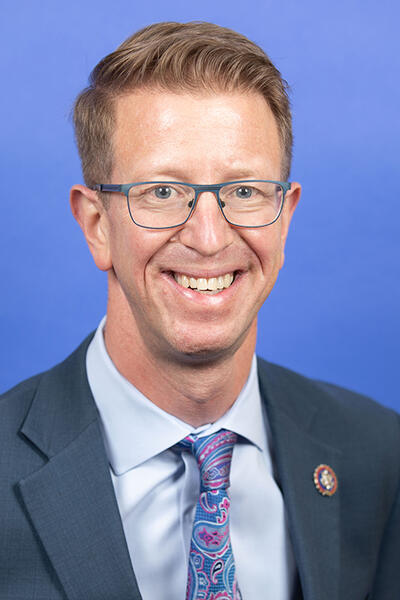
Here you will find contact information for Representative Derek Kilmer, including email address, phone number, and mailing address.
| Name | Derek Kilmer |
| Position | Representative |
| State | Washington |
| District | 6 |
| Party | Democratic |
| Status | Former Representative |
| Term Start | January 3, 2013 |
| Term End | January 3, 2025 |
| Terms Served | 6 |
| Born | January 1, 1974 |
| Gender | Male |
| Bioguide ID | K000381 |
About Representative Derek Kilmer
Derek Christian Kilmer (born January 1, 1974) is an American politician who served as the U.S. representative for Washington’s 6th congressional district from January 3, 2013, to January 3, 2025. A member of the Democratic Party, he served six terms in the U.S. House of Representatives and contributed to the legislative process during a significant period in American history, representing the interests of his constituents on the Olympic Peninsula and in the greater Puget Sound region. Before his election to Congress, he served in the Washington House of Representatives from 2005 to 2007 and the Washington State Senate from 2007 to 2012.
Kilmer was born and raised in Port Angeles, Clallam County, Washington. Both of his parents were public school teachers, and his upbringing in a working-class community shaped his later focus on education, economic development, and labor issues. He attended Princeton University’s Woodrow Wilson School of Public and International Affairs, earning a B.A. in public affairs with a certificate in American studies in 1996. His 184-page senior thesis, “Recovering From the Addiction: The Social and Economic Impacts of the Pacific Northwest Timber Crisis; An Analysis of the Implementation of the Clinton Forest Plan on Washington’s Olympic Peninsula,” supervised by sociologist Steven R. Brechin, reflected an early interest in the intersection of environmental policy and regional economic challenges. Kilmer then studied in the United Kingdom as a Marshall Scholar, earning a Ph.D. in comparative social policy from the Department of Social Policy and Intervention at Green Templeton College, Oxford.
Before entering elective office, Kilmer built a career focused on economic development and business consulting. He worked as a business consultant for McKinsey & Company, advising both private- and public-sector clients. He later served as a business retention manager for the Economic Development Board for Tacoma-Pierce County, where he worked to support local employers and attract investment. In addition to his professional roles, he was active in local civic and educational institutions, serving as a trustee for Tacoma Community College and on the board of the Peninsula Schools Education Foundation, further grounding his public service in community and educational advocacy.
Kilmer’s legislative career began in 2004, when he challenged incumbent Republican state representative Lois McMahan for Washington’s 26th House district, seat 2. He defeated McMahan by a margin of 50%–48%, a difference of 1,009 votes, and served in the Washington House of Representatives from 2005 to 2007. In 2006, following the decision of Republican state senator Bob Oke to retire, Kilmer ran for the Washington State Senate in the 26th district. He won the seat by defeating Republican Jim Hines 60%–40%, and was reelected in 2010, defeating Marty McClendon 59%–41%. During his tenure in the State Senate from 2007 to 2012, he served as chair of the Capital Budget Committee, vice chair of the Ways and Means Committee, and as a member of the Economic Development, Trade, & Innovation Committee and the Higher Education & Workforce Development Committee. In 2007, he was one of just three Democratic state senators to vote against a bill allowing labor unions to spend non-members’ bargaining fees on political causes without first obtaining their permission. He sponsored legislation to increase fines to help finance an $849 million Tacoma Narrows Bridge project in his district. Business groups frequently cited him as one of the most pro-business Democrats in Olympia; he received the Washington Economic Development Association’s “LEADER Award” three times, the Legislative Business Star Award from Enterprise Washington’s Business Institute, and multiple “Legislator of the Year” honors from the Washington Department of Veterans Affairs, the Northwest Chapter of the Paralyzed Veterans of America, the Washington Council of Police & Sheriffs, and was named an honorary fire chief by the Washington Fire Chiefs.
After congressional redistricting and the decision of longtime U.S. representative Norm Dicks to retire, Kilmer announced in March 2012 that he would run to succeed Dicks in Washington’s newly redrawn 6th congressional district. He received key editorial endorsements, including from The Seattle Times, which described him as “a problem solver who can be bipartisan,” and from The News Tribune, which praised his understanding of trade, business taxation, regulation, and job creation. In the November 6, 2012, general election, he defeated Republican nominee Bill Driscoll by a margin of 59%–41%, winning all six counties in the district. He took office on January 3, 2013, and was reelected five times, serving six terms until January 3, 2025. His tenure coincided with a period of economic and political change, including persistent employment challenges in his hometown of Port Angeles, which experienced an unemployment rate 2.3% higher than the Washington State average, consistent with trends predating his time in office.
In Congress, Kilmer served on the powerful Committee on Appropriations, where he sat on the Subcommittee on Defense, the Subcommittee on Interior, Environment, and Related Agencies, and the Subcommittee on Energy and Water Development. From 2019 to 2023, he chaired the Select Committee on the Modernization of Congress, leading a bipartisan effort to improve the efficiency, transparency, and technology infrastructure of the House of Representatives. He also chaired the New Democrat Coalition, a centrist Democratic caucus, from 2019 to 2021, and was succeeded in that role by Representative Susan DelBene of Washington’s 1st congressional district. His bipartisan approach was reflected in his ranking as the 33rd most bipartisan member of the House during the 114th Congress, and the third most bipartisan member of the U.S. House from Washington, according to the Bipartisan Index developed by the Lugar Center and the McCourt School of Public Policy. In the 117th Congress, he voted with President Joe Biden’s stated position 100% of the time, as measured by FiveThirtyEight.
Kilmer’s legislative portfolio emphasized economic opportunity, government reform, veterans’ services, and democratic accountability. On October 29, 2013, he introduced the American Savings Promotion Act (H.R. 3374; 113th Congress), which authorized certain financial institutions to conduct “savings promotion raffles,” allowing depositors to earn chances to win prizes based solely on making deposits into savings accounts, with each entry having an equal chance of being drawn. He sponsored the Honest Ads Act, an election reform measure designed to modernize Federal Election Commission law, enhance citizen financing of campaigns, and require disclosure of funding for social media electioneering. On December 16, 2021, he introduced the Tiny Homes for Veterans Act of 2021 (H.R. 6307; 117th Congress), which would require the Department of Veterans Affairs to implement a six-year pilot program to provide grants for the creation of five villages of tiny homes for homeless veterans, including supportive services to help veterans build and live in energy-efficient homes, maintain social connections, learn skills, and receive counseling.
Foreign policy and international partnerships also formed part of Kilmer’s congressional work. He cosponsored the United States–Israel Strategic Partnership Act of 2013, supporting Israel’s ability to defend itself and encouraging collaboration in energy, water, homeland security, agriculture, and alternative fuel technologies. He was part of a 37-member congressional delegation that visited Israel on a trip sponsored by the American Israel Education Foundation, aimed at strengthening strategic economic and military cooperation between the United States and Israel. In addition to his committee assignments, he was active in numerous caucuses, including the New Democrat Coalition, the Congressional Arts Caucus, the Congressional NextGen 9-1-1 Caucus, the Congressional United Kingdom Caucus, the Congressional Equality Caucus, the Climate Solutions Caucus, the U.S.-Japan Caucus, the Expand Social Security Caucus, the Blue Collar Caucus, the Rare Disease Caucus, and the United States–China Working Group.
On November 9, 2023, Kilmer announced that he would not seek a seventh term in the U.S. House of Representatives in the 2024 election. His service in Congress concluded on January 3, 2025, at the end of the 118th Congress. He was succeeded as the representative for Washington’s 6th congressional district by U.S. Representative Emily Randall. Following his departure from Congress, Kilmer continued his work in public policy and philanthropy, joining The Rockefeller Foundation as Senior Vice President of U.S. Program and Policy, where he focused on national initiatives aimed at expanding opportunity and addressing systemic challenges across the United States.