Representative DeWitt Stephen Hyde
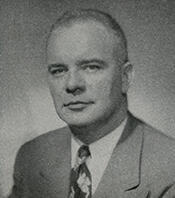
Here you will find contact information for Representative DeWitt Stephen Hyde, including email address, phone number, and mailing address.
| Name | DeWitt Stephen Hyde |
| Position | Representative |
| State | Maryland |
| District | 6 |
| Party | Republican |
| Status | Former Representative |
| Term Start | January 3, 1953 |
| Term End | January 3, 1959 |
| Terms Served | 3 |
| Born | March 21, 1909 |
| Gender | Male |
| Bioguide ID | H001021 |
About Representative DeWitt Stephen Hyde
DeWitt Stephen Hyde (March 21, 1909 – April 25, 1986) was an American attorney, jurist, and Republican politician who served as a member of the United States House of Representatives for Maryland’s 6th congressional district from 1953 to 1959. Over the course of three terms in Congress, he contributed to the legislative process during a significant period in American history, representing the interests of his Maryland constituents in the House of Representatives.
Hyde was born in Washington, D.C., where he attended the public schools. He pursued higher education at George Washington University, earning his Juris Doctor degree in 1935. That same year he was admitted to the District of Columbia Bar and commenced the practice of law in Washington, D.C., marking the beginning of a long professional career in the legal field.
Early in his legal career, Hyde worked with the Farm Credit Administration for three years, gaining experience in federal regulatory and financial matters during the New Deal era. In 1938 he moved to Maryland, where he continued the practice of law. His relocation laid the groundwork for his later political career in the state, even as he maintained strong professional ties to the nation’s capital.
During World War II, Hyde entered active military service. In March 1943 he joined the United States Navy as a lieutenant, junior grade, and served in the South Pacific theater. He was separated from the service in May 1946 with the rank of lieutenant commander. Following his wartime service, he returned to Washington, D.C., where he served as an instructor of law at Benjamin Franklin University from 1946 to 1951, combining practical legal experience with academic teaching.
Hyde’s formal political career began in Maryland’s state legislature. He served as a member of the Maryland House of Delegates from 1947 to 1950, and then as a member of the Maryland Senate in 1951 and 1952. Building on this state-level experience, he successfully ran for Congress in 1952 as a Republican and was elected to the Eighty-third Congress. He was subsequently reelected to the Eighty-fourth and Eighty-fifth Congresses, serving from January 3, 1953, to January 3, 1959, as the representative for Maryland’s 6th congressional district.
Hyde’s congressional service coincided with a pivotal era in domestic and international affairs, including the early Cold War and the emerging civil rights movement. As a member of the House of Representatives, he participated in the democratic process and legislative deliberations on a wide range of national issues. Notably, he did not sign the 1956 Southern Manifesto, a document opposing racial integration, and he voted in favor of the Civil Rights Act of 1957, aligning himself with early federal efforts to protect voting rights for African Americans. In 1958 he was an unsuccessful candidate for reelection to the Eighty-sixth Congress and left the House at the conclusion of his third term.
After his congressional service, Hyde returned to the practice of law before being called again to public service in the judiciary. In 1959 he was appointed an associate judge of the District of Columbia Court of General Sessions, a trial court that later became part of the Superior Court of the District of Columbia in 1971. He served on the bench for two decades, presiding over a broad range of civil and criminal matters until his retirement in 1979, thereby extending his influence on public life from the legislative to the judicial branch.
Hyde was a longtime resident of Bethesda, Maryland, during his later years. He died there on April 25, 1986. In recognition of his military service and public career, he was buried at Arlington National Cemetery.