Representative Dick Thompson Morgan
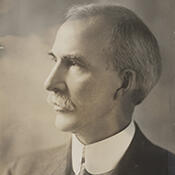
Here you will find contact information for Representative Dick Thompson Morgan, including email address, phone number, and mailing address.
| Name | Dick Thompson Morgan |
| Position | Representative |
| State | Oklahoma |
| District | 8 |
| Party | Republican |
| Status | Former Representative |
| Term Start | March 15, 1909 |
| Term End | March 3, 1921 |
| Terms Served | 6 |
| Born | December 6, 1853 |
| Gender | Male |
| Bioguide ID | M000947 |
About Representative Dick Thompson Morgan
Dick Thompson Morgan (December 6, 1853 – July 4, 1920) was an American educator, lawyer, and Republican politician who served six terms as a U.S. Representative from Oklahoma from 1909 to 1920. His congressional service, which extended over six consecutive terms in the House of Representatives, took place during a significant period in American history, and he played an active role in the legislative process while representing the interests of his constituents.
Morgan was born at Prairie Creek, Indiana, a few miles southwest of Terre Haute, on December 6, 1853. He attended local country schools and Prairie Creek High School before pursuing higher education. In 1876 he received a bachelor’s degree from Union Christian College in Merom, Indiana, followed by a master’s degree from the same institution in 1878. Shortly thereafter, he joined the faculty of Union Christian College as a professor of mathematics, reflecting an early commitment to education and public service.
Seeking a career in law, Morgan enrolled in Central Law School in Indianapolis, Indiana, and graduated in 1880. That same year he was admitted to the bar and commenced the practice of law in Terre Haute, Indiana. His interest in public affairs led him into politics, and he served as a member of the Illinois House of Representatives in 1880 and 1881. During this period he combined legal practice, legislative work, and writing, beginning to develop the expertise in land and credit issues that would later define much of his public career.
Morgan’s professional focus increasingly turned to land law and real estate. He authored several legal and practical manuals, including “Morgan’s Digest of Oklahoma Statutes and Supreme Court Decisions” (1897), “Morgan’s Manual of the United States Homestead, Township, and Mining Laws” (1900), and “Morgan’s School Land Manual” (1901). From 1901 to 1904 he served as president and treasurer of the Western Investment Co. in El Reno, Oklahoma, which published the periodical Oklahoma Real Estate Register. His growing reputation in land matters led President Theodore Roosevelt in 1904 to appoint him register of the United States land office at Woodward in Oklahoma Territory, a position he held until May 1, 1908.
In 1908 Morgan successfully sought election to Congress as a Republican. He was elected to the Sixty-first Congress and to the five succeeding Congresses, serving continuously from March 3, 1909, until his death in 1920. He initially represented Oklahoma’s 2nd congressional district beginning in 1909. Following redistricting after the 1910 Census, he represented Oklahoma’s 8th congressional district from 1915 onward. During his tenure in the House of Representatives, Morgan served on several important committees, including the Committees on Claims, Railways and Canals, Expenditures in the Treasury Department, Public Lands, and Judiciary. He became widely recognized as an expert on rural credits and agricultural finance, and he sponsored the 1916 rural credits law that created the federal land bank system, a major reform intended to improve credit access for American farmers.
Morgan also played a notable role in the development of federal regulatory policy. He was known as the “father of the Federal Trade Commission” for his early and persistent advocacy of a federal agency to oversee fair competition and trade practices. On January 12, 1912, he introduced the first bill in Congress to establish such a commission and delivered the first speech on the House floor urging its adoption on February 21, 1912. He reintroduced a slightly amended version of the bill in 1913, helping to lay the groundwork for the eventual creation of the Federal Trade Commission. His writings during this period included “Land Credits: A Plea for the American Farmer” (1915), which further articulated his views on rural finance and economic reform.
In his personal life, Morgan married Ora Heath in 1878. The couple had one son, Porter Heath Morgan, born in 1880. Throughout his career, Morgan balanced family life with his responsibilities as an educator, lawyer, author, and legislator, maintaining close ties to both Indiana and Oklahoma as he moved from state politics and legal practice into national public service.
Dick Thompson Morgan died in office on July 4, 1920, in Danville, Illinois, while returning from Washington, D.C., to Oklahoma. His death, attributed to pneumonia, placed him among the members of the United States Congress who died in office in the early twentieth century. He was interred in Rose Hill Burial Park in Oklahoma City, Oklahoma. His papers and legacy, including the Dick T. Morgan Collection at the Carl Albert Center and memorial addresses delivered in the House of Representatives and Senate in 1922, reflect a career marked by sustained engagement with land policy, rural credit, and the evolving regulatory framework of the federal government.