Senator Dirk Kempthorne
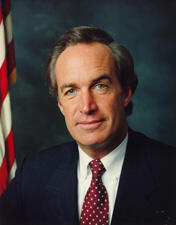
Here you will find contact information for Senator Dirk Kempthorne, including email address, phone number, and mailing address.
| Name | Dirk Kempthorne |
| Position | Senator |
| State | Idaho |
| Party | Republican |
| Status | Former Representative |
| Term Start | January 5, 1993 |
| Term End | January 3, 1999 |
| Terms Served | 3 |
| Born | October 29, 1951 |
| Gender | Male |
| Bioguide ID | K000088 |
About Senator Dirk Kempthorne
Dirk Arthur Kempthorne (born October 29, 1951) is an American politician who served as the 49th United States Secretary of the Interior from 2006 to 2009 under President George W. Bush. A member of the Republican Party, he previously served as a United States Senator from Idaho from 1993 to 1999 and as the 30th governor of Idaho from 1999 to 2006. Over the course of his career, he also served as mayor of Boise, Idaho, and later held prominent roles in national policy and the private sector, including leadership of a major industry association and work with a bipartisan policy organization.
Kempthorne was born in San Diego, California, on October 29, 1951, and was raised in San Bernardino, California. He graduated from San Gorgonio High School in San Bernardino and began his higher education at San Bernardino Valley College. He later transferred to the University of Idaho in Moscow, where he graduated in 1975 with a degree in political science. While at the University of Idaho, he served a term as student body president, an early indication of his interest in public service and politics. Kempthorne is of Cornish ancestry. He married Patricia Kempthorne, also a graduate of the University of Idaho, and the couple have two children, Heather and Jeff.
Following his graduation, Kempthorne entered public service and industry-related work in Idaho. He first served as an assistant to the director of the Idaho Department of Lands, gaining experience in natural resources and land management issues that would later inform his work at both the state and federal levels. He then became executive vice president of the Idaho Home Builders Association, where he worked on issues related to housing, development, and the construction industry. In 1982, he managed the gubernatorial campaign of Lieutenant Governor Phil Batt, who was unsuccessful in his challenge to incumbent Democratic Governor John V. Evans. The following year, in 1983, Kempthorne became state public affairs manager for FMC Corporation, further broadening his experience in corporate and public affairs.
Kempthorne’s first major electoral victory came in 1985, when, at age thirty-four, he was elected mayor of Boise, Idaho. As mayor, he quickly became a popular figure in city politics and was reelected without opposition in 1989. He served as mayor for seven years, from 1985 until 1992, overseeing a period of growth and development in the state capital and building a political base that would support his subsequent statewide and national campaigns. His tenure as mayor marked his emergence as a leading Republican figure in Idaho.
In 1992, following the decision of U.S. Senator Steve Symms not to seek a third term, Kempthorne ran for the open United States Senate seat from Idaho. He secured the Republican nomination and, in the general election, defeated Democratic U.S. Representative Richard H. Stallings. Kempthorne served one term in the Senate, from January 3, 1993, to January 3, 1999. His service in Congress occurred during a significant period in American history, and as a member of the Senate he participated in the legislative process and represented the interests of his Idaho constituents. During his six years in the Senate, he sponsored and helped pass the Unfunded Mandates Reform Act of 1995, legislation intended to curb the practice of imposing unfunded federal mandates on state, local, and tribal governments, strengthen the partnership between the federal government and those governments, and ensure that Washington bore the costs of certain federal requirements. Also in 1995, he introduced amendments to the Safe Drinking Water Act; these amendments were enacted when President Bill Clinton signed the bill into law on August 6, 1996. His voting record on environmental issues drew criticism from environmental organizations: he received a score of “0” from the League of Conservation Voters on its legislative scorecard every year except 1993, when he scored 6 percent on the basis of a single vote against funding a rocket booster that environmentalists considered harmful to the environment. His overall LCV score for his Senate tenure was less than 1 percent. Although he was widely expected to seek reelection in 1998, Kempthorne instead chose to run for governor of Idaho. His Senate seat was subsequently won by Republican Congressman Mike Crapo of Idaho Falls.
Kempthorne was elected governor of Idaho in 1998 after incumbent Republican Governor Phil Batt, then seventy-one, announced he would not seek a second term, citing his age as the primary factor in his decision. In the 1998 gubernatorial election, Kempthorne won in a landslide, receiving 68 percent of the vote, while his Democratic opponent, Robert C. Huntley, received 29 percent. He was reelected in 2002 with 56 percent of the vote against Democratic nominee Jerry Brady, who received 42 percent. Kempthorne’s 2002 campaign spent nearly $200,000 more than it had received in contributions prior to the election, and he spent the next two years raising funds to retire the campaign debt. As governor, he served from January 4, 1999, until May 26, 2006, focusing on issues such as state budgeting, education, and natural resources, and he became a prominent figure in western governors’ discussions of land and water policy.
On March 16, 2006, President George W. Bush nominated Kempthorne to serve as the 49th United States Secretary of the Interior, succeeding Gale Norton. His nomination was approved by voice vote in the Senate Committee on Energy and Natural Resources on May 10, 2006, and he was confirmed by the full Senate on May 26, 2006. That same day, he resigned as governor of Idaho to assume the Cabinet post, and Lieutenant Governor Jim Risch succeeded him as governor for the remainder of his term. Kempthorne was the second Idahoan to serve as Secretary of the Interior, following former Governor Cecil Andrus, who had held the position under President Jimmy Carter from 1977 to 1981. As Secretary of the Interior from 2006 to 2009, Kempthorne oversaw federal land management, natural resources, and wildlife agencies. Environmental groups characterized him as a policymaker who generally favored changing laws such as the Endangered Species Act and the Safe Drinking Water Act in ways they believed were more favorable to commercial interests. He was criticized for not placing any plants or animals on the federal endangered species list during his tenure; as of September 2007, he held the record for protecting fewer species than any previous Interior Secretary, a distinction that had previously been associated with James G. Watt.
Kempthorne’s tenure at the Interior Department was marked by several high-profile controversies and investigations. In December 2007, following a long-term investigation and the resignation of former Deputy Assistant Secretary Julie MacDonald, Interior Department Inspector General Earl Devaney reported “abrupt and abrasive, if not abusive” management within the department under Kempthorne’s supervision. Senator Ron Wyden, chairman of the Senate Subcommittee on Public Lands and Forests, attributed an “untold waste of hundreds of thousands of taxpayers’ dollars” to MacDonald’s actions, while Representative Nick J. Rahall II, chairman of the House Natural Resources Committee, stated that the investigation depicted “something akin to a secret society residing within the Interior Department that was colluding to undermine the protection of endangered wildlife and covering for one another’s misdeeds.” In September 2008, Devaney reported wrongdoing by current and former employees of the Minerals Management Service, an Interior agency that collects roughly $10 billion annually in oil and gas royalties. Investigators found that several officials had accepted gifts from energy companies in excess of ethics limits, including entertainment and travel, and that some had used illegal drugs and engaged in inappropriate relationships with industry representatives. A whistleblower had formally raised concerns about such conduct in the spring of 2006, before Kempthorne took office as Secretary. In December 2008, the Center for Biological Diversity, along with Greenpeace and Defenders of Wildlife, announced a lawsuit against the Interior Department under Kempthorne, challenging regulations they argued would weaken the Endangered Species Act by exempting many federal activities, including those generating greenhouse gases, from required review. The groups contended that the regulations violated the Act and had been pushed through an abbreviated process without adequate public review or environmental analysis. In 2009, CNN correspondent Campbell Brown criticized Kempthorne for authorizing approximately $235,000 in taxpayer funds to renovate his Interior Department office bathroom, citing features such as a shower, refrigerator, freezer, and wood paneling. Donald Swain, chief of the Interior Department’s National Business Center, responded that monogrammed towels mentioned in the report did not exist and that the project had come in $10,000 under budget and was approved by the General Services Administration.
After leaving federal office in 2009, Kempthorne remained active in public policy and the private sector. He became a co-chair of the Democracy Project at the Bipartisan Policy Center, a Washington-based think tank that promotes bipartisan solutions to national challenges. In November 2010, he was appointed president and chief executive officer of the American Council of Life Insurers, representing the interests of the life insurance industry in national policy debates and regulatory matters. In addition to his professional and public roles, Kempthorne has maintained close ties to Idaho and to his alma mater, the University of Idaho. On March 31, 2025, Kempthorne announced that he had been diagnosed with colon cancer and would begin chemotherapy, adding a significant personal health challenge to a long and visible career in public life.