Senator Dixie Bibb Graves
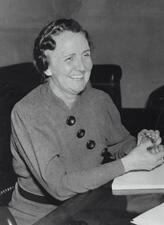
Here you will find contact information for Senator Dixie Bibb Graves, including email address, phone number, and mailing address.
| Name | Dixie Bibb Graves |
| Position | Senator |
| State | Alabama |
| Party | Democratic |
| Status | Former Representative |
| Term Start | August 20, 1937 |
| Term End | January 10, 1938 |
| Terms Served | 1 |
| Born | July 26, 1882 |
| Gender | Female |
| Bioguide ID | G000391 |
About Senator Dixie Bibb Graves
Dixie Bibb Graves (July 26, 1882 – January 21, 1965) was an American politician and civic leader who became the first woman to serve as a United States senator from Alabama and only the fourth woman to become a member of the U.S. Senate. A member of the Democratic Party, she served one term in Congress from 1937 to 1938, during a significant period in American history marked by the New Deal and major shifts in federal policy. She also served as First Lady of Alabama during the gubernatorial administrations of her husband, David Bibb Graves.
Dixie Bibb was born on July 26, 1882, on her family’s plantation outside Montgomery, Alabama, to Peyton and Isabel Thorpe Bibb. She attended local public schools in the Montgomery area. In 1900, at the age of eighteen, she married David Bibb Graves, then a state legislator who would later become governor of Alabama. Her marriage placed her at the center of Alabama political life, and she increasingly used that position to advance civic and social causes.
Before entering national office, Graves became a prominent civic leader in Alabama. She served as a trustee of the Alabama Boys’ Industrial School in Birmingham and was president of the United Daughters of the Confederacy from 1915 to 1917. She was active in the Woman’s Christian Temperance Union, the Alabama Federation of Women’s Clubs, and the women’s suffrage movement, reflecting her broader commitment to public welfare, moral reform, and the expansion of women’s roles in public life. As First Lady of Alabama during her husband’s administrations, she further developed her reputation as an advocate for health, education, and social services.
David Bibb Graves began his second nonconsecutive term as governor of Alabama in 1935. When U.S. Senator Hugo L. Black resigned in August 1937 to become an Associate Justice of the Supreme Court of the United States, Governor Graves appointed his wife to fill the vacancy. Dixie Bibb Graves was appointed to the United States Senate on August 20, 1937, becoming the first woman senator from Alabama and the first married woman to serve in the Senate; the women who had preceded her in that body had all been widows. Her husband publicly justified the appointment as an interim measure intended not to favor any of the potential candidates in the forthcoming special election, whose support he needed for his gubernatorial programs.
Graves served in the United States Senate from August 20, 1937, until her resignation on January 10, 1938. During her brief tenure, she participated in the legislative process at the height of the New Deal era and represented the interests of her Alabama constituents. She voted in support of key New Deal programs, particularly those directed at agriculture, crop control, and labor policy, aligning herself with the Democratic administration’s efforts to address the economic challenges of the Great Depression. She was succeeded in the Senate by fellow Democrat Lister Hill, who would go on to serve for more than three decades.
After leaving Congress, Graves remained active in public affairs and a wide range of civic causes. She continued to work on issues of public welfare, health, and education in Alabama and beyond. During World War II, she helped recruit women for the Women’s Army Corps (WACs) and worked with the American Red Cross and the United Service Organizations (USO); one WAC unit was designated the Dixie Bibb Graves Unit in her honor. She was a very active member of the State Advisors on Women’s Activities of the National Foundation for Infantile Paralysis, later known as the National March of Dimes Association, where she promoted research, treatment, and hospital facilities for those affected by polio. In Democratic Party politics, she served as chair or honorary chair of the Women’s Division of the State Democratic Campaign in 1948, 1952, 1956, and 1960, and she maintained memberships in organizations including the Alabama Historical Association, the American Legion Auxiliary, the No Name Club, and the United Daughters of the Confederacy.
Dixie Bibb Graves died in Montgomery, Montgomery County, Alabama, on January 21, 1965, at the age of 82. She was interred at Greenwood Cemetery in Montgomery. Her contributions were later recognized by her induction into the Alabama Women’s Hall of Fame in 1972. The Dixie Bibb Graves Armory, built in Montgomery in 1935 as a Works Progress Administration project and later converted in the 1990s into the Armory Learning Arts Center, also bears her name, reflecting her enduring association with public service and civic life in Alabama.