Senator Dixon Hall Lewis
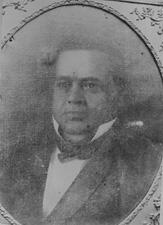
Here you will find contact information for Senator Dixon Hall Lewis, including email address, phone number, and mailing address.
| Name | Dixon Hall Lewis |
| Position | Senator |
| State | Alabama |
| Party | Democratic |
| Status | Former Representative |
| Term Start | December 7, 1829 |
| Term End | October 25, 1848 |
| Terms Served | 10 |
| Born | August 10, 1802 |
| Gender | Male |
| Bioguide ID | L000278 |
About Senator Dixon Hall Lewis
Dixon Hall Lewis (August 10, 1802 – October 25, 1848) was an American politician who served as both a representative and a senator from Alabama. A member of the Democratic Party and identified in his early national career as a States’ Rights Democrat, he contributed to the legislative process during a significant period in American history, ultimately serving in Congress from 1829 until his death in 1848. Over the course of ten terms in office in the House of Representatives and subsequent service in the Senate, he represented the interests of his Alabama constituents and held several influential committee positions.
Lewis was born on the Bothwick plantation in Dinwiddie County, Virginia, on August 10, 1802. In 1806 his family moved to Hancock County, Georgia, where he was raised. He received his early education at Mount Zion Academy, a noted preparatory institution in Georgia, and then attended South Carolina College at Columbia (later the University of South Carolina), from which he graduated in 1820. That same year, he moved westward to Autauga County, Alabama, reflecting the broader migration of Southern planters and professionals into the developing territories of the Deep South.
After settling in Alabama in 1820, Lewis studied law and was admitted to the bar in 1823. In that year he constructed a residence known as the “Old Homestead” in the town of Lowndesboro, Alabama, approximately twenty miles west of the state capital at Montgomery. He began the practice of law in Montgomery and quickly entered public life. Lewis was elected to the Alabama House of Representatives in 1826 and served in that body until 1828, gaining experience in state governance at a time when Alabama was still a relatively new state in the Union.
Lewis advanced to national office in 1829. He was elected as a States’ Rights Democrat to the Twenty-first Congress and was subsequently reelected to the seven succeeding Congresses, serving in the United States House of Representatives from March 4, 1829, to April 22, 1844, when he resigned to enter the Senate. During his long tenure in the House, he became an influential legislator. From 1831 to 1835 he served as chairman of the United States House Committee on Indian Affairs, a key committee during a period marked by the federal government’s policies of Indian removal and westward expansion. In the Twenty-sixth Congress he came close to attaining the speakership of the House, receiving 113 votes on the eighth ballot, just four short of the 117 required for election; the contest was ultimately decided in favor of Robert M. T. Hunter on the eleventh ballot.
Lewis’s Senate career began in 1844, when he was appointed by his brother-in-law, Governor Benjamin Fitzpatrick of Alabama, to fill the vacancy caused by the resignation of Senator William R. King. He took his seat in the United States Senate on April 22, 1844. He was subsequently reelected as the Democratic candidate in 1847, and he served in the Senate from April 22, 1844, until his death in 1848. In the Senate he held an important leadership role as chairman of the Committee on Finance from 1845 to 1847, a period that encompassed debates over tariffs, fiscal policy, and the economic consequences of territorial expansion. In 1847 he was also appointed to the Board of Visitors of the United States Military Academy at West Point, reflecting his prominence in national affairs. That same year, according to contemporary accounts, he purchased in Baltimore “fifteen or twenty thousand dollars worth of Negroes for use of himself and his son, on their plantations, at home,” underscoring his position as a large slaveholder within the plantation economy of the antebellum South.
Throughout his public life, Lewis was widely known for his extraordinary physical size. He was reported to weigh as much as 500 pounds (227 kg), making him the heaviest member of Congress on record. His great bulk required special accommodations: a specially constructed seat was provided for him in the Senate chamber, and his carriage was fitted with unusually heavy suspension springs. His size became the subject of political humor among his colleagues, and a popular witticism of the era held that Alabama had “the largest representation of any state” in Congress, a reference to Lewis’s imposing figure.
Dixon Hall Lewis died in office in New York City on October 25, 1848, while still serving as a United States senator from Alabama. His death brought to a close nearly two decades of continuous congressional service, spanning both the House of Representatives and the Senate during a transformative era in American politics. He was interred at Green-Wood Cemetery in Brooklyn, New York, where his grave marks the resting place of one of the most distinctive and influential Southern legislators of the antebellum period.