Representative Don Bonker
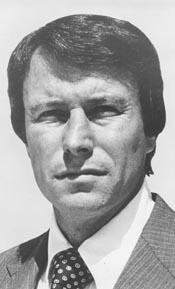
Here you will find contact information for Representative Don Bonker, including email address, phone number, and mailing address.
| Name | Don Bonker |
| Position | Representative |
| State | Washington |
| District | 3 |
| Party | Democratic |
| Status | Former Representative |
| Term Start | January 14, 1975 |
| Term End | January 3, 1989 |
| Terms Served | 7 |
| Born | March 7, 1937 |
| Gender | Male |
| Bioguide ID | B000620 |
About Representative Don Bonker
Donald Leroy Bonker (March 7, 1937 – May 30, 2023) was an American politician from the state of Washington who served seven terms as a Democratic member of the United States House of Representatives from 1975 to 1989, representing Washington’s 3rd congressional district. Over the course of his career, he became known as a moderate Democrat with particular influence in foreign affairs, international trade policy, and environmental conservation, and he played a significant role in shaping federal trade legislation during a pivotal period in late twentieth-century American politics.
Bonker attended public schools in Westminster, Colorado, before moving to the Pacific Northwest for his higher education. He received an Associate of Arts degree from Clark College in Vancouver, Washington, in 1962, and went on to earn a Bachelor of Arts degree from Lewis & Clark College in Portland, Oregon, in 1964. His early exposure to public service and regional issues in the Pacific Northwest helped lay the groundwork for his later political career at both the county and national levels.
Following his graduation, Bonker began his career in federal politics as an aide to United States Senator Maurine Neuberger of Oregon, serving in her office from 1964 to 1965. He then returned to Washington state and entered local government, winning election as county auditor of Clark County, Washington, a position he held from 1966 to 1974. During this period he also became active in party politics, serving as a delegate to Washington State Democratic conventions from 1968 to 1970. In 1972 he sought statewide office as a candidate for Washington Secretary of State, but was defeated by the incumbent Republican, Lud Kramer. Undeterred, he continued to build his profile in public service and Democratic Party affairs.
In 1974, Bonker was elected to the U.S. House of Representatives as a Democrat from Washington’s 3rd congressional district and took office on January 3, 1975, in the 94th Congress. He was subsequently reelected to six succeeding Congresses, serving continuously until January 3, 1989. His seven terms in the House coincided with a significant period in American history marked by the end of the Vietnam era, the Cold War’s later stages, and major shifts in global trade. As a member of the House of Representatives, he participated actively in the legislative process and represented the interests of his constituents in southwestern Washington, while also emerging as a national voice on trade and environmental policy.
During his congressional service, Bonker became a senior member of the House Committee on Foreign Affairs and chaired the Subcommittee on International Economic Policy and Trade. In these roles he helped shape U.S. trade and export policy at a time of growing globalization. He served on the President’s Export Council and headed Speaker Tip O’Neill’s Trade Task Force, which played a key role in the development and passage of the Omnibus Trade and Competitiveness Act. Bonker authored and was a principal sponsor of major trade legislation, including the Export Trading Company Act and the Export Administration Act, and he was widely regarded as an expert on international economic policy and export promotion.
Bonker also left a substantial environmental legacy during his time in Congress. He was instrumental in establishing the Grays Harbor National Wildlife Refuge and the Mount St. Helens National Volcanic Monument, both in Washington state. He helped add Protection Island to the National Wildlife Refuge System and worked to preserve the Point of Arches area within Olympic National Park. In addition, he played a key role in adding approximately 250,000 acres to the Washington Wilderness Act of 1984 and sponsored legislation to ban the export of Western redcedar, reflecting his commitment to conservation and sustainable management of the region’s natural resources. His combined focus on trade and environmental protection made him a distinctive figure among his contemporaries in Congress.
In 1988, Bonker chose not to seek reelection to the House in order to pursue a seat in the United States Senate. He ran for the Democratic nomination but narrowly lost in the primary to fellow Democratic Representative Mike Lowry. Lowry was subsequently defeated in the general election by Republican Senator Slade Gorton. Bonker remained active in politics and, in 1992, again sought a U.S. Senate seat, this time losing in the Democratic primary to Patty Murray, who went on to win the general election and serve in the Senate. In 2000, he returned to statewide politics as the Democratic nominee for Washington Secretary of State, winning his party’s primary but losing the general election to Republican Sam Reed.
After leaving Congress, Bonker pursued a career in international business, public affairs, and policy advocacy. He served as president and chief executive officer of the International Management and Development Institute, an organization focused on international management and policy issues. He sat on the board of the Foundation for U.S.-Russia Business Cooperation, reflecting his continued engagement with international economic relations, and later became executive vice president of the global public affairs firm APCO Worldwide. He also remained active in political reform efforts as a member of the ReFormers Caucus of Issue One, a bipartisan group of former elected officials advocating for campaign finance and government reforms.
Bonker continued to influence public debate on trade and foreign policy as an author, commentator, and speaker. He wrote the book “America’s Trade Crisis,” published by Houghton Mifflin, in which he examined U.S. trade policy and its challenges in a changing global economy. He contributed a monthly column on trade policy that appeared in newspapers around the country, further establishing his reputation as a leading voice on export and competitiveness issues. In 2009, he drew criticism from many Democrats when he endorsed Republican Susan Hutchison for King County Executive over the Democratic favorite, Dow Constantine, who ultimately won the election, underscoring his willingness at times to cross party lines based on personal judgment.
In his personal life, Bonker married Carolyn Ekern in 1971, and the couple had two children. He remained connected to Washington state throughout his life, even as his professional work took him to national and international arenas. In May 2023 he was diagnosed with liver cancer and died shortly thereafter at a hospital in Silverdale, Washington, on May 30, 2023, at the age of 86. His long career in public service, from county auditor to senior member of Congress and international trade expert, left a lasting imprint on both Washington state and national policy.