Representative Don Byron Colton
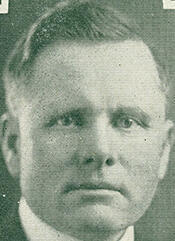
Here you will find contact information for Representative Don Byron Colton, including email address, phone number, and mailing address.
| Name | Don Byron Colton |
| Position | Representative |
| State | Utah |
| District | 1 |
| Party | Republican |
| Status | Former Representative |
| Term Start | April 11, 1921 |
| Term End | March 3, 1933 |
| Terms Served | 6 |
| Born | September 15, 1876 |
| Gender | Male |
| Bioguide ID | C000652 |
About Representative Don Byron Colton
Don Byron Colton (September 15, 1876 – August 1, 1952) was an American lawyer and Republican politician who served six consecutive terms as a U.S. Representative from Utah from 1921 to 1933. Over the course of his twelve years in the House of Representatives, he represented the interests of his Utah constituents and contributed to the legislative process during a period marked by post–World War I adjustment, the prosperity of the 1920s, and the onset of the Great Depression.
Colton was born on September 15, 1876, in Mona, Juab County, Utah Territory. He grew up in the rural communities of central Utah during the closing years of the territorial period, experiencing firsthand the agricultural and small-town life that shaped much of the state’s early development. His upbringing in a frontier environment influenced his later interest in land, irrigation, and public resource issues that were central to Utah’s economy and to many of the legislative questions facing Western states in the early twentieth century.
Pursuing higher education as Utah transitioned from territory to statehood, Colton attended local schools before studying at Brigham Young Academy in Provo, an institution that would later become Brigham Young University. He subsequently undertook legal studies and was admitted to the bar, beginning the practice of law in Utah. His legal training provided the foundation for a career that combined professional practice with public service, and it prepared him for the detailed statutory and procedural work that would characterize his later congressional service.
Before his election to Congress, Colton established himself in Utah public life through his legal work and involvement in civic and political affairs. As a lawyer, he became familiar with issues of land use, water rights, and local governance that were especially important in a predominantly agricultural and resource-dependent state. His growing reputation and engagement in Republican Party activities positioned him as a viable candidate for national office at a time when Utah was consolidating its political institutions and seeking effective representation in Washington, D.C.
Colton was elected as a Republican to the U.S. House of Representatives in 1920 and took his seat in the Sixty-seventh Congress on March 4, 1921. He was subsequently reelected to five additional consecutive terms, serving continuously until March 3, 1933. During these six terms in office, he participated in the democratic process as a member of the House of Representatives, working on legislation that affected both his home state and the nation. His tenure spanned the administrations of Presidents Warren G. Harding, Calvin Coolidge, and Herbert Hoover, and he served in Congress during such major national developments as the implementation of Prohibition, debates over agricultural and tariff policy, and the federal government’s initial responses to the economic crisis that began in 1929.
As a Representative from Utah, Colton focused on representing the interests of his constituents, many of whom were engaged in farming, mining, and other resource-based industries. He supported measures related to western development, including issues of reclamation, irrigation, and public lands that were vital to the economic growth of Utah and the Intermountain West. Within the broader legislative process, he contributed to committee work and floor debates, helping to shape federal policy in areas that affected both his district and the country at large during a transformative era in American history.
Colton’s congressional service concluded in 1933, when he left the House at the end of his sixth term. After his departure from Congress, he returned to private life and to the practice of law, remaining a respected figure in Utah’s legal and political circles. He lived to see the New Deal era and the profound changes it brought to federal–state relations and to the West, a region whose early twentieth-century development he had helped to influence as a member of Congress.
Don Byron Colton died on August 1, 1952. His career as an attorney and legislator, and his twelve years of continuous service in the U.S. House of Representatives from 1921 to 1933, left a record of sustained participation in the national legislative process and dedicated representation of Utah during a significant period in American history.