Representative Don Gingery
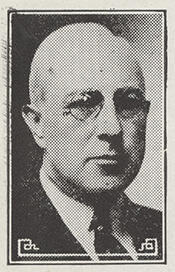
Here you will find contact information for Representative Don Gingery, including email address, phone number, and mailing address.
| Name | Don Gingery |
| Position | Representative |
| State | Pennsylvania |
| District | 23 |
| Party | Democratic |
| Status | Former Representative |
| Term Start | January 3, 1935 |
| Term End | January 3, 1939 |
| Terms Served | 2 |
| Born | February 19, 1884 |
| Gender | Male |
| Bioguide ID | G000224 |
About Representative Don Gingery
Don Hilary Gingery (February 19, 1884 – October 15, 1961) was a Democratic member of the U.S. House of Representatives from Pennsylvania who served two terms in Congress from 1935 to 1939. He represented his Pennsylvania constituency during a pivotal era in American history marked by the New Deal and the nation’s recovery from the Great Depression, contributing to the legislative process as a member of the House of Representatives.
Gingery was born in Woodland, Clearfield County, Pennsylvania, on February 19, 1884. In 1892 he moved with his family to Clearfield, Pennsylvania, which would remain his principal home for most of his life. He attended Mercersburg Academy in Mercersburg, Pennsylvania, and later pursued higher education at Ohio Northern University in Ada, Ohio. His early training combined formal education with practical and technical experience, laying the groundwork for a career that would span business, engineering, military service, and politics.
Beginning in 1902, Gingery entered the hardware and mine-supply business, an occupation he pursued until 1934. In 1903 he also worked as a civil engineer, gaining familiarity with the industrial and mining infrastructure that was central to the economy of his region. Parallel to his early business career, he served in the Pennsylvania National Guard from 1902 to 1906, rising through the enlisted and officer ranks from private to captain. This combination of commercial, technical, and military experience helped establish his standing in Clearfield County and introduced him to public service and leadership roles.
Gingery’s formal political career began at the state level. He was elected to the Pennsylvania House of Representatives, serving as a member in 1915 and 1916. Active in party affairs, he became chairman of the Clearfield County Democratic committee in 1916 and 1917, and subsequently served as a member of the Democratic State committee in 1919 and 1920. His growing influence within the Democratic Party led to his selection as a member of the official United States delegation that attended the inauguration of President Manuel L. Quezon of the Philippines at Manila in 1935, reflecting his prominence in party and public life beyond his home state.
In national office, Gingery was elected as a Democrat to the Seventy-fourth and Seventy-fifth Congresses, serving in the U.S. House of Representatives from Pennsylvania from January 3, 1935, to January 3, 1939. During these two terms, he participated in the democratic process at the federal level, representing the interests of his constituents during a significant period in American history. His service coincided with major New Deal legislative initiatives, and he took part in the deliberations and votes that shaped federal responses to economic hardship and social reform. A member of the Democratic Party throughout his tenure, he contributed to the legislative work of the House until the close of his second term. He was an unsuccessful candidate for reelection in 1938, ending his consecutive service in Congress after two terms.
Following his departure from Congress, Gingery continued his involvement in public affairs, particularly in areas related to the coal industry, which was central to Pennsylvania’s economy. From 1939 to 1946 he was associated with the Bituminous Coal Division of the Coal Mines Administration and with the Solid Fuels Administration for War in the United States Department of the Interior, based in Altoona, Pennsylvania. In these roles he worked within the federal wartime and regulatory framework that governed coal production and distribution during and immediately after World War II. He remained active in Democratic Party politics and served as a delegate from Pennsylvania to the 1948 Democratic National Convention.
In his later years, Gingery resided in Clearfield, Pennsylvania, maintaining his long-standing ties to the community where he had grown up and first entered public life. He died in Clearfield on October 15, 1961. Don Hilary Gingery was interred in Hillcrest Cemetery in Clearfield, closing a life that encompassed military service, business and engineering work, state and national legislative office, and continued federal service in the administration of the nation’s coal resources.