Senator Don Nickles
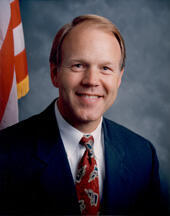
Here you will find contact information for Senator Don Nickles, including email address, phone number, and mailing address.
| Name | Don Nickles |
| Position | Senator |
| State | Oklahoma |
| Party | Republican |
| Status | Former Representative |
| Term Start | January 5, 1981 |
| Term End | January 3, 2005 |
| Terms Served | 12 |
| Born | December 6, 1948 |
| Gender | Male |
| Bioguide ID | N000102 |
About Senator Don Nickles
Donald Lee Nickles (born December 6, 1948) is an American politician and lobbyist who represented Oklahoma in the United States Senate from January 3, 1981, to January 3, 2005. A member of the Republican Party, he was considered both a fiscal and social conservative and, at the time of his retirement, was the longest-serving senator in Oklahoma history. Over four terms in office, he contributed to the legislative process during a significant period in American history, participating in the democratic process and representing the interests of his constituents. After leaving the Senate, he founded the Nickles Group, a lobbying and government consulting firm in Washington, D.C.
Nickles was born and raised in Ponca City, Oklahoma, the son of Coeweene (Bryan) and Robert C. Nickles. He attended Ponca City public schools and graduated from Ponca City High School in 1967. A formative experience in his youth occurred in 1961, when his father died and the family was forced to sell part of the family business to raise cash to pay the required estate tax, an event that later shaped his views on taxation and estate policy. He enrolled at Oklahoma State University in Stillwater, where he joined the Beta Theta Pi fraternity and, together with his wife, the former Linda Lou Morrison, operated Don Nickles Professional Cleaning Service to help pay for their education. He earned a Bachelor of Arts degree in business administration from Oklahoma State University in 1971.
Following his graduation, Nickles returned to Ponca City to work for Nickles Machine Corporation, a manufacturing business founded in 1918 by his grandfather, Clair Nickles. He rose to become the company’s vice president and general manager, gaining experience in business management and the concerns of small and medium-sized enterprises. Concurrently, he served in the Kansas Army National Guard and the Oklahoma Army National Guard from 1970 until 1976. His early exposure to business operations, combined with his family’s experience with estate taxation and his service in the National Guard, informed the fiscally conservative and pro-business positions that would characterize his later political career.
Nickles’s formal political career began in state government. In 1978, at age 29, he was elected to the Oklahoma Senate, marking the start of his public service in elective office. Two years later, in 1980, he successfully ran for the United States Senate and, at the age of 31, became—and remains—the youngest Republican ever elected to that body. He took office on January 3, 1981, at the outset of the Reagan administration, and was re-elected to the Senate in 1986, 1992, and 1998. From 1994 to 2005 he served as Oklahoma’s senior senator. During his tenure, he was known as a strong advocate of tax cuts, reduced federal spending, a robust national defense, and policies reflecting socially conservative views, including opposition to abortion and skepticism toward what he regarded as official hostility to religion.
Within the Senate, Nickles quickly rose through the Republican leadership ranks. He served as chairman of the National Republican Senatorial Committee in the 101st Congress, where he played a key role in party campaign strategy and fundraising. He then served as chairman of the Senate Republican Policy Committee in the 102nd, 103rd, and 104th Congresses, helping to shape and communicate the Republican legislative agenda. From 1996 to 2003 he was Assistant Republican Leader (Republican Whip), the second-ranking position in the party’s Senate leadership, where he was responsible for vote counting and party discipline. After being term-limited out of the Whip position, he served in the 108th Congress as chairman of the Senate Budget Committee, a post from which he influenced federal budget priorities and long-term fiscal policy. At one point, he was mentioned on Senator Bob Dole’s short list of potential vice-presidential running mates before Dole selected former Representative Jack Kemp of New York.
Nickles’s legislative record reflected his fiscal conservatism and social conservatism. He sponsored and supported measures to cut taxes and limit government spending, and he was a prominent critic of the federal estate tax, an issue tied to his own family’s experience. The National Federation of Independent Business praised him for including in the Senate’s 2005 budget a provision that would accelerate by one year the complete repeal of the federal estate tax. He was a leading sponsor of the Defense of Marriage Act, enacted in 1996, which allowed states to refuse to recognize same-sex marriages performed in other states. On judicial matters, he was one of many Republican senators who in 1981 contacted the White House to express opposition to the nomination of Sandra Day O’Connor to the United States Supreme Court, citing her presumed unwillingness to overturn Roe v. Wade. He later voted against the confirmations of Ruth Bader Ginsburg in 1993 and Stephen Breyer in 1994, making him one of three senators to oppose Ginsburg and one of nine to oppose Breyer.
As a member of the Republican leadership, Nickles was also involved in significant intra-party controversies. In December 2002, he became a central figure in the fallout from remarks made by Senate Republican Leader Trent Lott at Senator Strom Thurmond’s 100th birthday celebration, comments that were widely criticized as racially insensitive. Nickles went on national television and became the first member of the Republican leadership to call for Lott to step down as majority leader, arguing that the controversy would distract from the Republican legislative agenda. As Lott’s deputy in the Senate, his public stance was viewed as pivotal in Lott’s eventual decision to resign the leadership post. Nickles declined to run for majority leader himself, and Senator Bill Frist of Tennessee was subsequently elected to the position. Nickles’s public profile extended beyond legislative debates; during a 1986 campaign rally at the University of Oklahoma in Norman, President Ronald Reagan accidentally referred to him as “Don Rickles,” confusing him with the comedian, a slip that Reagan later found amusing. Nickles was also one of the politicians featured in the film “Traffic,” in which he appeared giving his opinion on the war on drugs.
On October 7, 2003, Nickles announced that he would not seek re-election in 2004, bringing to a close his 24-year career in the Senate. He left office on January 3, 2005, and was succeeded by Republican Tom Coburn. After retiring from Congress, he established the Nickles Group, a government consulting and lobbying firm based in Washington, D.C., through which he has represented corporate and institutional clients on federal policy matters. He has also served on the boards of directors of several public companies, including Oklahoma City-based Chesapeake Energy, maintaining close ties to the energy sector and to his home state’s business community.
Nickles and his wife, Linda, have four children. Throughout his career and post-congressional life, he has remained associated with Oklahoma and with Republican politics, and his long tenure in the Senate, leadership roles, and advocacy on tax, budget, and social issues have made him a significant figure in the late twentieth- and early twenty-first-century history of Congress.