Representative Don Levingston Short
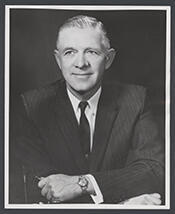
Here you will find contact information for Representative Don Levingston Short, including email address, phone number, and mailing address.
| Name | Don Levingston Short |
| Position | Representative |
| State | North Dakota |
| District | 2 |
| Party | Republican |
| Status | Former Representative |
| Term Start | January 7, 1959 |
| Term End | January 3, 1965 |
| Terms Served | 3 |
| Born | June 22, 1903 |
| Gender | Male |
| Bioguide ID | S000378 |
About Representative Don Levingston Short
Don Levingston Short (June 22, 1903 – May 10, 1982) was a cattle rancher and Republican politician from Billings County, North Dakota, who represented North Dakota in the United States House of Representatives from January 3, 1959, to January 3, 1965. Over three consecutive terms in Congress, he participated actively in the legislative process during a significant period in American history, representing the interests of his constituents while maintaining close ties to his ranching background.
Short was born in Le Mars, Iowa, to Hugh Connoran and Anne Otely Corkery Short. When he was less than a year old, his family moved to western North Dakota, where they established what became known as the Short Ranch in Billings County, near Medora. He attended public schools in Medora and later pursued further education at St. James School in Faribault, Minnesota. He completed an agricultural short course at Montana State University in Bozeman, reflecting his early and enduring connection to agriculture and ranching. In 1921 he graduated from Pillsbury Military Academy in Owatonna, Minnesota, and from 1922 to 1926 he attended the University of Minnesota, where he was a member of the Phi Kappa Psi fraternity.
After his studies, Short returned to the family ranch in Billings County and devoted himself to cattle ranching and farming. In 1929 he married Edith Esther Whittemore, a schoolteacher from Medora, and together they built a life centered on the operation of the Short Ranch. His professional identity remained firmly rooted in agriculture, and he became known locally as a working rancher who combined practical experience on the land with an emerging interest in public affairs and rural policy.
Short’s formal political career began in the late 1930s. From 1937 to 1938 he served as a county supervisor for the Farm Security Administration, a New Deal agency that worked to support struggling farmers during the Great Depression. This role introduced him to federal agricultural programs and the challenges facing rural communities, experience that would later inform his legislative priorities. He continued his involvement in public service over the following decades and, in 1957, was elected to the North Dakota House of Representatives, marking his entry into state-level legislative politics as a member of the Republican Party.
In 1958 Short successfully ran for the United States House of Representatives as a Republican, and his election marked the pinnacle of his political career. He took office on January 3, 1959, representing North Dakota’s 1st congressional district in the Eighty-sixth Congress and was subsequently reelected to the Eighty-seventh and Eighty-eighth Congresses, serving continuously until January 3, 1965. During his three terms in Congress, he participated in the democratic process at a time of major national developments, including the early civil rights era and significant debates over federal infrastructure and land use. He voted in favor of the Civil Rights Act of 1960 but opposed the Civil Rights Act of 1964, reflecting the complex and often divided views of the period.
Short’s congressional career was also marked by a notable policy dispute within his own party. He strongly opposed the construction of a U.S. highway through the National Grasslands in the North Dakota Badlands, arguing for stewardship and the preservation of an unspoiled scenic national treasure. This position put him at odds with North Dakota Republican Senator Milton Young, who favored the highway project. Their disagreement, characterized as a conflict between money and stewardship, became a significant factor in state Republican politics. In the 1964 election, Short was an unsuccessful candidate for reelection to the Eighty-ninth Congress; his defeat was widely attributed to Young’s active and covert efforts to unseat him, including the senator’s refusal to endorse Short as he had done in previous campaigns. In the long run, Short’s preservationist stance prevailed, as no U.S. highway was built through the area and the land remained largely unspoiled.
After leaving Congress, Short returned full time to the Short Ranch in Billings County. Two years after his defeat, he was asked to run for Congress again, but he declined, choosing instead to devote himself to his ranching operations and family life. He and his wife Edith operated the ranch with their son, Con “Buzzie” Short, and he remained a long-time resident of Beach, North Dakota. Even in his later years, he enjoyed driving between Beach and the ranch to check on cattle and crops, maintaining his close connection to the land that had shaped his life and career.
During his time in Washington, D.C., Short developed friendships with prominent national figures, including future President George H. W. Bush and future President Richard Nixon. His conduct in office and his emphasis on principle and stewardship earned him a reputation for integrity; North Dakota political writer Darrell Dorgan, brother of Senator Byron Dorgan, later remembered him as one of the last true statesmen following his death in 1982. In his late seventies Short’s health began to fail, and he developed Alzheimer’s disease, which increasingly limited his comfort with travel beyond Beach.
Don Levingston Short died in Dickinson, North Dakota, on May 10, 1982. He was interred in the Medora Cemetery in Medora, North Dakota, on a scenic bluff overlooking the town and the nearby Medora Musical outdoor theater. His gravestone, inscribed “COWBOY,” reflects both his lifelong identity as a cattle rancher and the enduring connection between his public service and the landscape and communities of western North Dakota.