Representative Donald M. Fraser
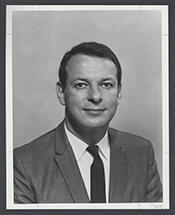
Here you will find contact information for Representative Donald M. Fraser, including email address, phone number, and mailing address.
| Name | Donald M. Fraser |
| Position | Representative |
| State | Minnesota |
| District | 5 |
| Party | Democratic |
| Status | Former Representative |
| Term Start | January 9, 1963 |
| Term End | January 3, 1979 |
| Terms Served | 8 |
| Born | February 20, 1924 |
| Gender | Male |
| Bioguide ID | F000350 |
About Representative Donald M. Fraser
Donald MacKay Fraser (February 20, 1924 – June 2, 2019) was an American politician from Minnesota who served as U.S. Representative from Minnesota’s 5th congressional district from 1963 to 1979 and as mayor of Minneapolis from 1980 to 1994. A member of the Democratic Party, he served eight consecutive terms in the United States House of Representatives, where he contributed significantly to the legislative process and became a leading congressional voice on human rights and foreign policy.
Fraser was born in Minneapolis, Minnesota, to Everett and Lois (McKay) Fraser, immigrants from Canada. His father, Everett Fraser, studied law at Harvard University, began his academic career teaching at George Washington University, and in 1920 became dean of the University of Minnesota Law School, a position that helped shape the family’s strong connection to legal scholarship and public affairs. Donald Fraser graduated from University High School in Minneapolis in 1941 and that same year entered the University of Minnesota. While an undergraduate, he was a member of the varsity swimming team, reflecting an early commitment to discipline and teamwork that would later characterize his public service.
During World War II, Fraser joined the U.S. Navy Reserve Officers’ Training Corps (ROTC) and was placed on active duty in July 1942. He continued his naval studies on the University of Minnesota campus until February 1944, when he was commissioned as a naval officer and sent to the Pacific Theater. He served as a radar officer during the latter stages of the war and into the early postwar period, remaining in service until 1946. In June 1946, following his discharge, Fraser returned to Minneapolis to study law at the University of Minnesota Law School, continuing the family’s legal tradition.
As a law student, Fraser served on the Minnesota Law Review and authored a notable article arguing for the illegality of racial covenants in land transactions, a position that anticipated and was supported by the United States Supreme Court’s 1948 decisions restricting enforcement of such covenants. He earned his law degree and was admitted to the bar in 1948. Fraser joined the politically active Minneapolis firm of Larson, Loevinger, Lindquist, Freeman, and Fraser, where he engaged in a general law practice and gained experience in municipal affairs by serving as attorney for the suburban community of Brooklyn Center, Minnesota. In 1950, he married Arvonne Skelton; the couple went on to have six children—Thomas, Mary, John, Lois, Anne, and Jean—while maintaining an active role in civic and political life.
Fraser entered elective office in 1954, when he was elected to the Minnesota Senate. He served in the state senate for eight years, building a reputation as a thoughtful and reform-minded legislator. In 1962, he successfully ran for the U.S. House of Representatives from Minnesota’s 5th congressional district, representing Minneapolis and surrounding areas. He took his seat in the 88th Congress on January 3, 1963, and remained in the House through the 95th Congress, leaving office on January 3, 1979. During this period, which encompassed the civil rights era, the Vietnam War, and significant domestic social change, Fraser participated actively in the democratic process and represented the interests of his constituents while emerging as a national leader on issues of human rights, governmental reform, and foreign policy oversight.
In the House of Representatives, Fraser became best known for his work as chair of the Subcommittee on International Organizations and Movements of the House Committee on Foreign Affairs. From 1973 to 1976, he used this position to hold extensive hearings on human rights violations in countries allied with the United States, challenging the traditional primacy of Cold War strategic concerns over human rights considerations. He was a key leader in drafting legislation to reduce U.S. aid to governments engaged in a pattern of “gross violations of human rights,” helping to institutionalize human rights as a central element of U.S. foreign policy. These efforts laid much of the groundwork for President Jimmy Carter’s human rights agenda and transformed the operations of the U.S. Department of State by mandating annual country reports on human rights practices and requiring diplomatic posts to monitor and report on human rights conditions. From 1974 to 1976, Fraser also served as president of Americans for Democratic Action, a prominent liberal advocacy organization, further extending his influence on national policy debates within the Democratic Party.
In 1978, following the death of Senator Hubert H. Humphrey, Fraser chose not to seek re-election to the House and instead ran in the special election for Humphrey’s U.S. Senate seat. He received the endorsement of the Minnesota Democratic–Farmer–Labor Party (DFL), but in a closely contested primary he was narrowly defeated by businessman Bob Short, who represented a more conservative wing of the party. Short subsequently lost the general election to Republican attorney David Durenberger. With his congressional career thus concluded in January 1979, Fraser turned his attention back to local government and civic leadership in Minneapolis.
Fraser was elected mayor of Minneapolis in 1979 and took office on January 2, 1980. His first term as mayor was for two years, after which he was re-elected to three additional four-year terms, serving until January 3, 1994. Over fourteen years in office, he became the oldest, longest-lived, and longest-serving mayor in Minneapolis history. His tenure was marked by efforts to strengthen city governance, promote neighborhood revitalization, and address issues such as urban development, environmental quality, and civic inclusion. In 1993, while still in office, he served as president of the National League of Cities, reflecting his stature among municipal leaders nationwide. He left the mayor’s office in 1994 and was succeeded by Sharon Sayles Belton, the city’s first female and first African American mayor.
In his later years, Fraser remained engaged in public affairs and international issues. On April 23, 2014, he endorsed the proposal for a United Nations Parliamentary Assembly, becoming one of only six former members of Congress to do so, underscoring his long-standing interest in democratic governance and international cooperation. His papers, preserved for research, provide extensive documentation of his work in international relations, Democratic Party policy and reform, human rights, environmental conservation, and women’s issues during the 1960s and 1970s, and they serve as a significant resource for scholars of modern American political history.
Donald MacKay Fraser died on June 2, 2019, at the age of 95. His long career in public service—from the Minnesota Senate and the U.S. House of Representatives to the mayoralty of Minneapolis—left a lasting imprint on Minnesota politics and on the development of human rights–centered foreign policy in the United States.