Representative Donald A. Manzullo
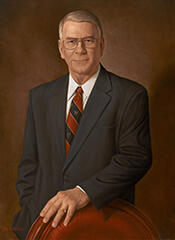
Here you will find contact information for Representative Donald A. Manzullo, including email address, phone number, and mailing address.
| Name | Donald A. Manzullo |
| Position | Representative |
| State | Illinois |
| District | 16 |
| Party | Republican |
| Status | Former Representative |
| Term Start | January 5, 1993 |
| Term End | January 3, 2013 |
| Terms Served | 10 |
| Born | March 24, 1944 |
| Gender | Male |
| Bioguide ID | M001138 |
About Representative Donald A. Manzullo
Donald Anthony Manzullo (born March 24, 1944) is an American lawyer and Republican politician who represented Illinois’s 16th congressional district in the United States House of Representatives from January 3, 1993, to January 3, 2013. Over the course of ten consecutive terms in Congress, he became known as one of the most conservative members of the Illinois delegation, with a strong focus on manufacturing, small business, and national security policy. From 2001 to 2007 he served as chairman of the House Committee on Small Business, and from January 2011 to January 2013 he chaired the House Foreign Affairs Subcommittee on Asia and the Pacific. After leaving Congress, he served as president and chief executive officer of the Korea Economic Institute from 2012 to 2018.
Manzullo was born in Rockford, Illinois, and raised in that community, attending Auburn High School and graduating in 1962. He pursued higher education in Washington, D.C., earning a bachelor’s degree from American University in 1967. He then studied law at Marquette University Law School in Milwaukee, Wisconsin, receiving his J.D. in 1970. Following law school, Manzullo returned to northern Illinois, where he established a legal practice in Oregon, Illinois. His work as an attorney in this small community helped shape his later legislative focus on small businesses, local manufacturing, and rural and small-town economic development.
Manzullo’s first bid for Congress came in 1990, when incumbent Republican Representative Lynn Morley Martin retired from the 16th congressional district to run for the U.S. Senate. Manzullo sought the Republican nomination but lost the primary to State Representative John Hallock Jr., 54 percent to 46 percent. In the general election that year, Hallock was defeated by Democrat John W. Cox Jr., a city attorney. Undeterred, Manzullo ran again in 1992. In that election cycle he won the Republican primary, defeating State Senator Jack Schaffer 56 percent to 44 percent, and went on to unseat incumbent Democrat John W. Cox Jr. in the general election by the same 56 percent to 44 percent margin. He took office in January 1993 as the representative for a district that historically stretched from the Rockford area to the northwestern corner of Illinois and, during his tenure, extended as far east as McHenry County in the Chicago suburbs.
Throughout the period from 1994 to 2006, Manzullo consolidated his political strength in the 16th district. He was never challenged in a Republican primary during those years and won re-election every two years with at least 60 percent of the vote, running completely unopposed in 1998. In subsequent general elections he defeated Democratic challengers by wide margins, including Barrington Hills Mayor Bob Abboud, whom he defeated 61 percent to 36 percent, and Freeport Mayor George Gaulrapp, whom he defeated 65 percent to 31 percent. His electoral success reflected both the Republican-leaning nature of the district and his alignment with conservative voters on social, economic, and national security issues. He was a member of the Republican National Committee and the Republican Study Committee, and he developed a reputation as a reliable conservative vote in the House.
Manzullo’s congressional career was marked by extensive legislative activity and committee service. Over his tenure, he authored 17 bills that were signed into law by the president and altered the direction of 18 other bills that also became law. He also significantly influenced more than 50 administrative actions by the executive branch through regulatory changes or internal policy alterations. As chairman of the House Committee on Small Business from 2001 to 2007, he focused on the challenges facing small manufacturers and entrepreneurs, holding more than sixty hearings on the phenomenon of corporate outsourcing and its impact on American jobs. He co-founded and co-chaired the bipartisan House Manufacturing Caucus and served as co-chair of the House Automotive Caucus, and he chaired the House Republican Policy Committee Task Force on Manufacturing. His prominence in manufacturing policy led to his being featured on the cover of The Manufacturer magazine. He also worked on transportation and infrastructure issues, securing significant federal funding for highway improvements in his district, which contributed to a reputation among some observers as a “pork barreller.” Among his legislative initiatives, he authored a law requiring clinics to report instances of child abuse.
In addition to his work on small business and manufacturing, Manzullo played an active role in financial and foreign affairs policy. He served on the House Committee on Financial Services, where his assignments included the Subcommittee on Capital Markets, Insurance, and Government-Sponsored Enterprises; the Subcommittee on Financial Institutions and Consumer Credit; and the Subcommittee on International Monetary Policy and Trade. On the House Committee on Foreign Affairs, he chaired the Subcommittee on Asia and the Pacific from 2011 to 2013 and served on the Subcommittee on the Middle East and South Asia. He was involved in several caucuses and policy groups, including the African and Investment Caucus, the Congressional Wine Caucus, the House Diabetes Caucus, the International Conservation Caucus, and the National Innovation Initiative’s Council on Competitiveness Steering Committee. His foreign policy interests later dovetailed with his leadership of the Korea Economic Institute, where he worked to promote understanding of Korean economic and political issues in the United States.
Manzullo’s voting record and public positions reflected a consistently conservative philosophy. He had a lifetime rating of 96 from the American Conservative Union, the highest in the Illinois delegation during much of his service, and he maintained a 100 percent approval rating from the National Right to Life Committee beginning in 1997, underscoring his opposition to abortion. He was a strong supporter of the American Land Rights Association and consistently backed the interests of organizations such as the American Security Council Foundation and the Center for Security Policy. He frequently emphasized his commitment to “the safety of the American people,” and he worked on an appeal to President Barack Obama urging him to abandon plans to transfer more than 200 Taliban and al Qaeda detainees from the Guantanamo Bay detention camp to a facility in northern Illinois. Instead, he advocated using the Thomson Correctional Facility as a new federal prison to relieve overcrowding in the national system. In 2009 he drew criticism from some constituents after referring to Islam as a “savage religion” in the context of detainees being considered for transfer to Thomson; he later apologized, stating that he was referring specifically to terrorists who, in his words, “believe and practice a violent, anti-modernity version of Wahhabism in which they seek to impose a new caliphate.”
Manzullo’s positions extended into international economic and regulatory debates. He offered support to British American Tobacco in its campaign against the Australian government’s decision to require plain packaging for tobacco products, a measure intended to reduce smoking rates, particularly among young people. In his political campaigns, he drew financial support from a range of corporate and professional interests. Honeywell International contributed $10,000 toward his final election effort, and he received $5,000 or more from New York Life Insurance, the American Society of Anesthesiologists, AFLAC Incorporated, and the American Bankers Association. Overall, approximately 58 percent of his campaign funds came from private sources and 40 percent from political action committees, with none of his own personal funds used to finance his campaigns.
Following the 2010 census, Illinois’s congressional map was significantly redrawn, and Manzullo’s district underwent some of the most dramatic changes in the state. Historically, the 16th district and its predecessors had run from the Rockford area to the state’s northwestern corner, though from 1993 to 2013 it extended into McHenry County in the Chicago suburbs—a change that had helped him defeat John W. Cox Jr. in 1992. Under the new map, the reconfigured 16th district retained Manzullo’s home in Ogle County and most of Rockford’s suburbs, but much of its western portion, including more than half of the city of Rockford itself, was shifted into the 17th district. To compensate for the population loss, the 16th was pushed eastward, stretching from the Wisconsin border to the Indiana border and effectively wrapping around the Chicago collar counties. The redistricting drew the home of freshman Representative Adam Kinzinger, then representing the 11th district and viewed as a somewhat more moderate Republican, into the 16th. Although the new 16th contained roughly 44 percent of Manzullo’s former territory and only 31 percent of Kinzinger’s, Kinzinger challenged him in the 2012 Republican primary. Manzullo was backed by conservative organizations including FreedomWorks, the American Conservative Union, and various Tea Party groups, while Kinzinger received support from House Majority Leader Eric Cantor. In the March 20, 2012, primary, Kinzinger defeated Manzullo 56 percent to 44 percent and later won the general election, ending Manzullo’s two-decade tenure in Congress.
After leaving Congress in January 2013, Manzullo transitioned to a role in international policy and advocacy. Beginning in 2012, he served as president and CEO of the Korea Economic Institute, a Washington-based organization focused on promoting dialogue and understanding regarding Korean economic, political, and security issues, a position he held until 2018. In this capacity, he drew on his legislative experience on the Foreign Affairs Committee and his prior chairmanship of the Subcommittee on Asia and the Pacific. Manzullo has continued to be recognized for his long service in the House of Representatives, where he participated in the legislative process during a period of significant economic, political, and security challenges for the United States and represented the interests of his northern Illinois constituents for twenty years.