Representative Donald J. Mitchell
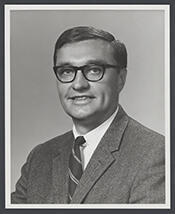
Here you will find contact information for Representative Donald J. Mitchell, including email address, phone number, and mailing address.
| Name | Donald J. Mitchell |
| Position | Representative |
| State | New York |
| District | 31 |
| Party | Republican |
| Status | Former Representative |
| Term Start | January 3, 1973 |
| Term End | January 3, 1983 |
| Terms Served | 5 |
| Born | May 8, 1923 |
| Gender | Male |
| Bioguide ID | M000808 |
About Representative Donald J. Mitchell
Donald Jerome Mitchell (May 8, 1923 – September 27, 2003) was an American optometrist, military aviator, and Republican politician who represented New York in the United States House of Representatives from January 3, 1973, to January 3, 1983. Over the course of five terms in Congress, he participated actively in the legislative process and represented the interests of his Central New York constituents during a significant period in American history.
Mitchell was born in Ilion, New York, on May 8, 1923, and was a lifelong resident of Central Upstate New York’s Mohawk Valley. His ancestral family roots in the region traced back to the era of the American Revolution. He was the oldest child of Donald J. Mitchell and Winnifred Packard Mitchell of Herkimer, New York. Raised in Herkimer, he attended the local public schools and graduated in 1940 from Herkimer High School, an institution founded in 1899. His early life in the Mohawk Valley helped shape a strong identification with the communities he would later represent in public office.
During World War II, Mitchell served in the United States Navy from 1942 to 1945 as a carrier-based fighter pilot. His wartime service as a naval aviator established a lifelong connection to military and veterans’ issues and fostered an enduring interest in aviation; he remained an avid pilot in private life. After several years in civilian pursuits, he re-enlisted in the Navy during the Korean War and served from 1951 to 1953 as a Naval Flight Instructor in Pensacola, Florida, training new pilots for military service.
Following his initial military service in World War II, Mitchell pursued higher education under the opportunities available to returning veterans. He completed a bachelor’s degree in optometry at Hobart College in 1949 and went on to earn a master’s degree from Columbia University in 1950. In the early 1950s he returned to Herkimer and founded an optometry practice, establishing himself as a health professional and small businessman in his hometown. In 1945, after returning from World War II, he married Margaretta “Gretta” Wilson LeVee, the daughter of E. Allen LeVee and Margaret Tinker LeVee of Little Falls, New York. The couple enjoyed a marriage of more than 57 years by the time of his death in 2003 and had three children—Gretchen, Cynthia, and Allen—and two grandchildren, Susan and Lisa.
Mitchell’s civic engagement led him into local politics in the 1950s. He was elected to the Herkimer City Council in 1954 and served there until 1957. He then served as Mayor of Herkimer from 1957 to 1960, gaining experience in municipal administration and local governance. Beyond elective office, he was active in numerous civic and charitable organizations, including the Boy Scouts of America, the American Civil Defense Association, the Central Association for the Blind, the Eastern New York Chapter of the Nature Conservancy, the Mohawk Valley Chapter of the American Red Cross, the American Cancer Society, the United Way, and the Herkimer County Historical Society. He also served on the Herkimer Zoning Board of Appeals from 1963 to 1964, remaining involved in local planning and development issues until his election to the state legislature.
In 1964, Mitchell was elected to represent Herkimer County in the New York State Assembly. He served in the Assembly from 1965 to 1972, sitting in the 175th, 176th, 177th, 178th, and 179th New York State Legislatures. Within the Republican majority, he rose to a leadership position as the Assembly’s Majority Whip from 1969 to 1972. In this role he helped manage floor activity and party strategy, building the legislative and political experience that would underpin his later congressional career.
Mitchell was elected to the United States House of Representatives in 1972 as a Republican, representing what was then New York’s 31st Congressional District. He took office on January 3, 1973, and served five consecutive terms until January 3, 1983. After winning re-election by a wide margin in 1974, he ran unopposed for three subsequent terms, reflecting strong support in his district. During his decade in Congress, he served on the House Armed Services Committee, where his background as a naval aviator informed his work on national defense and military policy. He was also elected by his colleagues to the House Republican leadership, serving four years as Regional Whip for New England and the Mid-Atlantic States, a position that involved coordinating legislative strategy and party discipline across a broad multi-state region.
In addition to his formal committee and leadership posts, Mitchell played a notable role in regional economic and preservation initiatives. He was a founder and the first chairman of the Northeast/Midwest Coalition in the House of Representatives, an alliance of members focused on the economic and industrial concerns of those regions. He was also a founding member of the Congressional Tourism Caucus, reflecting his interest in tourism as an economic driver. In the early 1970s, he joined with other House members in a campaign to persuade the Department of Defense to award more military contracts and maintain employment in the Northeast, which was losing defense funding and contracts to the South. In 1974, he led a successful effort to prevent the Air Force from cutting 1,500 jobs at the Rome Air Development Center at Griffiss Air Force Base in Rome, New York, an important employer in his district.
Mitchell also became involved in historic preservation and cultural policy. In 1982, at the urging of Broadway producer Joseph Papp and with the encouragement of family members and others active in the “Save the Theatres” movement, he introduced legislation in Congress, along with 13 co-sponsors, to designate a “Broadway/Times Square Theatre District National Historic Site” in midtown Manhattan. His bill (97th Congress – H.R. 6885) encountered strong opposition and intensive lobbying from the administration of New York City Mayor Edward I. Koch and major Manhattan development interests and was never enacted. Nonetheless, the legislative initiative and the broader preservation campaign helped slow the demolition of historic Broadway theaters, contributed to the eventual creation by the City of an official Theater Subdistrict, and aided in preserving elements of the district’s historic character. These efforts supported the continued vitality of the Theater District as one of New York City’s primary tourist attractions and cultural destinations.
After leaving Congress at the conclusion of his fifth term in January 1983, Mitchell retired from public office and, in 1984, returned full-time to Herkimer, New York. He resumed his optometry practice and divided his time with his wife Gretta between their home in the Mohawk Valley and a residence in Cedar Key, Florida. His commitment to veterans was recognized when the Veterans Administration hospital clinic at Griffiss Air Force Base near Rome, New York, was formally designated by an Act of Congress, signed into law by President Bill Clinton, as the “Donald J. Mitchell VA Outpatient Clinic.” The facility provides primary care and other health services for veterans in the greater Utica–Rome–Syracuse area of Central New York.
In 1992, Mitchell and his family established the “Donald J. Mitchell Family Fund,” a charitable trust administered through the Community Foundation of Herkimer and Oneida Counties, based in Utica. The fund’s mission is to build partnerships, inspire leadership, and generate positive outcomes aimed at increasing the percentage of adults with bachelor’s degrees in Herkimer and Oneida counties, principally through annual grants to local students. It also supports other programs and collaborations addressing economic development, education, health, and arts and culture in the region. Donald Jerome Mitchell died on September 27, 2003, leaving a legacy of military service, professional practice, public office, and civic and philanthropic engagement in the Mohawk Valley and beyond.