Representative Donald J. Pease
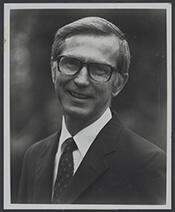
Here you will find contact information for Representative Donald J. Pease, including email address, phone number, and mailing address.
| Name | Donald J. Pease |
| Position | Representative |
| State | Ohio |
| District | 13 |
| Party | Democratic |
| Status | Former Representative |
| Term Start | January 4, 1977 |
| Term End | January 3, 1993 |
| Terms Served | 8 |
| Born | September 26, 1931 |
| Gender | Male |
| Bioguide ID | P000170 |
About Representative Donald J. Pease
Donald James Pease (September 26, 1931 – July 28, 2002) was an American politician who served eight terms as a member of the United States House of Representatives from Ohio’s 13th Congressional District in northeast Ohio. A member of the Democratic Party, he represented the district from 1977 to 1993 and contributed to the legislative process during a significant period in American history, participating actively in the democratic process and representing the interests of his constituents.
Pease was born in Toledo, Ohio, on September 26, 1931. He attended Ohio University in Athens, Ohio, supporting himself through college by working summers as a laborer at a Toledo oil refinery. At Ohio University he was deeply involved in campus life, serving as president of the student body, editor of the student newspaper The Post, and a student reporter for the Athens Messenger. He was also a member of the Delta Tau Delta fraternity. Pease graduated from Ohio University with a bachelor’s degree in journalism in 1953 and earned a master’s degree in government from the same institution in 1955. He then completed graduate work as a Fulbright Scholar at King’s College, Durham University, in the United Kingdom.
After completing his studies, Pease served in the United States Army from 1955 to 1957. Following his military service, he moved to Oberlin, Ohio, where he became editor and co‑publisher of the weekly local newspaper, the Oberlin News-Tribune. In this role he developed a reputation as a thoughtful and principled commentator on public affairs. He was an active member of the International Society of Weekly Newspaper Editors (ISWNE), winning the Society’s Golden Quill Award for editorial writing in 1962 and serving as president of ISWNE in 1965. His work in journalism helped establish his public profile and laid the groundwork for his entry into elective office.
Pease’s political career began at the local level with his election to the Oberlin City Council in 1961. He advanced to state office when he was elected to the Ohio Senate, serving from 1965 to 1967. In 1968 he won election to the Ohio House of Representatives, where he served from 1969 to 1975. In 1974 he returned to the Ohio Senate, serving there from 1975 until 1977. Early in his career he established a reputation for honesty and integrity that he maintained throughout his years in public life. A Democrat regarded as a liberal, he supported progressive tax reform, advocated for universal human rights, sought to link respect for internationally recognized worker rights to international trade, aid, and investment agreements, upheld civil liberties, and emphasized education reform and other liberal causes. He was widely respected as a reasonable and ethical public servant, even by conservative colleagues, who often described him as a “straight arrow.”
In 1976, Pease was elected to the U.S. House of Representatives as a Democrat from Ohio’s 13th District, entering the 95th Congress in January 1977. He served eight consecutive terms, from January 3, 1977, to January 3, 1993, easily winning all of his elections in the Democratic-leaning district. His longtime Chief of Staff and Legislative Director was Bill Goold, whom Pease had hired upon Goold’s graduation from Oberlin College. During his tenure in Congress, Pease quickly distinguished himself as a skillful legislator and staunch human rights advocate. In his first term, over the opposition of the Carter Administration, he sponsored and secured passage of legislation cutting off United States trade with Uganda during the brutal dictatorship of Idi Amin, under whose rule at least 500,000 Ugandans were killed. The trade ban resulted in the sudden loss of hundreds of millions of dollars in hard currency to the Amin regime, largely from coffee exports to the United States that had been used to purchase arms, luxury goods, and the loyalty of mercenary forces. Within months of the enactment of the trade ban, Amin was deposed, and the measure has been widely cited as one of the most effective uses of economic sanctions in modern U.S. foreign policy.
Throughout the early 1980s, Pease emerged as a leading congressional proponent of linking international economic policy to labor and human rights standards. He was the legislative champion of a growing movement inside and outside Congress to condition U.S. trade, investment, and aid agreements on respect for internationally recognized workers’ rights, including prohibitions on exploitative child labor in the production of goods for export. Before leaving Congress, he successfully authored six separate laws advancing these principles. Domestically, he played a significant role in federal tax policy. Pease authored controversial provisions of the Internal Revenue Code that partially disallowed itemized deductions for taxpayers with adjusted gross incomes above certain thresholds, measures that became known as the “Pease limitations.” These provisions were intended to increase progressivity in the federal income tax system and became a notable feature of late twentieth-century tax debates.
Pease chose not to seek re-election in 1992 and concluded his service in the House of Representatives at the end of his eighth term in January 1993. After leaving Congress, he returned to Oberlin and continued his engagement with public affairs and education. He served as Visiting Distinguished Professor of Politics at Oberlin College, sharing his experience in legislative politics and public policy with students. President Bill Clinton appointed him to the Amtrak Board of Directors, on which he served for five years, contributing to oversight and policy direction for the national passenger rail system.
In his personal life, Pease married Jeanne Camille Wendt on August 29, 1953. The couple made their home in Oberlin, Ohio, where Jeanne continued to reside after his death. They had one daughter, Jennifer, born on August 30, 1964. Donald James Pease died in Oberlin on July 28, 2002, closing a career marked by legislative accomplishment, a strong commitment to human rights and worker protections, and a reputation for integrity in public service.