Senator Donald Stuart Russell
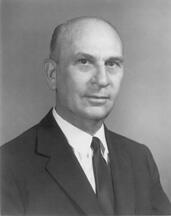
Here you will find contact information for Senator Donald Stuart Russell, including email address, phone number, and mailing address.
| Name | Donald Stuart Russell |
| Position | Senator |
| State | South Carolina |
| Party | Democratic |
| Status | Former Representative |
| Term Start | April 22, 1965 |
| Term End | January 3, 1967 |
| Terms Served | 1 |
| Born | February 22, 1906 |
| Gender | Male |
| Bioguide ID | R000525 |
About Senator Donald Stuart Russell
Donald Stuart Russell (February 22, 1906 – February 22, 1998) was an American politician, attorney, judge, and academic administrator from South Carolina. A member of the Democratic Party, he served as Governor of South Carolina from 1963 to 1965 and as a United States Senator from South Carolina from 1965 to 1967, contributing to the legislative process during one term in office. He later served as a judge of the United States District Court for the District of South Carolina and as a circuit judge of the United States Court of Appeals for the Fourth Circuit. Over the course of his career, Russell was also an Assistant Secretary of State, president of the University of South Carolina, and a close ally and political protégé of James F. Byrnes.
Russell was born on February 22, 1906, in the unincorporated community of Lafayette Springs in Lafayette County, Mississippi. His father died in the year of his birth, and in 1914 his family moved to Chester, South Carolina, where he was raised. He attended the University of South Carolina, receiving an Artium Baccalaureus degree in 1925. He then studied law at the University of South Carolina School of Law, earning a Bachelor of Laws and passing the South Carolina bar in 1928. In 1929 he pursued graduate-level legal studies at the University of Michigan Law School, further strengthening the academic foundation for his legal and public service career.
Russell entered private legal practice in Union, South Carolina, from 1929 to 1930, and then joined the Spartanburg firm of Nichols, Wyche and Byrnes, where he practiced from 1930 to 1942. His association with James F. Byrnes at this firm marked the beginning of a long and influential political and professional relationship. During World War II, Russell’s career shifted to federal service. In 1942 he served on the Price Adjustment Board of the War Department and as assistant director of economic stabilization. In 1943 he became an assistant to the director of war mobilization, following Byrnes into increasingly prominent roles in the Roosevelt administration. He entered the United States Army in 1944, serving as a major at the Supreme Allied Headquarters in Europe; he was discharged later that year. In early 1945 he served as deputy director of the Office of War Mobilization and Reconversion, and he took part in high-level wartime decision-making, including participation at the Potsdam Conference with President Harry S. Truman and Secretary of State Byrnes, where he was involved in deliberations leading to the decision to drop the first atomic bomb.
In August 1945, Russell was appointed Assistant Secretary of State for Administration under Secretary of State Byrnes, serving until January 1947. In that capacity he implemented plans for the reorganization of the Foreign Service and developed an early series of continual regional foreign policy statements, a practice that later became standard in American diplomacy. His interest in foreign service and administration led to involvement on several federal committees. During his tenure at the State Department, he became involved in the controversial “Mr. Blank” case and the dismissal of nine other State Department officials on unspecified loyalty charges, a matter that drew national attention when journalist Bert Andrews published a secret transcript in the New York Herald-Tribune beginning November 2, 1947. After leaving the Truman administration, Russell and Byrnes joined the Washington, D.C., law firm Hogan & Hartson. Russell returned to private practice in Spartanburg from 1947 to 1951 and again from 1957 to 1963, while also maintaining his growing profile in South Carolina public life.
Russell’s career in academic administration began when he was selected president of the University of South Carolina, a post he held from 1951 to 1957. As president, he oversaw the institution during a period of postwar growth and transition in higher education. He entered electoral politics in 1958, running for Governor of South Carolina, but was defeated in the Democratic primary by Ernest F. “Fritz” Hollings. Undeterred, Russell remained active in state politics and, in 1962, he was elected the 107th Governor of South Carolina. He served as governor from January 15, 1963, until his resignation on April 22, 1965. His governorship coincided with a period of significant social and political change in the state and nation. On January 28, 1963, Clemson University enrolled its first African American student, Harvey Gantt, who would later become mayor of Charlotte, North Carolina. During Russell’s tenure, South Carolina also witnessed former Governor Strom Thurmond’s announcement on September 16, 1964, that he was joining the Republican Party; Greenville native Charles Townes’s receipt of the Nobel Prize in Physics on October 29, 1964; and, on November 3, 1964, the decision of a majority of South Carolina voters to support Republican presidential candidate Barry Goldwater, the first Republican to carry the state in a presidential election since Reconstruction.
Russell’s service in Congress occurred during this significant period in American history. On April 22, 1965, he resigned as governor, and his successor, Governor Robert E. McNair, appointed him to the United States Senate to fill the vacancy caused by the death of Senator Olin D. Johnston. A Democrat, Russell served as a Senator from South Carolina from 1965 to 1967, participating in the democratic process and representing the interests of his constituents during one term in office. He ran in the special election to complete Johnston’s unexpired term but again faced Fritz Hollings in the Democratic primary and was defeated. His Senate tenure, though brief, placed him at the center of national legislative debates during the mid-1960s, a time marked by civil rights legislation, the Great Society programs, and escalating U.S. involvement in Vietnam.
Following his congressional service, Russell embarked on a distinguished federal judicial career. He was nominated by President Lyndon B. Johnson on October 11, 1966, to a seat on the United States District Court for the District of South Carolina, created by the death of Judge Charles Cecil Wyche. The United States Senate confirmed him on October 20, 1966, and he received his commission on November 3, 1966. He served on the district court until May 1, 1971, when he was elevated to the United States Court of Appeals for the Fourth Circuit. President Richard M. Nixon nominated him to the Fourth Circuit on April 7, 1971, to fill the vacancy left by Judge Simon Sobeloff. Russell was confirmed by the Senate on April 21, 1971, and received his commission on April 23, 1971. He served on the Fourth Circuit until his death on February 22, 1998, his long judicial tenure extending his influence on federal law and appellate jurisprudence across the region.
In his personal life, Russell was a Methodist. He married Virginia Utsey, and the couple had four children. He resided for many years in Spartanburg, South Carolina; his home there was later listed on the National Register of Historic Places in 2007, reflecting his prominence in the state’s political and civic history. Russell died in Spartanburg on his 92nd birthday, February 22, 1998, while still serving as a federal appellate judge. At his death, he left an estate valued at over $30 million (approximately $50 million in 2018), accumulated through long-term investments in banks, insurance companies, and utility enterprises, underscoring a lifetime of professional success and financial acumen alongside his extensive record of public service.