Representative Don Sundquist
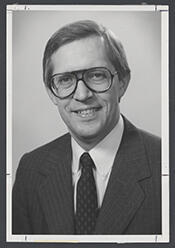
Here you will find contact information for Representative Don Sundquist, including email address, phone number, and mailing address.
| Name | Don Sundquist |
| Position | Representative |
| State | Tennessee |
| District | 7 |
| Party | Republican |
| Status | Former Representative |
| Term Start | January 3, 1983 |
| Term End | January 3, 1995 |
| Terms Served | 6 |
| Born | March 15, 1936 |
| Gender | Male |
| Bioguide ID | S001075 |
About Representative Don Sundquist
Donald Kenneth Sundquist (March 15, 1936 – August 27, 2023) was an American businessman and Republican politician who served as the 47th governor of Tennessee from January 21, 1995, to January 18, 2003, and as a United States Representative from Tennessee from January 3, 1983, to January 3, 1995. Over six terms in the House of Representatives, he represented Tennessee’s 7th congressional district and contributed to the legislative process during a significant period in late twentieth-century American political history, before going on to serve two terms as governor.
Sundquist was born in Moline, Illinois, on March 15, 1936, the son of Kenneth and Louise (Rohren) Sundquist. His father was of Swedish descent and his mother of German descent, and he was raised in the industrial Mississippi River community of Moline. He attended local public schools and graduated from Moline High School in 1953. He then enrolled at Augustana College in nearby Rock Island, Illinois, where he studied business and became a member of the Rho Nu Delta fraternity. He received a Bachelor of Arts degree in Business Administration from Augustana in 1957.
Immediately after college, Sundquist entered military service. He served in the United States Navy from 1957 to 1963, including two years on active duty, followed by reserve service. His naval service coincided with the early Cold War era and preceded his move into private business. In 1959, he married Martha Swanson; the couple would have three children.
Sundquist began his business career with Jostens, a company known for yearbooks and class rings, in 1961. He first worked at company plants in Princeton, Illinois, and Owatonna, Minnesota. In 1962, he was transferred to Jostens’ plant in Shelbyville, Tennessee, where he became plant manager, marking his permanent relocation to Tennessee. He left Jostens in 1972 and moved to Memphis, where he established an advertising and printing firm, Graphic Sales of America, gaining experience as an entrepreneur and small-business owner.
After settling in Tennessee, Sundquist became increasingly active in Republican Party politics. He helped organize the 1964 presidential campaign of Senator Barry Goldwater in Tennessee, reflecting his alignment with the emerging conservative wing of the party. Nationally, he served as chair of the Young Republicans from 1971 to 1973, building a network within GOP circles. In Tennessee, he chaired the Shelby County Republican Party from 1975 to 1977 and was a delegate to the Republican National Conventions in 1976 and 1980. During the 1980 election cycle, he managed the presidential campaign of Senator Howard Baker, further elevating his profile in both state and national politics.
In 1982, Sundquist ran for Congress to succeed Representative Robin Beard, who was retiring to run for the U.S. Senate. Following redistricting, Beard’s 6th District had been renumbered as the 7th District. In the general election, Sundquist narrowly defeated Democrat Bob Clement, son of former Tennessee Governor Frank G. Clement, by just over 1,000 votes out of more than 145,000 cast. This initial race proved to be his closest electoral contest; he was unopposed for reelection in 1984 and subsequently won three additional terms with little difficulty. He served in the U.S. House of Representatives from January 3, 1983, to January 3, 1995, representing Tennessee’s 7th congressional district over six terms.
During his congressional service, Sundquist established a reliably conservative voting record and was well regarded by conservative-oriented organizations such as the National Federation of Independent Business and the American Conservative Union. He served on the influential House Committee on Ways and Means, including the Subcommittee on Trade and the Subcommittee on Select Revenue Measures, where he participated in shaping federal tax and trade policy. He was also a member of the Republican Task Force on Trade and the Republican Task Force on Ethics Reform, reflecting his involvement in party efforts to address economic policy and congressional standards of conduct. Throughout his tenure, he participated in the democratic process on behalf of his constituents in Tennessee, representing their interests in national debates during the Reagan, George H. W. Bush, and early Clinton administrations.
In 1994, Sundquist sought statewide office, running for governor of Tennessee to succeed Democratic Governor Ned McWherter, who was term-limited. He easily secured the Republican nomination, winning more than 80 percent of the vote in the primary. In the general election, he faced Nashville mayor Phil Bredesen. The campaign featured sharp policy contrasts: Bredesen criticized Sundquist for voting against an increase in the federal minimum wage while supporting a congressional pay raise, while Sundquist accused Bredesen of changing positions on issues such as public funding for abortion and school privatization. On November 8, 1994, Sundquist was elected governor, receiving 807,104 votes to Bredesen’s 664,252, and he took office on January 21, 1995.
As governor, Sundquist focused in his first term on government efficiency, welfare reform, and criminal justice. In 1996, he signed the “Families First” welfare reform bill, which significantly reduced the number of families on welfare in Tennessee from approximately 70,000 to 30,000, aligning the state with broader national trends toward work-oriented assistance programs. He also approved a series of crime-related measures that emphasized tougher sentencing and enhanced victims’ rights. That same year, he eliminated the state’s scandal-plagued Public Service Commission, replacing it with the Tennessee Regulatory Authority to oversee utilities, and created the Department of Children’s Services to consolidate and improve oversight of child welfare programs.
Sundquist was easily renominated for a second term in 1998, defeating Memphis realtor Shirley Beck-Vosse in the Republican primary by 258,786 votes to 28,951. In the general election, he won reelection overwhelmingly against Democrat John Jay Hooker, receiving 669,973 votes to Hooker’s 287,790. Shortly after his reelection in November 1998, Sundquist launched the ConnectTen program, which made Tennessee the first state in the nation to connect all of its public schools and libraries to the Internet, an initiative that reflected his interest in technology and education. During his second term, he turned his attention to the state’s long-term fiscal structure. Concerned that Tennessee’s heavy reliance on the sales tax produced unstable revenues and hindered the state’s ability to compete regionally in education and infrastructure, he proposed a sweeping tax reform plan that included the introduction of a state income tax—an idea that had long been considered politically untouchable in Tennessee. The proposal provoked intense opposition; many of his former political allies broke with him, and large anti–income tax demonstrations took place in Nashville. In July 2001, protesters vandalized the governor’s office and broke windows in the state capitol while the legislature debated the measure. The income tax plan ultimately failed, but the controversy defined much of his second term.
Near the end of Sundquist’s governorship, questions arose regarding state contracting practices involving some of his associates. In 2002, Nashville television station NewsChannel 5 reported evidence that businesses owned by friends of Sundquist had been improperly awarded no-bid state contracts. In December 2002, the Federal Bureau of Investigation raided the offices of Education Networks of America (ENA), a company founded by Sundquist’s friend Al Ganier, as part of an investigation into whether Ganier had used his relationship with the governor to obtain millions of dollars in state contracts, including the ConnectTen contract. Ganier later pleaded guilty to a misdemeanor charge of unauthorized use of a computer. In May 2004, Joanna Ediger, an employee of the Tennessee Department of Labor, was convicted of rigging a $2 million state contract for Workforce Strategists, a firm owned by another Sundquist associate, John Stamps. In 2005, Stamps pleaded guilty to four counts of tax evasion and one count of making false statements. U.S. District Judge Karl Forester stated that Sundquist was the “impetus” for the investigations, though Sundquist himself, and senior members of his administration, were never implicated in any wrongdoing. Sundquist left office in January 2003 at the end of his second term, barred by state law from seeking a third consecutive term.
In the years following his governorship, Sundquist remained active in public policy and national politics. In July 2005, he was appointed by U.S. Secretary of Health and Human Services Michael Leavitt to head a national panel on improving Medicaid, drawing on his gubernatorial experience with health and welfare programs. He later served as state vice chair of Senator John McCain’s 2008 presidential campaign team in Tennessee, continuing his long involvement in Republican electoral politics. His gubernatorial and congressional papers were deposited in the University of Tennessee Libraries, providing a documentary record of his public career. In recognition of his contributions to international and regional cooperation, he received the Order of the Rising Sun, 2nd Class, Gold and Silver Star, from the government of Japan in 2018. He also participated in activities of the National Governors Association and appeared on national media outlets, including C‑SPAN, to discuss policy and governance.
Donald Kenneth Sundquist died in Memphis, Tennessee, on August 27, 2023, at the age of 87, following surgery and a short illness. He was survived by his wife, Martha, and their three children.