Senator Donelson Caffery
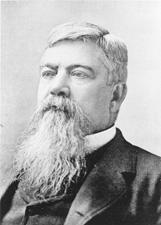
Here you will find contact information for Senator Donelson Caffery, including email address, phone number, and mailing address.
| Name | Donelson Caffery |
| Position | Senator |
| State | Louisiana |
| Party | Democratic |
| Status | Former Representative |
| Term Start | January 1, 1892 |
| Term End | March 3, 1901 |
| Terms Served | 2 |
| Born | September 10, 1835 |
| Gender | Male |
| Bioguide ID | C000016 |
About Senator Donelson Caffery
Donelson Caffery (September 10, 1835 – December 30, 1906) was an American lawyer, sugar planter, and Democratic politician from Louisiana who served as a United States Senator from 1891 to 1901. He was born in Franklin, the seat of St. Mary Parish, Louisiana, where he would maintain lasting personal and family ties. Caffery came from a prominent Southern lineage: his great-grandfather, Colonel John Donelson, co‑founder of the city of Nashville, Tennessee, was the father‑in‑law of Andrew Jackson, seventh President of the United States. This family background situated Caffery within a tradition of public life and regional leadership that would shape his later political career.
Details of Caffery’s formal education are less extensively documented than his public service, but after his early years in Franklin he pursued legal studies and was admitted to the bar, establishing himself as a practicing attorney in Louisiana. In addition to his legal work, he became a sugar plantation owner, entering an industry that was central to the economy and social structure of southern Louisiana in the nineteenth century. His dual roles as lawyer and planter gave him a direct stake in the legal, commercial, and tariff policies that affected the state’s agricultural interests, particularly the sugar trade.
During the American Civil War, Caffery served in the Confederate army, reflecting the allegiance of many white Louisianans of his generation. He held the rank of lieutenant in the 13th Louisiana Infantry Regiment, participating in the Confederate war effort until the conflict’s conclusion in 1865. After the war, he returned to civilian life in Louisiana, resumed the practice of law, and managed his sugar plantation. His professional success and local prominence led him into state politics, and he was elected to the Louisiana State Senate as a member of the Democratic Party, aligning himself with the dominant political organization in the post‑Reconstruction South.
Caffery’s service in the United States Congress began during a significant period in American history, marked by industrial expansion, the aftermath of Reconstruction, and the emergence of the United States as an overseas power. A Democrat, he was appointed to the United States Senate from Louisiana in 1892 to fill the unexpired term of Senator Randall L. Gibson, who had died in office. In 1894, the Louisiana State Legislature elected Caffery to a full six‑year term, and he served continuously in the Senate until 1901. Over the course of these two terms, he contributed to the legislative process and participated in the democratic governance of the nation, representing the interests of his Louisiana constituents while engaging in debates on national policy.
Within the Senate, Caffery held important committee responsibilities. He served as chairman of the Senate Committee on Enrolled Bills from 1893 to 1894, overseeing the final preparation of legislation before it was sent to the President for signature. Later, from 1899 to 1901, he chaired the Senate Committee on Corporations Organized in the District of Columbia, a body concerned with the regulation and oversight of corporate entities chartered in the nation’s capital. His committee work placed him at the intersection of legislative drafting, administrative oversight, and emerging questions about corporate power at the turn of the twentieth century.
Caffery was particularly noted for his strong anti‑imperialist and anti‑expansionist views during the era of the Spanish–American War and its aftermath. He opposed the acquisition and retention of new American possessions in tropical climates, such as Puerto Rico, Hawaii, and the Philippines. This stance was rooted in both principle and economic concern: he feared that incorporating these territories into the U.S. tariff system would allow large quantities of cheaper, tariff‑free sugar to enter the American market, thereby harming Louisiana sugar planters, including his own constituency and peers. His opposition to expansion placed him among a significant minority of Democrats and other public figures who resisted the imperial turn in American foreign policy at the close of the nineteenth century.
In 1900, Caffery’s anti‑imperialist reputation led to two notable, though ultimately declined, presidential nominations. He was the first nominee for President of the United States of the so‑called “Democratic National Party” at its Indianapolis Convention in 1900, a group organized in opposition to both imperialism and certain policies of the regular Democratic Party. Caffery, a staunch Democrat loyal to his party’s traditional organization, declined this nomination. Later that year, on September 5, 1900, a separate group of anti‑imperialists meeting in New York nominated Caffery for President and Boston attorney and historian Archibald M. Howe for Vice President. Caffery again refused the nomination, and Howe quickly withdrew as well. That same year, Caffery declined to seek a second full Senate term, bringing his congressional service to a close in 1901.
After leaving the Senate, Caffery returned to Louisiana and resumed the practice of law, withdrawing from national office but remaining a figure of note in state and regional affairs. His family continued his political legacy: his son, Donelson Caffery Jr., became the gubernatorial nominee of the “Lily‑White” faction of the Republican Party in the 1900 Louisiana gubernatorial election, though he was decisively defeated by Democrat W. W. Heard. A later generation also entered public service; his grandson, Patrick T. Caffery, served one term in the Louisiana House of Representatives and then represented Louisiana in the United States House of Representatives from 1969 to 1973. Donelson Caffery died on December 30, 1906, in New Orleans, Louisiana. He was interred in Franklin Cemetery in his native Franklin, St. Mary Parish, closing a life that spanned the antebellum era, the Civil War, Reconstruction, and the dawn of the American century.