Representative Dorsey William Shackleford
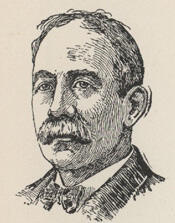
Here you will find contact information for Representative Dorsey William Shackleford, including email address, phone number, and mailing address.
| Name | Dorsey William Shackleford |
| Position | Representative |
| State | Missouri |
| District | 8 |
| Party | Democratic |
| Status | Former Representative |
| Term Start | December 4, 1899 |
| Term End | March 3, 1919 |
| Terms Served | 10 |
| Born | August 27, 1853 |
| Gender | Male |
| Bioguide ID | S000274 |
About Representative Dorsey William Shackleford
Dorsey William Shackleford (August 27, 1853 – July 15, 1936) was a United States Representative from Missouri who served ten consecutive terms in Congress from 1899 to 1919. A member of the Democratic Party, he represented his Missouri constituents during a period of significant political and social change in the United States, spanning the end of the nineteenth century and the First World War. Over the course of his two decades in the House of Representatives, he contributed to the legislative process on a wide range of issues, with particular influence in the development of federal road policy.
Shackleford was elected as a Democratic Representative to the Fifty-sixth Congress to fill the vacancy caused by the death of Representative Richard P. Bland. He took his seat on August 29, 1899, and was subsequently re-elected to the Fifty-seventh and to the eight succeeding Congresses, serving continuously until March 3, 1919. His tenure thus encompassed the Fifty-sixth through the Sixty-fifth Congresses. During these years, he participated actively in the democratic process in the House of Representatives, working to represent the interests and concerns of his Missouri district at the national level.
During his congressional service, Shackleford became particularly prominent in the area of transportation and infrastructure policy. He served as chairman of the Committee on Roads during the Sixty-third, Sixty-fourth, and Sixty-fifth Congresses. In this capacity, he played a central role in shaping early federal involvement in highway construction and improvement. He introduced legislation that would ultimately be enacted as the Federal Aid Road Act of 1916, a landmark measure that established a system of federal-state cooperation in road building and laid the groundwork for the modern national highway system. His work on this legislation reflected growing national recognition of the importance of improved roads for commerce, agriculture, and the emerging automobile industry.
Shackleford’s congressional career also intersected with major national and international events. On April 5, 1917, as the United States debated its entry into the First World War, he voted against declaring war on Germany. This vote placed him among the minority in Congress who opposed the declaration, reflecting the divisions within the country over intervention in the European conflict. Despite this stance, he continued to serve through the wartime Congresses, participating in the legislative responses to the economic and social demands of the war period.
In 1918, after nearly twenty years in the House, Shackleford was an unsuccessful candidate for renomination to the Sixty-sixth Congress. His defeat ended his continuous service in the national legislature on March 3, 1919. Following his departure from Congress, he moved to Jefferson City, Missouri, in 1919, where he resumed and continued the practice of law. In his post-congressional years, he remained a figure of experience and seniority within Missouri’s legal and political circles, drawing on his long background in public service and legislative affairs.
Dorsey William Shackleford died in Jefferson City, Missouri, on July 15, 1936. He was interred in Walnut Grove Cemetery in Boonville, Missouri. His two decades in the House of Representatives, his leadership of the Committee on Roads, and his role in advancing what became the Federal Aid Road Act of 1916 left a lasting imprint on the development of the nation’s transportation infrastructure and on the legislative history of the early twentieth century.