Representative Doug Bereuter
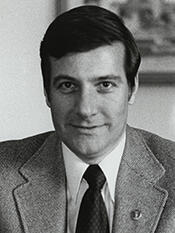
Here you will find contact information for Representative Doug Bereuter, including email address, phone number, and mailing address.
| Name | Doug Bereuter |
| Position | Representative |
| State | Nebraska |
| District | 1 |
| Party | Republican |
| Status | Former Representative |
| Term Start | January 15, 1979 |
| Term End | August 31, 2004 |
| Terms Served | 13 |
| Born | October 6, 1939 |
| Gender | Male |
| Bioguide ID | B000403 |
About Representative Doug Bereuter
Douglas Kent Bereuter (born October 6, 1939) is an American retired politician and public servant from the state of Nebraska in the Midwestern United States. A member of the Republican Party, he served as a Representative from Nebraska in the United States Congress from 1979 to 2004, representing Nebraska’s 1st Congressional District for 13 consecutive terms. His 26 years in the House of Representatives constituted the longest tenure for a Nebraska congressman, exceeded only by the combined House and Senate service of George W. Norris and Carl Curtis. Following his congressional career, he served as president and chief executive officer of The Asia Foundation from 2004 to 2011 and later became a member of the ReFormers Caucus at Issue One.
Bereuter, a fifth-generation Nebraskan, was born in York, Nebraska, and raised in Utica, Nebraska. He attended Lutheran and public schools in Utica and graduated from Utica High School in 1957. He then enrolled at the University of Nebraska–Lincoln, where he was a member of Sigma Alpha Epsilon fraternity and was elected to Phi Beta Kappa and Sigma Xi. He graduated in 1961 with a Bachelor of Arts degree and distinction as a Distinguished Military Graduate in the Reserve Officers’ Training Corps. From 1961 to 1963, he attended the Harvard Graduate School of Design, earning a Master in City Planning (M.C.P.) degree. After several years of professional work, he returned to Harvard from 1972 to 1973, attending the John F. Kennedy School of Government and receiving a Master in Public Administration (M.P.A.) degree.
Bereuter’s early career combined military service, federal and state government work, and academic and private-sector consulting. From 1963 to 1965, he served as a counter-intelligence officer in the United States Army with the 1st Infantry Division. He then joined the U.S. Department of Housing and Urban Development as an urban planner, serving from 1965 to 1966. In Nebraska state government, he was a division director for the Nebraska Department of Economic Development from 1967 to 1968 and, from 1968 to 1970, director of the Nebraska Office of Planning and Programming as well as the state’s Federal-State Relations Coordinator. After the 1970 election defeat of Republican Governor Norbert T. Tiemann, Bereuter worked as an independent city and regional planning consultant in the Great Plains and Rocky Mountain West and served as a part-time associate professor in the graduate planning programs at both Kansas State University and the University of Nebraska.
Bereuter entered elective office at the state level after defeating an incumbent state senator in his home district and served in the unicameral Nebraska Legislature from 1975 to 1979. During his tenure in the Legislature, he was a member of the Appropriations Committee, gaining experience in budgetary and fiscal matters. In the 1978 general election, he ran as the Republican candidate for Nebraska’s 1st Congressional District and was elected to the U.S. House of Representatives with 58.13 percent of the vote. He was subsequently re-elected 12 times, never receiving less than 59 percent of the vote, and served continuously in Congress from January 3, 1979, until his retirement on August 31, 2004.
In the House of Representatives, Bereuter’s committee assignments and leadership roles reflected a sustained focus on foreign affairs, financial services, intelligence, and infrastructure. After initial assignments on the House Interior and Insular Affairs Committee and the Small Business Committee, he served for 22 years on both the House Foreign Affairs Committee and the Banking (later Financial Services) Committee. On the Foreign Affairs Committee, he rose to become vice chairman and chaired its Asia-Pacific and Europe Subcommittees, while also serving on the Economic Policy and Trade and Human Rights Subcommittees. On the Banking Committee, he served for 16 years as chairman or ranking minority member of the International Financial Institutions Subcommittee. Bereuter also served nearly 10 years on the House Permanent Select Committee on Intelligence, retiring as its vice chairman, and in his final three terms he sat on the Transportation and Infrastructure Committee. In addition, he served on the House Select Committee on Hunger for the entire period of its existence, underscoring his interest in global food security and humanitarian issues.
Bereuter’s congressional responsibilities extended beyond standing committees to a wide range of special assignments and international parliamentary roles. He served as a congressional delegate to the United Nations 42nd General Assembly and was the founding co-chairman of the Congressional-Executive Commission on China. He chaired the Speaker’s Task Force to Monitor and Report on the Transition in Hong Kong from 1996 to 2002, overseeing congressional attention to the territory’s handover and subsequent developments. He was appointed to the U.S. Presidential Commission on Security and Economic Assistance (1983–1984) and the U.S. Presidential Commission on Agricultural Trade and Export Policy (1985–1986). Bereuter chaired the House delegation to the NATO Parliamentary Assembly for ten years and retired from that body after serving two years as its president. For his work on European and NATO expansion issues, he received decorations from the governments of Bulgaria, Lithuania, and Romania. He also held leadership roles in parliamentary exchanges with the European Parliament, Japan, Korea, China, and the United Kingdom.
Legislatively, Bereuter authored and co-authored measures that reflected his interests in international trade, disaster policy, and rural development. Among the bills he authored was the Bunning–Bereuter–Blumenauer Flood Insurance Reform Act of 2004, which addressed reforms to the National Flood Insurance Program. He co-authored the Bereuter–Levin Amendment, which was instrumental in securing passage of legislation granting Permanent Normal Trade Relations (PNTR) status to China. He was responsible for initiating the U.S. Agency for International Development’s Farmer-to-Farmer technical assistance program, which has sent thousands of American volunteers abroad to share agricultural expertise. At the end of his congressional service, that program was named in his honor, as was a Farmers Home Administration program he authored to provide a home loan guarantee program for residents of small communities.
Bereuter generally maintained a moderate voting record within the Republican Party; his lifetime rating from the American Conservative Union was 63. His moderation and emphasis on inclusivity were highlighted in a 1998 speech to a Nebraska Republican Party meeting, which drew national attention when he urged the party to adopt a “big tent” policy and to welcome people of any religious background through its practices and policies. In 2004, as he prepared to leave Congress, he endorsed State Senator Curt Bromm, Speaker of the Nebraska Legislature, as his preferred successor in the U.S. House of Representatives. In a crowded Republican primary field of seven candidates, Bromm finished second to Jeff Fortenberry after a large, last-minute campaign expenditure by the Club for Growth helped defeat him. Shortly before his departure from Congress, Bereuter publicly reassessed his earlier support for the Iraq War, issuing a statement calling the war “a mistake” and sharply criticizing what he described as a “massive failure” of pre-war intelligence.
Bereuter announced that he would not seek re-election for a fourteenth term and retired from the House of Representatives on August 31, 2004, to assume the position of president and CEO of The Asia Foundation. In that role, which he held until his retirement at the beginning of 2011, he oversaw the foundation’s programs in governance, economic development, women’s empowerment, and regional cooperation throughout Asia. After leaving The Asia Foundation, he remained active in public and civic affairs. He served as a long-term board member of the Arbor Day Foundation and the Nebraska Community Foundation and worked with the Chicago Council on Global Affairs, where he is a Distinguished Fellow, focusing on food security and agricultural development in Sub-Saharan Africa and South Asia. He also served for seven years as a member of the U.S. State Department’s International Security Advisory Board and is a member of the Council on Foreign Relations and the World Affairs Council of Northern California. Through his later work, as well as his participation in the ReFormers Caucus at Issue One, Bereuter continued to engage in issues of international security, democratic governance, and political reform following his long tenure in Congress.