Representative Wayne Owens
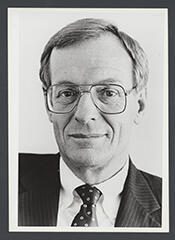
Here you will find contact information for Representative Wayne Owens, including email address, phone number, and mailing address.
| Name | Wayne Owens |
| Position | Representative |
| State | Utah |
| District | 2 |
| Party | Democratic |
| Status | Former Representative |
| Term Start | January 3, 1973 |
| Term End | January 3, 1993 |
| Terms Served | 4 |
| Born | May 2, 1937 |
| Gender | Male |
| Bioguide ID | O000156 |
About Representative Wayne Owens
Douglas Wayne Owens (May 2, 1937 – December 18, 2002) was an American politician and attorney who represented Utah’s 2nd congressional district in the United States House of Representatives. A member of the Democratic Party, he served in Congress from 1973 to 1975 and again from 1987 to 1993, contributing to the legislative process during four terms in office. His congressional service spanned a significant period in American history, including the Watergate era and the late Cold War, during which he participated in the democratic process and represented the interests of his Utah constituents.
Owens was born and raised in the small town of Panguitch, Garfield County, Utah. He graduated from Panguitch High School in 1955 and subsequently enrolled at the University of Utah in Salt Lake City. His undergraduate studies were interrupted when he left to serve as a missionary in France for the Church of Jesus Christ of Latter-day Saints from 1957 to 1960. During his mission in France, he met his future wife, Marlene, who was also serving as a missionary. Returning to the University of Utah, Owens completed his Bachelor’s degree in 1961 and went on to earn his Juris Doctor from the University of Utah College of Law in 1964. He worked his way through college and law school by holding various jobs, including serving as a night watchman at the historic Beehive House in Salt Lake City.
After receiving his law degree, Owens entered private legal practice and began building a career that combined law and public service. He served on the staff of three United States Senators: Frank Moss of Utah, Robert F. Kennedy of New York, and Edward M. Kennedy of Massachusetts. These positions gave him experience in federal legislative work and national politics. He was active in Democratic Party affairs, serving as the Western states coordinator for Robert F. Kennedy’s 1968 presidential campaign and for Edward M. Kennedy’s 1980 presidential campaign. In addition, he was a delegate to the Democratic National Convention in both 1968 and 1980, further solidifying his role in national Democratic politics.
In 1972, Owens ran for Congress as a Democrat in Utah’s 2nd congressional district, famously “walking for Congress” throughout the district to meet voters personally. In that election he unseated incumbent Republican Representative Sherman P. Lloyd with 55 percent of the vote. Taking office on January 3, 1973, Owens served in the Ninety-third Congress. During this first term, he sat on the House Judiciary Committee, which played a central role in the Watergate investigation and voted for the articles of impeachment against President Richard M. Nixon. His participation on this committee placed him at the center of one of the most consequential constitutional crises in modern American history. In 1974, instead of seeking reelection to the House, Owens ran unsuccessfully for the United States Senate from Utah, challenging Republican Senator Jake Garn.
Following his 1974 Senate defeat, Owens stepped away from elected office for several years. From 1975 to 1978 he served as president of the LDS Church’s Canada Montreal Mission, overseeing missionary work and church administration in that region. After completing his service in Canada, he returned to Salt Lake City and resumed the practice of law. Remaining engaged in public affairs, he sought statewide office again in 1984 as the Democratic candidate for governor of Utah, but lost the general election to Republican Norman H. Bangerter.
Owens returned to Congress after winning election in 1986 to represent Utah’s 2nd congressional district, beginning his second period of service in the U.S. House of Representatives in the One Hundredth Congress and continuing through the One Hundred Second Congress, from January 3, 1987, to January 3, 1993. Over these three consecutive terms, he again participated actively in the legislative process and represented his district during the final years of the Cold War and the early post–Cold War era. In 1992, he chose not to seek reelection to the House and instead ran once more for the United States Senate. That year he was defeated by Republican candidate Bob Bennett by a wider margin than many observers had expected. His 1992 campaign was complicated by his involvement in the House banking scandal, in which the improper use of House bank overdrafts drew public criticism and embarrassment for a number of members, including Owens.
After leaving Congress in 1993, Owens remained involved in national and international public policy, particularly in efforts to promote peace in the Middle East. He became head of the Center for Middle East Peace & Economic Cooperation, an organization dedicated to fostering dialogue and economic collaboration in the region. In this role, he traveled extensively and worked with political, civic, and business leaders to advance the cause of peace. His commitment to public service and international understanding was widely recognized, and he was posthumously inducted into the Hinckley Institute of Politics Hall of Fame at the University of Utah, honoring his contributions to politics and public life.
On December 18, 2002, while on a trip to Israel in connection with his work to further Middle East peace, Owens suffered a fatal heart attack in Tel Aviv. At his funeral, Gordon B. Hinckley, then president of the Church of Jesus Christ of Latter-day Saints, described him as “a man of achievement” and a peacemaker who sought to make the world better, noting that he had followed Owens’s career with appreciation and respect. Owens’s legacy in Utah politics continued through his family; in the 2014 and 2016 congressional elections, his son, Doug Owens, ran as the Democratic candidate for Utah’s 4th congressional district, though he was defeated in both races by Republican Mia Love.