Representative Douglas (Pete) Peterson
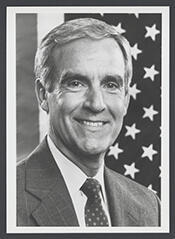
Here you will find contact information for Representative Douglas (Pete) Peterson, including email address, phone number, and mailing address.
| Name | Douglas (Pete) Peterson |
| Position | Representative |
| State | Florida |
| District | 2 |
| Party | Democratic |
| Status | Former Representative |
| Term Start | January 3, 1991 |
| Term End | January 3, 1997 |
| Terms Served | 3 |
| Born | June 26, 1935 |
| Gender | Male |
| Bioguide ID | P000259 |
About Representative Douglas (Pete) Peterson
Douglas Brian “Pete” Peterson (born June 26, 1935) is an American politician, diplomat, and former military officer who served three terms as a Democratic Representative from Florida in the United States Congress from 1991 to 1997, and later became the first United States Ambassador to the Socialist Republic of Vietnam after the Vietnam War. A veteran of the United States Air Force and a former prisoner of war, he devoted much of his public life to issues of reconciliation, veterans’ affairs, and international development.
Peterson grew up in Milton, Iowa, where he spent his early years before leaving to pursue higher education. He attended the University of Tampa in Tampa, Florida, laying the foundation for a career that would combine military service, business, academia, and public office. His move from the rural Midwest to Florida marked the beginning of a long association with that state, which would later become the base of his professional and political life.
After college, Peterson joined the United States Air Force, beginning what would become a 26-year military career. During the Vietnam War he served as a pilot, flying the F-4 Phantom II fighter. On September 10, 1966, his aircraft was shot down over North Vietnam. Captured by North Vietnamese forces, he spent more than six years as a prisoner of war under harsh conditions, a period he later described as consisting of “hours and hours of boredom, spliced with moments of stark terror.” He was released on March 4, 1973, as part of the broader repatriation of American prisoners following the Paris Peace Accords. Peterson remained in the Air Force after his release and continued his service until retiring in 1981 with the rank of colonel, completing over a quarter-century in uniform.
Following his retirement from the Air Force, Peterson entered private enterprise and education in Florida. He established a general contracting firm in Tampa, Florida, and later founded a small computer company in Marianna, Florida, known as CRT Computers. In addition to his business activities, he served for five years on the faculty of Florida State University in Tallahassee, Florida, contributing to the academic community while building his profile in the state. These post-military endeavors broadened his experience in management, technology, and public affairs, and helped prepare him for a subsequent career in elective office.
In 1990, Peterson ran as a Democrat for the United States House of Representatives from Florida’s 2nd congressional district. He challenged incumbent Bill Grant, who had become unpopular among many constituents after switching from the Democratic Party to the Republican Party in the middle of his second term. Peterson defeated Grant in the general election and took office in January 1991. He served three terms in the House of Representatives, from 1991 to 1997, participating actively in the legislative process and representing the interests of his North Florida constituents during a significant period in American political history. During his first campaign and time in Congress, he was assisted by staffer Jason Altmire, who would later be elected to three terms in Congress himself. As a member of the Democratic Party, Peterson’s congressional service encompassed issues ranging from veterans’ affairs and defense to economic development in his district. He declined to run for a fourth term in 1996 and was succeeded by Allen Boyd.
Peterson’s congressional tenure coincided with the post–Cold War realignment of U.S. foreign policy, and his own experience as a former prisoner of war in Vietnam gave him a distinctive perspective on reconciliation and international engagement. In 1997, after he left Congress, President Bill Clinton asked him to serve as the first post-war United States Ambassador to Vietnam, a historic appointment that returned him to Hanoi in a dramatically different role. Confirmed by the Senate, Peterson began his ambassadorship in 1997. His primary goals included securing a full accounting of those still listed as missing in action from the Vietnam War and helping to address the longstanding POW/MIA issue that had shaped U.S.–Vietnam relations. He served as ambassador until July 2001, working to normalize and deepen diplomatic, economic, and cultural ties between the two countries. In recognition of his service, on November 17, 2000, President Clinton presented him with the Presidential Citizens Medal.
After retiring as ambassador, Peterson devoted himself to philanthropic and advisory work, particularly focused on child safety and international business. He founded The Alliance for Safe Children (TASC), an organization dedicated to reducing preventable injuries to children worldwide, with a particular emphasis on drowning and other common causes of accidental death in Asia. Together with his wife, he also established Peterson International, a company aimed at promoting American business interests in Southeast Asia. In addition, Peterson served as a senior advisor to the Albright Stonebridge Group, an international strategic consulting firm, where he drew on his diplomatic and regional experience to counsel clients on political and economic developments in the Asia-Pacific region.
Peterson’s personal life was marked by both loss and renewal. His first wife died in 1995, during his years in Congress. Two weeks after his installation as ambassador in Hanoi, he met Vi Le, Australia’s senior trade commissioner to Vietnam, who had been born in Vietnam and emigrated to Australia. The two later married, and in 2002 Peterson moved to Melbourne, Australia, so they could be closer to her family. He continued his international and philanthropic activities from his new home base. In 2009, he acquired Australian citizenship, further underscoring the global dimension of his life and career while remaining a notable figure in American political and diplomatic history.