Representative Doug Walgren
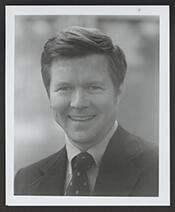
Here you will find contact information for Representative Doug Walgren, including email address, phone number, and mailing address.
| Name | Doug Walgren |
| Position | Representative |
| State | Pennsylvania |
| District | 18 |
| Party | Democratic |
| Status | Former Representative |
| Term Start | January 4, 1977 |
| Term End | January 3, 1991 |
| Terms Served | 7 |
| Born | December 28, 1940 |
| Gender | Male |
| Bioguide ID | W000044 |
About Representative Doug Walgren
Douglas Walgren (born December 28, 1940) is an American attorney and politician who served as a Democratic member of the U.S. House of Representatives from Pennsylvania from 1977 to 1991. Over the course of seven consecutive terms in Congress, he contributed to the legislative process during a significant period in American history, representing the interests of his constituents in western Pennsylvania and participating actively in the work of the House of Representatives.
Born in 1940, Walgren came of age in the post–World War II era, a time of rapid economic and social change in the United States. Details of his early life, including his family background and upbringing, are less widely documented in public sources, but his later professional and political career reflects a grounding in law, public service, and the concerns of his region. His formative years coincided with the early stages of the Cold War and the beginnings of the modern civil rights movement, developments that would shape the national political environment in which he would eventually serve.
Walgren pursued higher education and professional training in law, preparing for a career as an attorney before entering electoral politics. His legal background provided him with experience in statutory interpretation, advocacy, and the workings of government institutions, skills that would prove valuable in his subsequent legislative work. Before his election to Congress, he practiced law and developed an understanding of the legal and regulatory issues affecting individuals, businesses, and local governments in Pennsylvania.
In 1976, Walgren was elected to the U.S. House of Representatives as a Democrat from Pennsylvania, taking office at the start of the 95th Congress in January 1977. His tenure in Congress extended through the 101st Congress, ending in January 1991, encompassing seven full terms. During these years, he served through the administrations of Presidents Jimmy Carter, Ronald Reagan, and George H. W. Bush, a period marked by economic restructuring, debates over energy and industrial policy, and significant shifts in domestic and foreign policy. As a member of the House of Representatives, Walgren participated in the democratic process by introducing and considering legislation, serving on committees, and engaging in oversight of the executive branch.
Representing a district in Pennsylvania that included communities shaped by manufacturing and heavy industry, Walgren’s work in Congress reflected the concerns of a region facing deindustrialization and economic transition. He worked to represent the interests of his constituents on issues such as jobs, economic development, and federal support for local infrastructure and services. His role in the House placed him at the center of legislative debates over federal spending priorities, social programs, and regulatory policy during a time of changing economic conditions in the United States.
Throughout his seven terms, Walgren contributed to the legislative process by voting on major national issues and participating in committee work that helped shape federal policy. His service coincided with key congressional deliberations on energy, environmental regulation, social welfare programs, and the federal budget. As a Democratic member of the House, he was part of his party’s efforts to respond to economic challenges, address social needs, and adapt to the evolving political landscape of the late 1970s and 1980s.
Walgren left Congress at the conclusion of his final term in 1991. After his congressional service, he returned to private life and to his profession as an attorney, drawing on his legislative experience and legal training. His fourteen years in the House of Representatives marked a substantial period of public service, during which he represented Pennsylvania in the national legislature and took part in the broader democratic process that shaped federal policy in the closing decades of the twentieth century.