Representative Duncan E. McKinlay
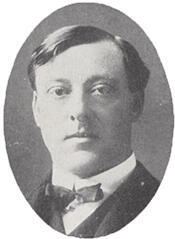
Here you will find contact information for Representative Duncan E. McKinlay, including email address, phone number, and mailing address.
| Name | Duncan E. McKinlay |
| Position | Representative |
| State | California |
| District | 2 |
| Party | Republican |
| Status | Former Representative |
| Term Start | December 4, 1905 |
| Term End | March 3, 1911 |
| Terms Served | 3 |
| Born | October 6, 1862 |
| Gender | Male |
| Bioguide ID | M000518 |
About Representative Duncan E. McKinlay
Duncan E. McKinlay (October 6, 1862 – December 30, 1914) was an American lawyer and Republican politician who served three terms as a U.S. Representative from California from 1905 to 1911. His service in the House of Representatives occurred during a significant period in American history, and he participated in the legislative process as a member of the Republican Party, representing the interests of his California constituents over the course of three consecutive terms.
McKinlay was born in Orillia, Ontario, Canada, on October 6, 1862. He attended the common schools in his youth and did not initially pursue a professional career in law or politics. Instead, he learned the trade of carriage painting, a skilled craft that took him across both the American Midwest and the West Coast. He worked in Flint, Michigan, and later in several California cities, including San Francisco, Sacramento, and Santa Rosa. This early period of manual and artisanal work preceded his transition into the legal profession and public service.
After deciding to study law, McKinlay prepared for admission to the bar in California. He was admitted to the bar by the Supreme Court of California in 1892 and commenced the practice of law in Santa Rosa, California. Establishing himself as an attorney, he built a legal career that led to federal service in the U.S. Attorney’s Office. His legal training and experience in private practice provided the foundation for his later roles in federal law enforcement and in Congress.
McKinlay entered federal service in San Francisco at the beginning of the twentieth century. He served as second assistant United States attorney at San Francisco from 1901 to 1904, and then as first assistant United States attorney from 1904 to 1905. During this period, he became publicly identified with the movement to restrict Chinese immigration. At the Chinese Exclusion Convention in 1901, he was an avowed supporter of the Geary Act, which restricted Chinese immigration, and he led the speakers with an address on the “Legal Aspects of the Chinese Question.” The San Francisco Call lauded this as a “brilliant address,” in which he concluded by calling for a renewal of the Geary Act to “guard and protect [us] from the blighting curse of Asiatic immigration.”
Building on his legal and federal experience, McKinlay was elected as a Republican to the Fifty-ninth, Sixtieth, and Sixty-first Congresses, serving from March 4, 1905, to March 3, 1911. As a member of the House of Representatives from California, he participated actively in the democratic process and contributed to the legislative work of Congress during a transformative era in national politics and economic development. His three terms in office reflected sustained support from his constituents, and he was part of the Republican majority that shaped federal policy in the years preceding the Progressive Era’s major reforms.
McKinlay sought to continue his congressional career but was unsuccessful in securing renomination in 1910, which ended his service in the House at the close of the Sixty-first Congress in March 1911. Following his defeat, he remained in public service at the federal level. President William Howard Taft appointed him United States surveyor of customs for the port of San Francisco, a position that placed him in a key administrative role overseeing customs operations at one of the nation’s most important Pacific ports.
In his later years, McKinlay continued to reside in the San Francisco Bay Area while carrying out his customs responsibilities. He died in Berkeley, California, on December 30, 1914. He was interred in Sunset View Cemetery in nearby El Cerrito, California. His career spanned manual trade work, the practice of law, federal prosecutorial service, and three terms in the United States Congress, marking him as a notable figure in early twentieth-century California political life.